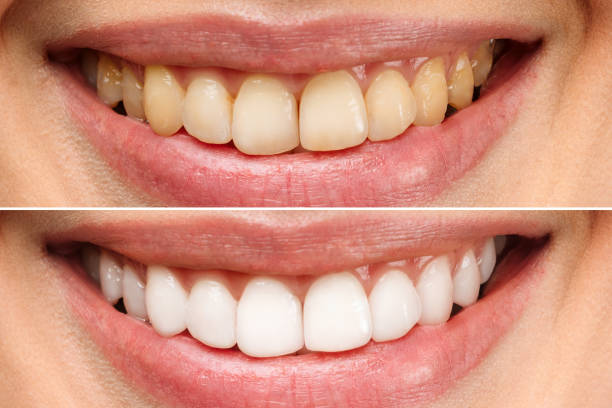
When you smile at the mirror, do you notice that your smile isn’t as bright as you want it to be? You may have always had white teeth until recently, or you may have never experienced white teeth before. Whatever the case, I am about to show you some practical and easy ways to whiten yellow teeth and regain your bright smile.
Common habits like drinking coffee, tea, soda, as well as aging and poor oral hygiene, can lead to yellow teeth, but with the right tips, you don’t need to hide your smile when you can safely and effectively whiten your teeth once again.
Having sparkling white teeth can enhance your self-confidence, personal satisfaction, and attractiveness. It can also enhance your professional and social image in professional and social settings. These work together to enhance your social interactions, interpersonal relationships, mood, overall satisfaction with life, and so on.
Thus, rather than feel depressed about not being able to find effective remedies for yellow teeth, this post will show you some tips and remedies that actually work.
What is the Natural Color of Teeth?
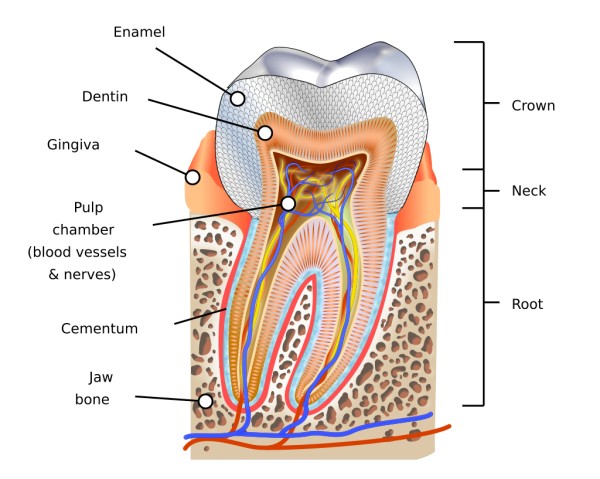
The natural color of teeth is not bright white, as most people might be made to believe. The color of teeth is mainly determined by the color of the dentin layer covered by a semi-transparent enamel layer. And the eventual color is highly dependent on genetics, race, and lifestyle factors.
According to an investigative study of natural teeth on 1640 teeth in 82 dental students in the University of Prishtina, Prishtina, Kosovo, using the Vita Easyshade spectrophotometer, the commonest shade of teeth was 2M2, which corresponds to a light ivory color with a gentle yellow hue. This may naturally differ for individuals based on race, genetics, as well as age.1Pustina-Krasniqi, T., Bytyçi, A., Bicaj, T., Ahmedi, E., Dula, L., Lila, Z., Dragusha, A., & Ajeti, N. (2015). The color of natural teeth investigated by visual perception and spectrophotometer. Open Journal of Stomatology, 5(2), 26–35.


Home Tips/Remedies for Whitening Yellow Teeth
Your teeth are said to be yellow when they are more yellowish than they used to be. This means this comparison is to yourself, not other people. This is because the natural color of teeth is often affected by genetics, race, and other non-modifiable factors, as already mentioned.
However, there are things you can do at home to whiten your teeth when they are getting discolored. In this section, we will discuss these tips and remedies and how they work to whiten your teeth.
1. Brushing Twice Daily (With a Whitening Toothpaste)
Whitening toothpastes are fluoride-containing toothpastes containing mild abrasives like baking soda or hydrogen peroxide, for stain removal. The mild abrasive effect may help remove stubborn stains that are causing teeth discoloration.
Dentists recommend brushing your teeth at least twice a day with a suitable toothpaste to prevent tooth decay and tooth discoloration. Brushing twice a day with a whitening toothpaste can also help reverse teeth yellowing by removing surface stains. In addition, fluoride helps strengthen enamel and prevent decay, which can lead to brighter and healthier-looking teeth.
While teeth discoloration involving the dentin is harder to remove by regular brushing, keeping the surface and surroundings of your teeth clean and free from particles can help prevent irreversible changes in the dentin.
2. Daily Flossing
Flossing daily can help remove plaque from spaces between the teeth where a toothbrush cannot reach, thus preventing discoloration or worsening of discoloration. A plaque is a colourless or whitish biofilm composed of billions of bacteria that grow on food dirt on the teeth, destroying the enamel, and exposing the dentin.2ScienceDirect. Tooth plaque. In Medicine and Dentistry. Elsevier. Retrieved [date you accessed it], from https://www.sciencedirect.com/topics/medicine-and-dentistry/tooth-plaque
By flossing daily, you remove those plaques and protect your dentin from direct exposure to other agents that can cause tooth discoloration.
3. Baking Soda Denitrifices/Paste
Dentifrices, including toothpowder and baking soda paste, are agents used along with a toothbrush to aid in the removal of dental plaque.
Baking soda helps in teeth whitening through its mild abrasive effect, gently scrubbing away surface stains and plaque to reveal a brighter appearance, but it does not change the underlying teeth color, mainly imposed by the dentin.3Li Y. (2017). Stain removal and whitening by baking soda dentifrice: A review of literature. Journal of the American Dental Association (1939), 148(11S), S20–S26. https://doi.org/10.1016/j.adaj.2017.09.006
While baking soda denitrifices may help remove surface stains on the enamel of the teeth, their overuse may cause erosion of the enamel. Thus, any yellowness of the teeth that is resistant to mild abrasion after a while may require professional dental interventions, as you will see in the next section.
Other home tips and remedies include:
- Washing your teeth with activated charcoal.
- Swish coconut or sesame oil in your mouth for about 15-20 minutes. This method is known as oil pulling and has been found to reduce harmful bacteria, which may help prevent tooth decay, gingivitis, and bad breath.4Peng TR, Cheng HY, Wu TW, Ng BK. Effectiveness of Oil Pulling for Improving Oral Health: A Meta-Analysis. Healthcare (Basel). 2022 Oct 11;10(10):1991. doi: 10.3390/healthcare10101991. PMID: 36292438; PMCID: PMC9602184.
- Strawberry paste (mixture of strawberry and baking soda): Malic acid in strawberries and apples can help whiten teeth by acting as a natural astringent to remove surface gum and tooth stains.
Professional Remedies for Teeth Whitening
At-home remedies and tips can be effective for teeth whitening by removing surface stains, plaques, and dirt, but they have limited effectiveness. Professional dental remedies offer more reliable ways of achieving teeth whitening, especially when at-home remedies fail.
Here, we explore some professional remedies that can help you achieve whiten yellow teeth quickly and effectively.

1. Scaling and Polishing
Scaling and polishing (S&P) is a preventive dental procedure that involves removing plaque, tartar, and stains from the teeth. While it is not a whitening procedure per se, it can help remove any surface stains that may have accumulated, to prevent gum disease and tooth decay, leaving the teeth feeling smooth and shiny.5Hilton Dental. (n.d.). Scaling and polishing vs. teeth whitening. Retrieved [Date you accessed it], from https://hiltondental.com.ng/oral-health/scaling-and-polishing-vs-teeth-whitening
It is not a whitening procedure because it only removes surface stains like the at-home remedies, but it is done by a dentist using specialized dental equipment in the dental clinic. S&P is generally recommended twice a year to prevent dental plaque accumulation, dental caries or cavities, and promote better oral hygiene and a brighter smile.
2. In-Office Dental Bleaching
In-office bleaching involves the use of professional whitening gel, often composed of hydrogen peroxide or its precursor, carbamide peroxide. These substances penetrate the tooth enamel and dentin to reach stain molecules and break down colored organic compounds on the dentin through the process of oxidation to whiten the teeth.6Gentle Dental of New England. (n.d.). Hydrogen peroxide for teeth whitening: Is it safe? [Expert tips]. Retrieved September 19, 2025, from https://www.gentledental.com/resources/articles/hydrogen-peroxide-teeth-whitening
This procedure is a more effective and faster way to whiten yellow teeth.
While the cost of the procedure may vary based on location and facility, your dentist would schedule an appointment with you after taking a preliminary dental history, when the whitening gel is applied to your teeth for 15-20 minutes, and sometimes activated using a high-intensity laser. Other precautions are taken to prevent any potential irritation that can be caused by the bleaching agent.
For more information on the in-office dental bleaching procedure for whitening yellow teeth, check here. The procedure may be repeated several times per session, or a follow-up visit may be scheduled for a repeat session to achieve the desired smile.
3. At-Home Whitening Tray/Gel
A whitening tray may be offered as a take-home kit after an in-office bleaching procedure, but it can also stand alone as a more budget-friendly option when in-office care seems unaffordable at the moment. The whitening tray/gel composite comprises a custom-fitted mouldable dental tray into which a whitening gel is applied before wearing. It can be worn for a few hours daily or overnight for 1-2 weeks.
The whitening tray and gel kit have weaker and slower effects than an in-office whitening procedure, but it is significantly more effective than non-professional home remedies and over-the-counter solutions.
4. Laser Whitening
Laser whitening is not done as a separate procedure, even though some people see it as a professional whitening intervention on its own. It is done in combination with in-office bleaching using hydrogen peroxide. A laser is used to activate the oxidation reaction that enables hydrogen peroxide to bleach off organic stains from the dentin.
5. Dental Veneers
Dental veneers are custom-made shells that are bonded to the front surface of teeth to mask any underlying permanent discoloration and improve their appearance. These accessories are typically made of porcelain or composite resin, which cover the surface of the teeth without altering the intrinsic appearance or structure of the teeth.
With veneers, you are liberty to select your preferred tooth whiteness. From your intrinsic natural teeth color to perfect white teeth, dental veneers offer you an opportunity to whiten yellow teeth and brighten your smile.
How to Prevent Teeth Discoloration
Aging causes teeth discoloration because, as we get older, the enamel wears down, exposing the underlying dentin, predisposing the teeth to yellowish discoloration. In addition, certain lifestyles can also significantly cause teeth discoloration, but here are some tips on preventing teeth yellowing or worsening yellowing of the teeth.
1. Practice good oral hygiene
Good oral hygiene is the most important way to prevent tooth yellowing. This is because debris and dirt in the mouth can lead to bacterial buildup, plaque accumulation, and irreversible staining of the enamel and dentin.
Dentists recommend at least twice daily brushing with fluoride-containing toothpaste and a soft to medium-bristle toothbrush. Daily flossing is also encouraged to remove debris and dirt from areas where a brush cannot get to.
2. Watch your diet
Certain foods/drinks are known to cause teeth discoloration when taken too regularly without the right precautions. These include coffee, tea, soda, red wine, and dark-colored berries, etc. These foods stain your teeth by getting trapped in the pores of your teeth enamel, causing discoloration.
Gummy foods can also cause teeth discoloration and decay by sticking to the enamel and creating a nidus for bacteria to accumulate. It is important to rinse your mouth after consuming teeth-staining food and drinks, or limit their intake entirely.
3. Quit smoking
Aside from other impacts of smoking on health, research has confirmed that smoking is also a major cause of teeth discoloration. The nicotine and tar in tobacco smoke can stain the teeth yellow, brown, dark brown, or even black, depending on the duration and frequency of the habit.7Alkhatib, M. N., Holt, R. D., & Bedi, R. (2005). Smoking and tooth discoloration: findings from a national cross-sectional study. BMC Public Health, 5, 27. https://doi.org/10.1186/1471-2458-5-27
The tar and nicotine can stick to the enamel and seep through microscopic cracks onto the dentin, causing its discoloration. Thus, quitting smoking is an important lifestyle modification to prevent further yellowing of your teeth to achieve brighter and whiter teeth.
Final Words
Whether your teeth are just recently getting yellowish or have been discolored for a long time now, with the right knowledge of the tips and remedies for teeth whitening, you can recover your shiny teeth and regain your bright smile. At-home remedies can help remove surface stains, but professional dental procedures guarantee more effective and faster ways to whiten yellow teeth.
This post explored the home-based, professional remedies, as well as tips to prevent teeth yellowing. If you found it interesting, kindly let me know what you think in the comment section below.
References
| ↑1 | Pustina-Krasniqi, T., Bytyçi, A., Bicaj, T., Ahmedi, E., Dula, L., Lila, Z., Dragusha, A., & Ajeti, N. (2015). The color of natural teeth investigated by visual perception and spectrophotometer. Open Journal of Stomatology, 5(2), 26–35. |
|---|---|
| ↑2 | ScienceDirect. Tooth plaque. In Medicine and Dentistry. Elsevier. Retrieved [date you accessed it], from https://www.sciencedirect.com/topics/medicine-and-dentistry/tooth-plaque |
| ↑3 | Li Y. (2017). Stain removal and whitening by baking soda dentifrice: A review of literature. Journal of the American Dental Association (1939), 148(11S), S20–S26. https://doi.org/10.1016/j.adaj.2017.09.006 |
| ↑4 | Peng TR, Cheng HY, Wu TW, Ng BK. Effectiveness of Oil Pulling for Improving Oral Health: A Meta-Analysis. Healthcare (Basel). 2022 Oct 11;10(10):1991. doi: 10.3390/healthcare10101991. PMID: 36292438; PMCID: PMC9602184. |
| ↑5 | Hilton Dental. (n.d.). Scaling and polishing vs. teeth whitening. Retrieved [Date you accessed it], from https://hiltondental.com.ng/oral-health/scaling-and-polishing-vs-teeth-whitening |
| ↑6 | Gentle Dental of New England. (n.d.). Hydrogen peroxide for teeth whitening: Is it safe? [Expert tips]. Retrieved September 19, 2025, from https://www.gentledental.com/resources/articles/hydrogen-peroxide-teeth-whitening |
| ↑7 | Alkhatib, M. N., Holt, R. D., & Bedi, R. (2005). Smoking and tooth discoloration: findings from a national cross-sectional study. BMC Public Health, 5, 27. https://doi.org/10.1186/1471-2458-5-27 |













You Might Also Like