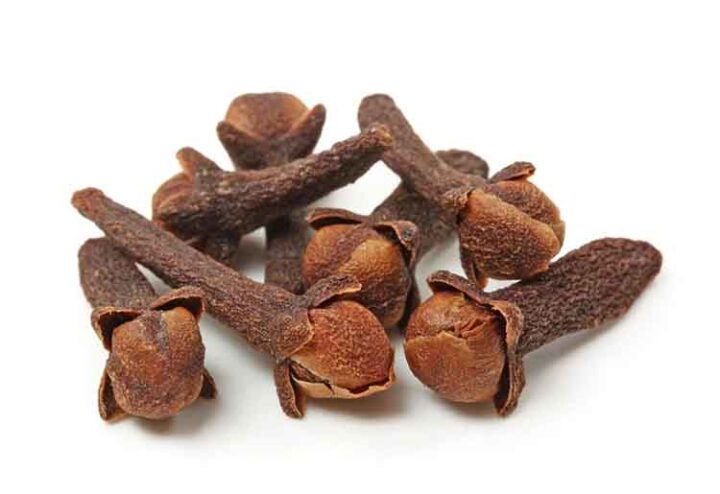
The clove plant (Syzygium aromaticum) is a spice plant that has found usefulness as a food ingredient and preservative, and which also has immense benefits for sexual health and fertility for both men and women. It is native to Indonesia but is now grown in several parts of the world, including Brazil, the United States, and Africa.
Many people have talked about the benefits of the clove plant, while several sources state that drinking clove water has benefits to one’s sexual health and fertility. In this post, you will learn more about the clove plant, how to make clove extracts, and the sexual and fertility benefits of drinking clove water or ingesting clove oil.
Clove (Syzygium aromaticum)
Clove (Syzygium aromaticum) belongs to the family Myrtaceae. It is native to the Maluku Islands, or Moluccas, in Indonesia, and is commonly used as a spice, flavoring, or fragrance in consumer products, such as toothpaste, soaps, or cosmetics.[1]Clove. (July 31, 2025). In Wikipedia. Retrieved August 19, 2025, from https://en.wikipedia.org/wiki/Clove
In Indonesia, cloves are commonly called Cengkeh, while in certain parts of Africa, they are referred to as Kanafuru (Yoruba, Nigeria), Kanumfari (Hausa, Nigeria), Dadoa amba (Twi, Ghana), Karafuu (Swahili, Tanzania/Kenya), etc.
Cloves have a characteristic spicy heat with an aromatic scent. It has a warm and sweet taste, similar to cinnamon or nutmeg, making it a popular spice for the hibiscus drink. If overused, cloves may impart a bitter and astringent taste with a medicinal aftertaste.
Sexual Health/Performance Benefits of Clove
In addition to its usefulness as a spice or an ingredient in food and local drinks, clove water has several health benefits, including sexual health and fertility.
According to a study, clove-water extract is said to have potent aphrodisiac activity with significant effects in boosting sexual performance and libido. Here are some of the benefits of clove for sexual health and performance in both males and females.
1. Clove water boosts libido in men
This was experimented with by analysing its effects in male mice, where it was shown to possess strong aphrodisiac (or libido-enhancing) effects on the animals.[2]Tajuddin, Ahmad S, Latif A, Qasmi IA. Effect of 50% ethanolic extract of Syzygium aromaticum (L.) Merr. & Perry. (clove) On the sexual behaviour of normal male rats. BMC Complement Altern Med. … Continue reading Clove significantly increased sexual activity in the rats without any adverse effects.
While these animal studies are reassuring, more research is needed to verify the benefits of cloves for sexual performance and libido in humans.
2. Treatment of premature ejaculation
Men who cum too fast may benefit from clove water. Clove is highly rich in eugenol, eugenol acetate, and gallic acid, all of which work synergistically to prevent or treat premature ejaculation in men. Gallic acid acts as an antioxidant, while eugenol/eugenol acetate has numbing properties, which could potentially reduce overstimulation of the penis, preventing premature ejaculation.
3. Treatment of erectile dysfunction
Men who are struggling with maintaining a strong erection during sex could potentially benefit from clove extract (either clove water or clove oil).
In another study, eugenol, as a component of clove essential oil (CEO), was shown to improve erectile function in diabetic mice. Erectile dysfunction is a common complication in men who are diabetic. The effect of clove on improved sexual performance in diabetic men may reflect its combined effect in improving premature ejaculation and erectile dysfunction in men.
4. Improve sperm count and motility
An experimental study in 2022 using clove extract revealed that clove extracts at concentrations up to 15 mg kg-1 eugenol stimulated the production of testosterone through activation of steroidogenic enzymes 3-β and 17-β hydroxysteroid dehydrogenase in the testis, and improved the motility and morphology of spermatozoa.
However, higher concentrations up to 20 and 40 mg kg-1 eugenol resulted in reduced serum testosterone and sperm viability. This reflects a dose-dependent effect of eugenol on serum testosterone, sperm count, and sperm viability.[3]Renner Philipe Rodrigues Carvalho, Graziela Domingues de Almeida Lima, Fernanda Carolina Dias Ribeiro, Luiz Otávio Guimarães Ervilha, Elizabeth Lopes Oliveira, Arabela Guedes Azevedo Viana, Mariana … Continue reading
Again, while these animal studies are promising, more research is needed to ascertain the effects of clove extract or the eugenol constituents on human testosterone, sperm viability, and motility.
Fertility Benefits of Clove Extract/Water
Improved sexual performance indirectly equates to improved fertility. This is because a stronger and longer-lasting erection, together with more viable sperm, culminates in greater chances of achieving pregnancy after unprotected sexual intercourse.
In addition to this, other fertility benefits of clove extract (water or oil) typically involve some fertility-enhancing effects on women and the female reproductive tract, as follows:
1. Clove may boost ovulation in women
Eugenol appears to be the wonder constituent of clove extract, and once again, it plays a role in boosting ovulation.
Studies indicate that eugenol and β-caryophyllene in clove extract may significantly affect the level of sex hormones (FSH, LH, etc) involved in ovulation and fertility. The main mechanism for regulating these hormones is not yet clearly understood, but it may be by potentially improving circulation to reproductive organs and reducing oxidative stress.[4]Taghipour Z, Bahmanzadeh M, Rahimi R. The Effects of Clove and Its Constituents on the Reproductive System: a Comprehensive Review. Reprod Sci. 2023 Sep;30(9):2591-2614. doi: … Continue reading
Also, it was also suggested that the type of extract (whether clove water or clove oil or ethanolamine extract, etc), dose, duration of administration, as well as the primary cause of the hormonal disorder, affect the response of clove to such ovulation-impacting hormonal changes.
By addressing ovulation problems, clove can successfully treat infertility resulting from anovulatory causes.
2. Treatment of Polycystic Ovarian Syndrome
Polycystic Ovarian Syndrome (PCOS) is a gynaecological condition where multiple fluid-filled spaces form within a woman’s ovaries, thereby affecting the hormonal and ovulation functions of the ovaries. In PCOS, there is generally a reduction in the levels of oestrogen and progesterone, which are responsible for libido and fertility.
A 2023 study showed that clove decreased the autophagy activity of ovarian tissue in polycystic ovarian syndrome.[5]Soltani M, Moghimian M, Abtahi-Evari SH, Esmaeili SA, Mahdipour R, Shokoohi M. The Effects of Clove Oil on The Biochemical and Histological Parameters, and Autophagy Markers in Polycystic Ovary … Continue reading
Autophagy is the primary pathophysiology in PCOS, with elevated insulin and glucose levels (a condition known as insulin resistance). By inhibiting the autophagy of ovarian tissue, clove active constituents, including eugenol, can help normalize insulin and blood glucose levels and reverse the progression of PCOS.
3. Menstrual irregularities
Clove extract also normalizes menstrual irregularities through the same mechanism of hormonal regulation. By interacting with sex hormones like oestrogen, leutenizing hormone, follicle-stimulating hormone, and progesterone, clove water or oil can help address problems of infertility resulting from menstrual irregularities.
4. Relief from severe menstrual cramps
Eugenol has also been shown to give significant relief from menstrual cramps and shorten the duration of painful menstruation. Eugenol may relax uterine muscles, improve circulation, and reduce discomfort.
The India Times unequivocally listed six essential oils that can ease menstrual cramps. Applying clove oil to the abdomen or consuming clove tea helps ease the symptoms of the menstrual period and limit excessive menstrual bleeding.
How to Make Clove Water Extract
Clove water or clove tea has a characteristic, strong, warm, and spicy taste with a slightly bitter undertone. Drinking clove tea has been believed by some people to cause twinning or multiple gestation in women. However, further research will be needed to verify these claims.
To make clove water or clove tea;
- Soak a handful of dry cloves in water for at least 6 hours.
- Boil the soaked cloves in water for 15-20 minutes.
- Let it cool to room temperature and then drink it once or twice a day. You may store it in the fridge if you are preserving it for more than a day.
- You can add other beneficial ingredients like tea tree oil, aloe vera, or honey. A combination of clove tea and honey has added antioxidant effects that support sperm health and fertility.
How to Make Clove Oil
To make clove oil, you will need whole cloves and a carrier oil like coconut or olive oil.
- Crush the cloves into smaller pieces to release their oils.
- Mix them into the carrier oil in a jar, ensuring that the cloves are fully submerged.
- Allow the mixture to sit for 1-2 weeks, and shake daily.
- Then, strain out the cloves. The resulting oil is referred to as clove oil and can be stored for a longer period in a cool, dark place.
The same chemical constituents are present in both clove water and clove oil. However, the relative proportions may differ based on the method of preparation. Also, while clove water/tea may be more easily ingested orally, clove oil may be more suitable for topical application on the skin or abdomen.
Frequently Asked Questions
1. Is clove water safe during menstruation?
Eugenol and other constituents of clove extracts have not been shown to interfere with normal menstruation. Clove may even have beneficial effects in reducing menstrual pain and heavy menstrual bleeding.
2. Does drinking clove water prevent pregnancy?
Drinking clove tea does not prevent pregnancy. In contrast, clove water may improve fertility and ovulation in women.
3. Can I drink clove water every day continuously?
Though there are no known dangers associated with drinking clove tea, this is not something you want to take every time. It does not taste very palatable, and if you are using it to treat a persistent medical condition, it might be time to see your doctor.
4. Are there side effects of drinking clove water?
There are no documented side effects of clove water. However, caution should be taken when drinking clove water during pregnancy due to a possible teratogenic effect on the developing baby, especially when it is mixed with other plant extracts and alcohol.
5. How long can you drink clove water for fertility?
While clove water or clove tea is beneficial for fertility, its effectiveness depends on the primary cause of infertility. If you have taken clove for up to 2 months without any significant response, consider seeing your doctor immediately.
6. Can I combine clove with other natural herbs?
Clove can be safely combined with other natural herbs and roots like ginger, garlic, bay leaf, and even honey. Some people have reported similar efficacy using these combined extracts of clove water and other extracts, while added benefits have been noticed in some combinations.
7. Can clove extract cause miscarriage when taken in pregnancy?
Clove is safe during pregnancy. It does not cause miscarriage or abortion when taken during pregnancy. However, when combined with other herbal products whose constituents are unknown, it can be risky to take during pregnancy.
8. Can I apply clove directly to my vagina?
Clove should not be directly applied to your vagina. Only creams medically approved for vaginal use should be applied directly into it. Herbs and concoctions are unsafe for direct vaginal application due to the potential of being chemical irritants to the vaginal mucosa.
Final words
Clove water/tea or clove oil has been found to have beneficial sexual health and fertility effects. It offers a non-pharmacological solution to problems of sexual performance, infertility/subfertility, and menstrual problems.
This post explores all you need to know about clove extracts (clove water and clove oil), their health and fertility benefits, and how to prepare them.
If you found this post enlightening, consider commenting or asking a question in the comment section below.
References
| ↑1 | Clove. (July 31, 2025). In Wikipedia. Retrieved August 19, 2025, from https://en.wikipedia.org/wiki/Clove |
|---|---|
| ↑2 | Tajuddin, Ahmad S, Latif A, Qasmi IA. Effect of 50% ethanolic extract of Syzygium aromaticum (L.) Merr. & Perry. (clove) On the sexual behaviour of normal male rats. BMC Complement Altern Med. 2004 Nov 5;4:17. doi: 10.1186/1472-6882-4-17. PMID: 15530165; PMCID: PMC534794. |
| ↑3 | Renner Philipe Rodrigues Carvalho, Graziela Domingues de Almeida Lima, Fernanda Carolina Dias Ribeiro, Luiz Otávio Guimarães Ervilha, Elizabeth Lopes Oliveira, Arabela Guedes Azevedo Viana, Mariana Machado-Neves. Eugenol reduces serum testosterone levels and sperm viability in adult Wistar rats. Reproductive Toxicology. Volume 113. 2022. Pages 110-119. ISSN 0890-6238. https://doi.org/10.1016/j.reprotox.2022.08.012. |
| ↑4 | Taghipour Z, Bahmanzadeh M, Rahimi R. The Effects of Clove and Its Constituents on the Reproductive System: a Comprehensive Review. Reprod Sci. 2023 Sep;30(9):2591-2614. doi: 10.1007/s43032-023-01223-x. Epub 2023 Apr 11. PMID: 37040058. |
| ↑5 | Soltani M, Moghimian M, Abtahi-Evari SH, Esmaeili SA, Mahdipour R, Shokoohi M. The Effects of Clove Oil on The Biochemical and Histological Parameters, and Autophagy Markers in Polycystic Ovary Syndrome-Model Rats. Int J Fertil Steril. 2023 Apr 1;17(3):187-194. doi: 10.22074/ijfs.2022.543640.1260. PMID: 37183845; PMCID: PMC10189158. |












You Might Also Like