

Valentine’s Day seems to be all about romance, roses, and heartfelt gifts, but behind the cards and chocolates are strange and fun facts you probably never knew. From ancient fertility rites to love-matching rituals to modern-day extravagant spending habits, Valentine’s Day has had some interesting traditions worth knowing.
Here are 25 fun facts about Valentine’s Day you probably didn’t know.

Fun Facts About The Origin of Valentine’s Day
The origin of Valentine’s Day dates back to the 3rd Century. Here are some fun facts about the origin of Valentine’s Day you probably didn’t know.
Valentine’s Day started as a pagan festival
Valentine’s Day originated in the pagan festival of Lupercalia, held on February 15 in ancient Rome. This festival was dedicated to Faunus (the Roman god of Agriculture) and to Romulus and Remus (founders of Rome).1Valentine’s Day | Definition, History, & Traditions – Britannica
The festival involved making sacrifices of a goat and a dog at a sacred cave. The goat’s hide was then dipped into the sacrificial blood from the animals and taken to the street to slap both women and crop fields for fertility.2Valentine’s Day. 2024: Origins, Background & Traditions – History.com
Valentine’s Day was once a lottery matchmaking day
The festival of Lupercalia was also marked by lottery matchmaking, in which eligible bachelors drew a woman’s name from a large urn (vase). These partners are paired for the year, and many of these matches have ended in marriage.
The first “Valentine” may have been sent from prison
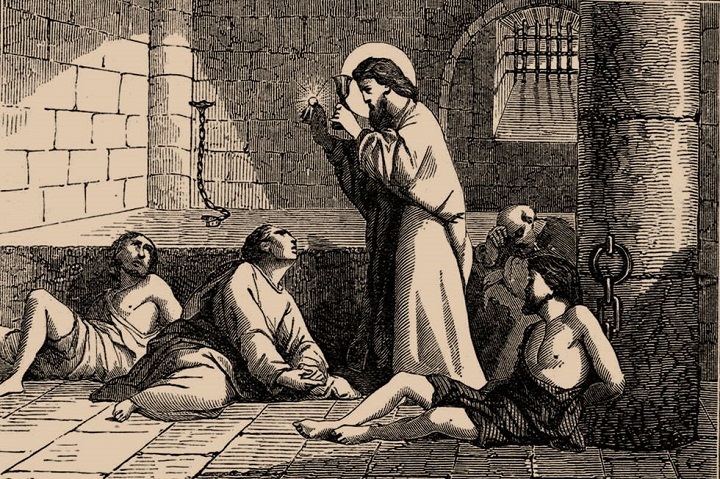
The first Valentine note was said to have been sent by St. Valentinus, the Roman priest, who was imprisoned by Emperor Claudius II for defying his decree against conducting weddings for couples. The emperor thought that single men made better soldiers, thus he banned marriage for young men. However, unable to resist love, St. Valentine secretly married young couples until he was caught.3Ibid. History.com. 2024
While in prison, he fell in love with the jailer’s blind daughter, who visited her father. By some account, he healed her of her blindness, and a day before his execution, he wrote a letter to the jailer’s daughter which he signed “from your Valentine“.
There was more than one St. Valentine
The Roman Catholic Church identified three St. Valentine’s, two of which are associated with the history of Valentine’s Day–St. Valentine of Rome, who was executed on February 14 for defying the decree of Emperor Claudius II, and St. Valentine of Terni (modern-day Italy), a Catholic bishop, who was arrested, tortured, and beheaded on February 14 under the same Emperor Claudius II for his piety and dedication to spreading Christianity.
Christianity was instrumental to current-day Valentine’s Day festival
At the end of the 5th century, Pope Gelasius I forbade and condemned the celebration of Lupercalia because of its pagan roots, replacing it with the celebration of Valentine’s Day on 14th of February. The Pope declared February 14 as Valentine’s Day in honour of the 3rd Century priest who died believing in love, and also possibly in honour of the other St. Valentine who was beheaded on February 14.4The 8th-century Gelasian Sacramentary
Cupid is named in both Roman and Greek mythology
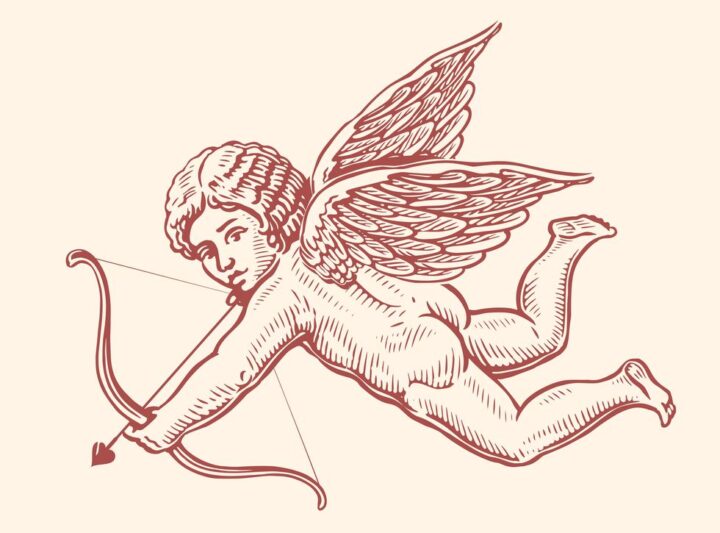
Cupid is a significant symbol of love and Valentine’s Day, but he is described in both Greek and Roman mythology. In ancient Greece, he was known as Eros, the Greek god of love. He is depicted as a handsome young man who has the power to make people fall madly in love. He is the son of Aphrodite, the Greek goddess of love and beauty.
The Romans portray him as Cupid (meaning ‘desire’), and describe him as a cheeky little angel with a bow and arrow, who is said to make people fall in love when he shoots his arrow at them. Cupid is the son of Venus (the goddess of love) and Mars (the god of war).5What the mythical Cupid can teach us about the meaning of love and desire – BrandeisNOW
The first Valentine’s gift is a poem dated back to 1415
The first known Valentine’s gift is a poem written by Charles, a French royal and Duke of Orléans, to his wife while he was imprisoned in the Tower of London in 1415, after being captured by the British at the Battle of Agincourt. In this poem, he addressed his wife as “My very gentle Valentine”, making it the first Valentine poems ever written after Valentine’s Day was officially recognized.
The romantic ideas of Valentine’s Day were shaped by writers
While Valentine’s Day was originally meant to honor St. Valentine, modern-day ideas about it were significantly influenced by writers like Geoffrey Chaucer and William Shakespeare.
Geoffrey, an English poet, wrote in his works “The Parlement of Foules” and “The Complaint of Mars” about birds choosing their mates on “Seynt Valentynes day”. This work has been recognized as having significantly influenced how we view and celebrate Valentine’s Day today.
William Shakespeare is also credited with contributing to our romantic ideas about Valentine’s Day. In several of his works, including Hamlet and A Midsummer Night’s Dream, Shakespeare depicted romantic aspects of Valentine’s Day, linking it more closely to themes of love.
The tradition of giving Valentine’s Day flowers dates back to the 17th century
The tradition of giving flowers on Valentine’s Day began during the Victorian Era (the late 17th century). During this era, flowers were used to express emotions and convey messages of love and admiration. This was known as floriography, or the language of flowers.
For example, red roses were associated with love and passion, while a yellow rose symbolised joy and friendship. Thus, roses gradually became the universal way to convey romantic feelings on Valentine’s Day from that era onward.
Surprising Valentine’s Day Statistics and Spending Facts
From ancient rites to the modern-day expressions, Valentine’s Day has some surprising stats and spending facts you’d never believe are true if you never saw it here.
Over 1 billion Valentine’s Day cards are exchanged globally every year
According to several sources, approximately 1 billion Valentine’s Day cards are exchanged worldwide each year. Of this, over 145 million cards are exchanged every year in the United States alone. This makes Valentine’s Day the second most popular day of the year for sending cards, second only to Christmas Day.
Americans Spend $20 billion on Valentine’s Day every year
According to the National Retail Federation and Prosper Insights & Analytics, Americans spend over $20 billion dollars every Valentine’s Day. The annual projection for 2026 is $29.1 billion.
At least 36 million heart-shaped boxes of chocolate are sold every Valentine’s Day
Around 36 million heart-shaped gift boxes are sold every year on Valentine’s Day. Among the top Valentine’s Day gift categories, candy makes up the most gifts exchanged, accounting for 56% of the top five gifts. Others include greeting cards (41%), flowers (41%), evening dates (39%), and jewelry (29%).
Men spend double the amount of money on Valentine’s Day gifts compared to women
The average amount men spend on Valentine’s Day gifts every year is about $130. This is approximately double the amount women spend on Valentine’s Gifts every year.
Approximately 50 million roses are given on Valentine’s Day around the world
According to several sources, approximately 50 million roses are exchanged on Valentine’s Day around the world. This underscores the significance of roses in love and romance, particularly on Valentine’s Day.
About 6 million couples get engaged every Valentine’s Day
Even though a “Be my val” proposal is not an engagement proposal, approximately 6 million couples get engaged every year on Valentine’s Day. The setting of Valentine’s Day makes it a perfect moment to pop the big question, and there is a high chance you will experience or witness a Valentine’s proposal this Valentine’s Day.
About 14 million cards get sent during and around Valentine’s Day every year
About 14 million cards get sent on Valentine’s Day and the days around it. This is in addition to greeting cards being one of the top five Valentine’s Day gift categories in the United States.
About 64% of men don’t plan Valentine’s Day ahead of time
Despite the increasing pressure from girlfriends on Valentine’s Day, the majority of men (64%) do not plan Valentine’s Day ahead of time. They usually fall back on last-minute options like a surprise date night and regular candies.
Fun Facts About Valentine’s Day Traditions Around the World
Valentine’s Day traditions and practices vary throughout the world. Here are some surprising traditions and practices relating to Valentine’s Day.
Valentine’s Day is prohibited in some countries of the world
In some countries, Valentine’s Day is prohibited for religious reasons. These countries include Iran, Saudi Arabia, and Malaysia. In addition to religious reasons, political opposition to Western influence is also a significant factor.
International Quirkyalone Day is the Valentine’s Day alternative for single people
International Quirkyalone Day is a holiday for single people on the same date. This holiday isn’t an anti-Valentine’s Day event; it’s a special moment set aside for single people to appreciate self-love and platonic relationships, rather than feeling left out on Valentine’s Day. International Quirkyalone Day has been observed since 2003.
In Japan, women give gifts
The Japanese celebrate Valentine’s Day differently from the rest of the world. Chocolates matter more than cards, flowers, or jewelry. In contrast to the conventional Valentine’s Day tradition, Japanese men receive chocolate from the women in their lives, rather than giving it.
Another day, ‘Marshmallow Day’ or White Day is observed on March 14, where men return gifts to the women in their lives.
Galentine’s Day has become popular
Galentine’s Day is a holiday adapted from the TV show Parks and Recreation, introduced to celebrate the women in women’s lives. It is observed on February 13, just before Valentine’s Day. According to the show where it originated from, Galentine’s Day is all about “Ladies celebrating ladies”.
Elements of Modern-Day Valentine’s Day
The inception of Valentine’s Day was about celebrating the martyrs who died for love–St Valentine of Rome and St. Valentine of Terni. This celebration has become increasingly romantic by the day. From chubby little Cupids, red roses, and pink hearts, here are some key elements of modern-day Valentine’s Day.
- It is highly commercialized: Today, Valentine’s Day is highly commercialized. Billions are spent annually on Valentine’s gifts. Gift vendors use this opportunity to promote Valentine’s Day products such as jewelry, chocolates, flowers, and cards.
- It’s not only for couples anymore: Modern-day Valentine’s Day has expanded beyond couples and lovers. Friends celebrate Galentine’s Day (Ladies celebrating ladies), parents exchange gifts with their children, singles celebrate self-love (Quirkyalone day), and pet owners even buy Valentine’s gifts for their animals.
- Social media shapes holiday and gift preferences: Every year, popular platforms like Instagram, TikTok, and Pinterest influence the experience of Valentine’s Day and gift aesthetics. These platforms influence mainstream ideas about how the holiday should be celebrated and which gifts matter most.
- Experiences are replacing physical gifts: Many people now prefer experiences over physical gifts, leading to a rise of Valentine’s Day concerts or events, romantic dinner dates, weekend trips, spa experiences, etc.
- Cupid is less prominent in modern-day Valentine’s Day: It focuses less on the holiday’s historical elements, such as Cupids, lovebirds, and animal sacrifices, and more on the exchange of intentional gifts with loved ones.
Final words
Valentine’s Day is a special day of love with a rich history and ever-changing trends. From ancient pagan rites to modern Valentine’s Day spending, this post featured some interesting fun facts about the holiday, its origins, and current-day practices.
If you made it to this point, let me know which of the above fun facts you found most interesting. Check this post if you are looking for Valentine’s Day gift ideas for your Valentine.
References
| ↑1 | Valentine’s Day | Definition, History, & Traditions – Britannica |
|---|---|
| ↑2 | Valentine’s Day. 2024: Origins, Background & Traditions – History.com |
| ↑3 | Ibid. History.com. 2024 |
| ↑4 | The 8th-century Gelasian Sacramentary |
| ↑5 | What the mythical Cupid can teach us about the meaning of love and desire – BrandeisNOW |














You Might Also Like