
Have you ever been in an interview where you were asked “What is the key thing about you that can give you an edge over other contenders for this position?” The answer to this question can significantly determine whether you will get the job or not. But if you ever walked out of an interview unsure if you gave the right answer, here are expert tips on how to approach this question the right way.
Getting an edge over other applicants in an interview begins with having a sound résumé. The selection process begins from get-go, and it is important to highlight the basic components of a good résumé.
In this article, we explore 6 key things to highlight when asked “What are the things that give you an edge over other applicants”. But first, let’s see the basic components of a résumé and how you can beef it up to increase your chances of getting the job.
Basic Components of a Résumé
In an interview by Paige Cohen of Harvard Business Review featuring Kristi DePaul, CEO of Founders, Kristi stated that it takes less than 10 seconds for hiring managers to decide whether a résumé is accepted or thrown into the reject pile. Thus, a properly optimized résumé can give you a head start over other contenders for the role.1How to Write a Resume That Stands Out – HBR
Here are the basic components of a résumé, and how to highlight the most important details in your application.
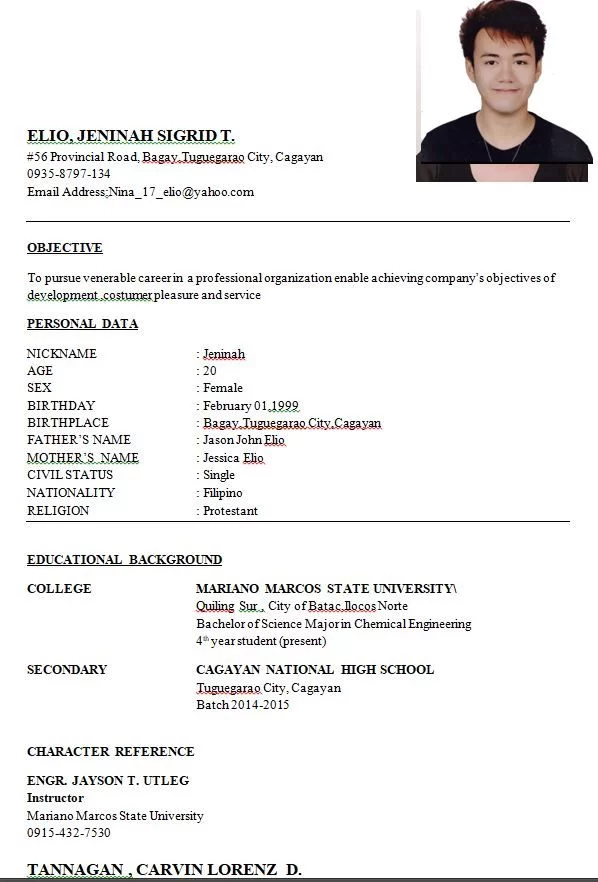
1. Contact Details
The name and contact information should be at the top of the page. Your name should be boldly written with larger print and bolder text, followed by other contact information like phone number, email, and residential address.
Depending on the job you are applying for, you might want to include a link to your social media profile.
2. Professional Summary/Objective
A professional summary is a two or three-sentence statement at the top of your résumé highlighting your most important skills and experiences relevant to the job you are applying. However, it is not the same thing as a professional objective.
If you have some work history, skills, and experience, a professional summary would be more appropriate, but if you have limited work experience, as in the case of a recent high school or college graduate, a professional objective would be more useful. The following examples highlight the major difference between a professional summary and a professional objective in a résumé.
Professional Summary
“Results-driven marketing professional with 5+ years of experience in developing and executing successful digital marketing campaigns. Proven ability to increase brand awareness by 30% through targeted social media strategies and content creation. Strong expertise in SEO, PPC, and analytics tools. Seeking to leverage skills and experience to drive growth for Knowseeker Co.”
Professional Objective
“Ambitious recent graduate with a degree in Business Administration, eager to apply analytical skills and passion for data-driven decision-making in a junior analyst role at Knowseeker Corporation. Committed to contributing to team success through hard work, attention to detail, and a focus on continuous learning.”
3. Professional Experience
Your professional experience gives a clear picture of your qualifications and why you should be considered for the interview. Though this can take up significant space on your résumé, you need to focus on your professional accomplishments, previous organizations, position, date/years of employment, employer, and location of employer.
Try to include as many measurable details in terms of percentages and numbers related to your achieved results or the amount of work done. As a general rule, only include experiences within the last 10 to 15 years while focusing on those experiences most relevant to your current application, including internships, part-time jobs, freelance or volunteering jobs.2The Key Components of a Great Resume – Indeed
4. Skills and Qualifications
In this section, highlight your relevant technical, non-technical, and communication skills (with proofs – awards, certifications, and endorsements) concisely, preferably using bullet points. Focus on emphasizing those skills that are relevant to the job you are currently applying for.
5. Education and Certifications
This section should contain your relevant educational background and qualifications, including names of schools attended, degrees obtained (starting with the most advanced to the least), and relevant certifications. While this section is generally placed at the bottom of the résumé, you may place it directly above your professional experience if you are a fresh college graduate with no significant work experience.
6. Extras
These can make your résumé richer and fuller, but you don’t want to make it too long and bulky. They include awards, recognitions, publications, languages, political interests & achievements, projects, professional memberships, testimonials, etc. Again, the goal is to highlight important achievements related to the position you are currently applying for.
Expert Tips to Enrich Your Résumé to Give You an Edge
Now that we have seen the basic components of a résumé, knowing the right tips to enrich your résumé can give you a head start over other applicants. In the same interview with Kristi DePaul above, she shared some important tips to enrich one’s résumé and increase one’s chances at getting accepted.
Kristi stated that the following important tips can determine whether your résumé gets accepted or ends up among the rejected pile.
1. Use simple descriptive headlines
Using simple headlines that describe you and your specialty can give you an edge from the get-go. If you are a content creator or digital marketer, you want to highlight it concisely at the top of your résumé. This is especially useful if you are just starting in a new industry or have very little work experience.
2. Hype yourself but sincerely
“You do want to hype yourself up on your résumé but not too much where it seems cliche or insincere. Instead, use bullet points to list out your achievements, data, responsibilities, and specialties,” Kristi also added.
3. Include a blurb about your previous organizations
Both Kristi and Cohen agreed in the interview that, except if the organization you worked for is very recognizable, include a blurb about what they do. Adding a single line beneath the organization name that says, “This is the premier professional development association for engineers”, is an efficient way to give your hiring manager a cheat sheet in your resume, Kristi added.
4. Highlight important experience
Whether you have 20 years of working experience or you are just starting, you do have more experience than you think. You just need to find ways to highlight them in your résumé.
There are a lot of transferable skills you gained from roles that seem to be way outside what you are applying for, but in fact are very transferable to any job of interest. Highlighting skills relating to public relations, customer service-related, internships, volunteer works, etc., are ways you can position yourself as someone with sufficient work experience for the job you are applying for.
Key Things That Give You an Edge Over Other Applicants in an Interview
While the question “What is the key thing about you that can give you an edge over other contenders for this position” may sound like a competition, the secret is in recognizing and expressing your strengths and unique abilities politely while demonstrating your readiness for teamwork.
Some hiring managers devise different ways and strategies to discover important qualities in their applicants before hiring. For example, Steve Jobs invented the beer test where he takes a walk and enjoys a beer with an applicant with the hopes of helping them loosen up a bit while he learned more about their suitability for the role.
Similarly, answering this question helps employers identify important qualities in an open-ended manner.
To answer the question about what key thing about you can give you an edge over other contenders for the position, Ron Rule, former CEO of As Seen on TV, Inc., commented that the following is the best answer he has ever gotten when asking the question in job employment interviews.
“I don’t know, I haven’t met the other applicants. For this job, you need someone who’s experienced with [__experiences__] and able to [__roles__], who knows how to work with other people who might be more or less [__better__] and play off each other’s strengths. I think with my background I’d be a great fit, but only you can tell me if there’s someone else on the list that’s more qualified. If there is, I’d hire them instead.”
Emphasis on highlighting your strengths politely without downplaying other applicants, and demonstrate a willingness for team work and collaboration.
Key Qualities to Highlight in Your Answer
While the above answer offers a comprehensive view of what can make you stand out from the crowd, it will be beneficial to highlight specific qualities that can give you an edge. Rather than memorizing the answer and answering verbatim, understanding the key qualities can help you approach the answer without any stress.
Michael Pukownik, Head of Genre Marketing at Amazon Music, shared his insights about the following qualities that can improve your chances of getting hired. At the end of the day, it’s about proving to your employer that you have more than just skills and working experiences.315 Top Qualities Employers Look For in Job Candidates – Indeed.com
1. Professional experience
Of course, professional experience is the primary reason for seeking new professionals in any establishment. And while you may have already listed them in your résumé, the interview is another opportunity to re-iterate your work experience and achievements to the hiring manager.
2. Relevant professional skills
Again, we can’t talk about getting employed without referring to one’s skillset. These include technical skills and transferable soft skills as already discussed above. Highlight relevant professional skills as much as possible, whether it is communication skills, conflict resolution, technical skills, etcetera.
3. Teamwork and collaboration
As earlier mentioned, there will be a lot of qualified applicants in terms of professional achievements and skillset, but what truly sets you apart are those additional qualities like the ability for teamwork and collaboration. These are some transferable not-easy-to-acquire skills that can give you an edge over other contenders for the same position.
4. Passion to contribute to the company or organization
You should demonstrate your passion to contribute to the company or organization’s success. Be honest about your expectations from the organization, but also stating how you hope to contribute to the growth and success of the organization, when asked, can significantly give you an edge over other applicants.
5. Complementarity
Complementarity refers to the idea that different employees can work together effectively because their skills, abilities, or roles complement each other. It’s an offshoot of teamwork but in addition to eyeing the common goal, complementarity emphasizes that everyone in the team is needed for the wholeness or completeness of the group.
Going the extra mile to under-study the current roles in the organization and what may be lacking can make your employer know that you understand what complementarity means in any organization.
6. Openness and adaptability
Openness and adaptability refers to your willingness to adapt to changes and take up any additional role that may be assigned to you in the course of your employment. While this may look absurd and unimportant, it demonstrates your passion towards the growth of the business, company, or organization.
7. Work ethic
Work ethic is another top quality that can give you an edge over other applicants for the job. It involves being serious about a task at hand, respecting deadlines, and working hard to achieve your targets and organizational goals. Demonstrating a good work ethic can significantly increase your employability, and this is something you can highlight in your résumé and during the interview.
8. Problem-solving
A problem-solving mindset is another key quality that gives you an edge over other applicants. Your employer might present a problem and ask you about how you would solve it. A problem-solving mindset is often more focused on identifying the problem and looking for solutions without recourse to complaining and blame-casting on other members of the team.
9. Willingness to learn
It is arrogant and unhealthy to act like you know everything already. While demonstrating adequate knowledge is an important quality for employability, being humble enough to accept when you are wrong is a quality that would give you an edge over other contenders in the interview.
10. Confidence
One of the key things your employer may try to observe when asking you about what key thing about you can give you an edge over other contenders, your confidence is one of the first things they look out for. Trying to talk down on other people or showing arrogance might mean that you are not confident in your abilities, but highlighting your strengths politely can indeed give you an edge and secure you the job.
Final words
Granted, several people will be professionally qualified for the job, but some key, sometimes unrecognized skills, hold the answer to what can give you an edge in the job interview. Now that you know the above tips, I hope you provide a better answer that gives you the job on your next interview.
References
| ↑1 | How to Write a Resume That Stands Out – HBR |
|---|---|
| ↑2 | The Key Components of a Great Resume – Indeed |
| ↑3 | 15 Top Qualities Employers Look For in Job Candidates – Indeed.com |













You Might Also Like