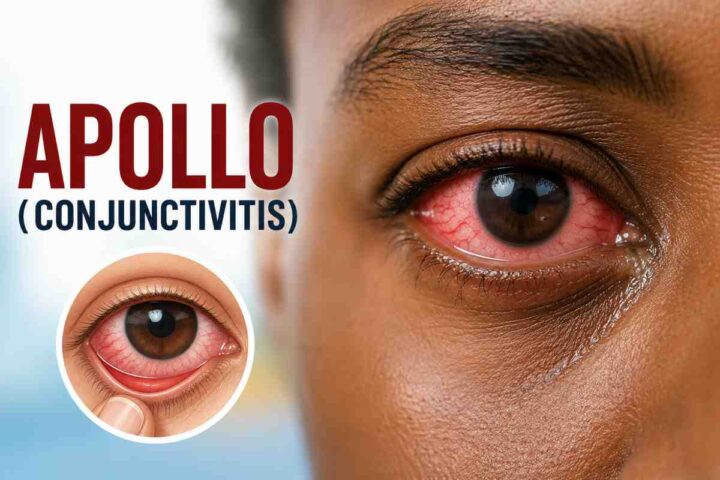
If you spend enough time in Nigeria, you will likely come across the term “Apollo”. Apollo is a popular name for conjunctivitis in Nigeria and several other West African countries.
Conjunctivitis is an inflammation of the conjunctiva, which is the thin, transparent membrane that lines the inside of the eyelids and covers the white part of the eye. It commonly causes symptoms such as eye redness, watering, eye itching, or discharge, depending on the underlying cause.
Apollo was originally associated with epidemic viral conjunctivitis, but people sometimes use the term loosely for almost any red eye. However, there are other conditions such as glaucoma, keratitis, and corneal ulcers, which also cause red eyes but are not conjunctivitis.
This broad use of the term has led to several misconceptions about the causes, treatment, and transmission of the disease. These range from the belief that Apollo is caused by staring at bright light to the harmful practice of applying urine and other unsterile substances to the eye as a means of treatment.
In this post, we explore what Apollo eye infection is, its causes, symptoms, and treatment options. In addition, we will see why conjunctivitis is popularly referred to as Apollo in certain parts of the world.
Apollo is a popular Nigerian name for conjunctivitis or pink eye, caused by an infection or irritation of the eye conjunctiva. It commonly presents as redness, watery eyes, discharge, or a gritty eye sensation. While viral and bacterial conjunctivitis can spread through contaminated hands and objects, allergic conjunctivitis is not contagious.
Because other serious eye conditions can resemble Apollo, prompt care should be sought when there is significant eye pain, light sensitivity, or changes in vision.
What is Apollo eye infection?
Apollo eye infection is the inflammation or infection of the conjunctiva (conjunctivitis), the transparent membrane covering the eyeball and the internal aspects of the eyelids. This reaction could be due to irritants, infection by micro-organisms, or allergens, resulting in the inflammation of the conjunctival blood vessels, causing redness and other signs and symptoms.
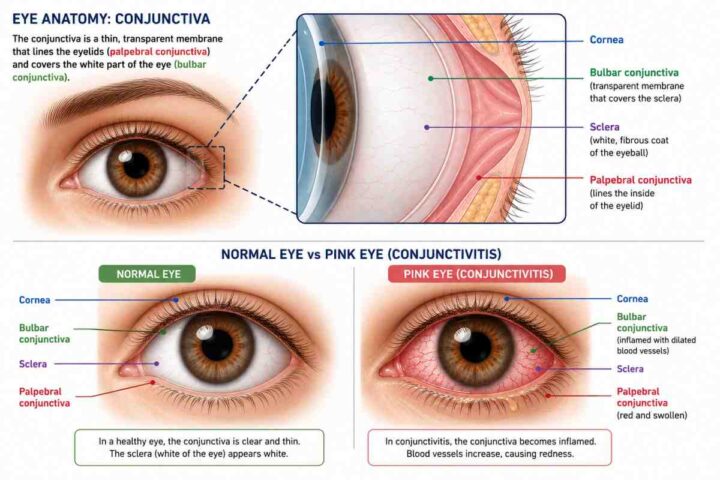
When irritants, infectious organisms, or allergens enter the eye, the conjunctiva acts as a protective barrier that traps and destroys these foreign bodies, allowing tears to wash them away. However, this triggers an immune reaction against the offending agent or microorganism, resulting in the redness of the eyes, itching, watery or purulent discharge, and other symptoms depending on the specific cause.
Apollo Signs and Symptoms
One of the most common symptoms of Apollo eye disease is eye redness or pink eye, but the severity of the redness can vary depending on the specific cause and degree of conjunctival haemorrhages caused by the infection/irritation. Other signs and symptoms of Apollo include a gritty or sandy sensation in the eye, itchy eyes, and watery eyes.1Centers for Disease Control and Prevention. (2024, April 15). Clinical overview of pink eye (conjunctivitis). U.S. Department of Health and Human Services. https://www.cdc.gov/conjunctivitis/hcp/clinical-overview/index.html
The common signs and symptoms of Apollo include:
- Red eye
- Watery or teary eye
- A gritty or sandy sensation
- Increased sensitivity or disturbance to light
- Eye discharge
- Eyelid sticking together after waking up from sleep
- Itching, burning, or irritation
- Swollen eyelids
- Crusting around the eyelashes
Apollo may affect one or both eyes. It may begin with one eye and later spread to the other eye, particularly if it is infectious. The specific symptoms or combination of symptoms of Apollo depends on the type of conjunctivitis.
How to Distinguish the Types of Apollo
While Apollo is often used loosely for any red eye, certain symptoms or symptom patterns can provide helpful clues about the type of conjunctivitis.
- Viral conjunctivitis: Watery discharge with a gritty or burning sensation is often seen in viral conjunctivitis. It often starts with one eye and may spread to the other, and there may be associated flu or common cold symptoms.
- Bacterial conjunctivitis: Thick yellow, white, or greenish discharge is more suggestive of bacterial conjunctivitis. The discharge may cause the eyelids to stick together after waking from sleep. It can affect one or both eyes, or spread to the other if only one eye was initially involved.
- Allergic conjunctivitis: Intense itching and watering in both eyes are more suggestive of allergic conjunctivitis. There may be associated sneezing, nasal itching, or runny nose, which are in keeping with an allergic reaction.
| Symptom | Viral conjunctivitis | Bacterial conjunctivitis | Allergic conjunctivitis |
|---|---|---|---|
| Causes | Adenovirus, enteroviruses, etc | Streptococcus, chlamydia, etc. | Allergens |
| Typical discharge | Watery | Thick and purulent | Watery |
| Itching eyes | Usually not prominent | Usually not prominent | Often Intense |
| Contagious or not | Yes | Yes | No |
| Eyes affected | Often begins in one | One or both | Usually both |
| Associated features | Cold-like symptoms | Sticking eyelids on waking | Sneezing or runny nose |
Table comparing the symptoms of the three common types of conjunctivitis
This is not a definitive guide to diagnosing the type of conjunctivitis because in some cases, the symptoms can overlap. Thus, you may need to see your doctor for proper examination, diagnosis, and treatment.
What Causes Apollo (Conjunctivitis)
Apollo eye infection, medically known as conjunctivitis, occurs when the conjunctiva becomes inflamed. This inflammation results when bacteria, viruses, foreign bodies, or allergenic substances enter the conjunctiva, leading to eye redness and other symptoms of conjunctivitis.
While many people use Apollo for all forms of conjunctivitis, the specific cause of Apollo depends on the type of conjunctivitis. In this section, we will take a look at the different causes of conjunctivitis or Apollo eye infection.
1. Viral conjunctivitis
Viruses are among the most common causes of infectious conjunctivitis. These include adenoviruses (commonest – 65 to 90% of viral causes), enteroviruses, and Coxsackie virus.2Hashmi MF, Gurnani B, Benson S. Conjunctivitis. [Updated 2024 Jan 26]. In: StatPearls [Internet]. Treasure Island (FL): StatPearls Publishing; 2026 Jan-. Available from: https://www.ncbi.nlm.nih.gov/books/NBK541034/
Adenoviruses also produce respiratory symptoms such as the common cold and sore throat, while enteroviruses and Coxsackie virus are associated with acute hemorrhagic conjunctivitis. Herpes simplex and varicella-zoster viruses can also cause conjunctivitis; thus, conjunctivitis requires prompt medical evaluation.3Ibid., Hashmi MF, Gurnani B, Benson S. Conjunctivitis.
2. Bacterial conjunctivitis
Bacterial conjunctivitis is caused by bacterial infection of the conjunctiva. Examples of common bacteria in these cases include Staphylococcus aureus, Streptococcus pneumoniae, Haemophilus influenzae, Moraxella, Chlamydia, and Neisseria species.
Chlamydia trachomatis and Neisseria gonorrhoeae are sexually transmitted infections that can also cause conjunctivitis when they enter the eye. Gonococcal conjunctivitis (N. gonorrheoae) is a medical emergency because it can progress rapidly, lead to corneal perforation, blindness, and systemic infection if not treated immediately.4EyeWiki. (2026, July 21). Bacterial conjunctivitis. https://eyewiki.org/Bacterial_Conjunctivitis5Elsevier. (n.d.). Gonococcal conjunctivitis. ScienceDirect Topics. Retrieved September 13, 2026, from https://www.sciencedirect.com/topics/medicine-and-dentistry/gonococcal-conjunctivitis
3. Allergic conjunctivitis
Allergic conjunctivitis occurs when the body reacts to normally harmless environmental substances known as allergens. Common triggers include:
- Dust
- Pollen
- mould spores
- Animal dander
- Eye cosmetics
- Certain eye drops
- Contact lens solutions, etc
Allergic conjunctivitis has a seasonal pattern, but it can occur throughout the year. In Nigeria, the dry, dusty Harmattan season may aggravate symptoms in susceptible individuals, especially people with a history of allergies. Some people experience flare-ups during the early rains when there is high exposure to pollens and molds.
4. Chemical and environmental irritants
Contact with irritants can also cause inflammation of the conjunctiva. These include chemicals and environmental irritants as follows:
- Chlorine
- Smoke
- Air pollutants
- Shampoo or cosmetics
- Household cleaning products
- Industrial chemicals, etc.
How is Apollo Transmitted?
All types of conjunctivitis are not transmitted in the same way. Viral and bacterial conjunctivitis are infectious (that is, can spread from one person to another), while allergic and chemical/irritant conjunctivitis are not.
Apollo eye infection is mainly transmitted when bacteria or viruses from an infected person enter the eyes of another person. This is commonly through contact with hands or objects contaminated with infected eye discharge, tears, or respiratory secretions.
Here, we see the different modes through which Apollo eye infection is transmitted.
1. Hand-to-eye contact
A person with infectious conjunctivitis may touch or rub the affected eye with their hands. They may directly pass the infection to others when they shake hands, or indirectly through touching a shared surface without washing their hands. The infection may then spread to the uninfected person when they touch their eyes with the contaminated hands.
2. Contact with contaminated objects
Contaminated objects that make contact with the eyes can transmit infectious conjunctivitis. Examples include:
- Towels and washcloths
- Pillowcases and bed linen
- Eye makeup and cosmetic applicators
- Contact lenses and lens cases
- Eyeglasses
- Mobile phones
Due to this, avoid sharing the above objects during an active infection to avoid transmission.
3. Airborne transmission
Apollo eye infection can also be transmitted via airborne droplets from individuals with a respiratory infection. Recall that adenoviruses can also cause respiratory infections like the common cold. Thus, large respiratory droplets containing these viruses can land in the eyes when infected individuals cough or sneeze.6Centers for Disease Control and Prevention. (2024, April 15). Clinical overview of pink eye (conjunctivitis). U.S. Department of Health and Human Services. https://www.cdc.gov/conjunctivitis/hcp/clinical-overview/index.html
Airborne transmission of conjunctivitis is particularly common in overcrowded places like schools, hostels, workplaces, and homes. Transmission via hand-to-eye and contact with contaminated objects is also common in crowded conditions because people frequently share spaces and touch common surfaces.7Mbonile L. Acute haemorrhagic conjunctivitis epidemics and outbreaks of Paederus spp. keratoconjunctivitis (“Nairobi red eyes”) and dermatitis. South African Medical Journal. 2011;101(8):541–543.8Lay, K., Chukmol, K., Chea, G., et al. (2026). Acute haemorrhagic conjunctivitis outbreak attributed to coxsackievirus A24 in Ratanakiri, Cambodia, 2023. Western Pacific Surveillance and Response Journal.
4. Spread from one eye to the other
Apollo may begin from one eye and spread to the other via rubbing or touching the unaffected eye without washing your hands. It can also spread via washclothes or cotton pads used to clean the affected eye.
5. Sexual contact
Sexually transmitted bacterial infections like Chlamydia trachomatis and Neisseria gonorrhoeae can infect the eyes when contaminated genital secretions come in contact with it. Sexual transmission of conjunctivitis may occur through direct contact of the eye to genital secretions or through contact with hands contaminated with these secretions.
To reiterate, gonococcal conjunctivitis is considered a medical emergency because it may progress rapidly within a hours and damage the cornea. It is characterised by copious purulent discharge described as “fountain of pus”, marked eyelid swelling, and/or severe eye pain.
6. Mother-to-child exposure
Gonococcal conjunctivitis is also common in newborns of mothers with Neisseria gonorrhoeae infection. During the birth process, infectious genital secretions from the mother can contaminate and infect the eyes of the newborn to cause conjunctivitis.
This condition is known as Ophthalmia neonatorum and is best prevented through careful screening during antenatal visits, prophylaxis using Erythromycin eye ointment, and prompt treatment using parenteral antibiotics.
Other (milder) causes of conjunctivitis in newborns include blocked tear ducts and irritation by prophylactic eye drops administered after birth.9Centers for Disease Control and Prevention. (2024, April 15). Pink eye in newborns. https://www.cdc.gov/conjunctivitis/newborns/index.html
Treatment of Apollo Eye Disease
The appropriate treatment for Apollo eye infection depends on the specific cause, whether viral, bacteria, allergic, or irritant. While eye drops are useful in the treatment of Apollo, there is no single “best eye drop” for every red eye. And using the wrong medications, particularly steroid-containing eye drops, can worsen certain eye conditions.
As mentioned earlier, several other conditions such as glaucoma, keratitis, and corneal ulcers can also cause red eye. Thus, it is important to seek medical evaluation if you are experiencing significant eye pain, sensitivity to light, intense redness, copious discharge, or reduced vision.
Here are the treatment options tailored to specific causes of conjunctivitis.
Treatment of viral conjunctivitis
Most viral apollo eye diseases are self-limiting and usually resolve on their own with supportive treatment. These treatments include applying artificial tear drops, cold compresses, eye hygiene, and avoiding excessive scratching.
Antibiotic eye drops are not recommended for viral conjunctivitis because antibiotics have no effect against viruses. It usually clears up within 7 to 14 days without any specific treatment, and without any long-term complications. However, some viral conjunctivitis cases can take 2 to 3 weeks or more to clear up.10Centers for Disease Control and Prevention. (2024, April 15). How to treat pink eye. https://www.cdc.gov/conjunctivitis/treatment/index.html
Antiviral medications may be required for the treatment of serious forms of viral conjunctivitis, such as those caused by herpes simplex virus or varicella-zoster virus. These are characterised by significant eye pain, marked light sensitivity, reduced vision, and facial blisters or rash near the eye.
Treatment of bacterial conjunctivitis
Mild bacterial conjunctivitis may resolve within 2 to 5 days without treatment but can take 2 weeks to completely resolve.11Ibid., CDC. How to Treat Pink Eye | Conjunctivitis (Pink Eye) Supportive care tips like washing the eyes to remove any discharge and avoidance of itching may also be helpful.
A healthcare professional may prescribe antibiotic eye drops or ointment when it persists. Antibiotic eye drops are also recommended when the patient is immunocompromised or certain bacteria like Chlamydia or Gonorrhea are suspected. In some of these cases, systemic antibiotics may be required together with topical eye drops.
The choice of antibiotics and dosing depends on the patient’s age and suspected organism. Your doctor will be able to make a specific diagnosis after clinical evaluation and some investigations. Lastly, recall that gonococcal conjunctivitis is an eye emergency due to how rapidly it can progress and damage the cornea.
Treatment of allergic conjunctivitis
The treatment of allergic conjunctivitis involve reducing exposure to the allergen and suppressing the allergic reaction. These measures may include:
- Washing the eye with low-pressure water jet
- Applying a cool compress over the eyes
- Using artificial tears to wash off allergens from the eye
- Using an appropriate antihistamine or mast-cell-stabilizing eye drop following prescription by a healthcare professional
- Steroid eye drops should only be used after a healthcare professional has excluded other causes of red/pink eyes like glaucoma or keratitis.
Treatment of chemical/irritant conjunctivitis
Chemical or irritant conjunctivities is primarily treated by immediately irrigating the affected eye with plenty of clean, lukewarm water under a running tap for at least 20 minutes. Remove any glasses or contact lenses during irrigation.
Where a running tap is not available, gently pour water continuously on the affected eye through the side of the eyes with the head turned to one side. Continue for at least 20 minutes or until the irritation reduces.
While minor irritation may improve following eye irrigation, exposure to strong, corrosive chemical is an eye emergency. Irrigation should be continued even when the patient is being taken to the hospital for urgent medical treatment.
| Type | Treatment that may be used |
|---|---|
| Viral | Artificial tears and supportive care |
| Bacterial | Supportive care and antibiotics when prescribed or clinically indicated |
| Allergic | Antihistamine or mast-cell-stabilizing drops |
| Chemical exposure | Immediate irrigation and urgent medical assessment |
| Herpes-related | Prescription antiviral treatment |
Summary of treatments for different types of conjunctivitis
Prevention and Supportive Home Care Tips
Here are some preventive ans supportive care tips for Apollo eye infection.
- Practice regular hand hygiene by washing your hands regularly before and after touching your face
- Avoid sharing towels or cosmetics with someone who has Apollo
- Avoid known allergens or triggers
- Wear safety goggles when exposed to dry and dusty weather
- Use preservative-free artificial tears to keep the eye moist and prevent dryness and irritation
- Avoid rubbing the eyes with your hands, especially when one eye is infected
- Remove contact
- Cold compress over itchy eyes in allergic conjunctivitis
- Avoid contact lenses until the symptoms have resolved and an eye-care professional says it is safe to resume
Common Myths About Apollo Conjunctivitis
Poor knowledge of the types and causes of Apollo eye disease has led to several misconceptions about the condition. This short section debunks some common myths about Apollo eye infection or conjunctivitis.12American Academy of Ophthalmology. (2023, April 27). Pink eye: Quick home remedies. https://www.aao.org/eye-health/diseases/pink-eye-quick-home-remedies
- Apollo is caused by looking at bright light: Apollo is not caused by looking at bright light. It is caused by eye contact with infectious organisms, including bacteria, viruses, and fungi, or irritants like allergens and irritant chemicals.
- Apollo is transmitted when you look into the eyes of an infected person: Apollo cannot be transmitted merely be looking at the eyes of someone who has it. Transmission is usually through contaminated hands, objects, eye secretions, or respiratory droplets.
- Every red eye is Apollo: There are other causes of red eyes other than conjunctivitis or Apollo. These include glaucoma, corneal ulcer, keratitis, etc.13Malu K. N. (2014). Allergic conjunctivitis in Jos, Nigeria. Nigerian medical journal: journal of the Nigeria Medical Association, 55(2), 166–170. https://doi.org/10.4103/0300-1652.129664
- Antibiotics are useful for all Apollo: Antibiotic eye drops are only useful in Apollo caused by bacteria. Viral, allergic, and chemical conjunctivitis does not respond to antibiotic treatment.
- Urine cures Apollo: Applying urine to the eyes during Apollo can worsen the condition. Urine does not cure Apollo and it can also potentially introduce other infections to the eye.
- Breast milk cures Apollo: Breast milk does not have an antibacterial effect when used on the eyes. And it may also introduce new organisms that can worsen the existing eye infection.14Baynham JTL, Moorman MA, Donnellan C, et al. Antibacterial effect of human milk for common causes of paediatric conjunctivitis. British Journal of Ophthalmology 2013;97:377-379
- Salt water cures Apollo: Salt water does not cure or soothe Apollo. It may worsen it by causing local irritation, inflammation, and potentially introducing particulate matter into the eye.
- Herbal extracts are helpful: Herbal extracts are not sterile. They may worsen the eye infection if introduced directly into the eyes.
When To See a Doctor for Apollo Eye
Most cases of Apollo eye disease are mild and will resolve within 7-10 days with supportive home treatment. However, you should seek prompt medical treatment if you experience the following:
- Moderate or severe eye pain
- Significant sensitivity to light (photophobia)
- Blurred vision that does not improve after wiping off the discharge
- Intense redness or rapidly progressive symptoms
- Copious eye discharge or “fountain of pus”
- Severe eyelid swelling, with associated fever or difficulty moving the eye
- Symptoms following physical trauma or chemical exposure
- Worsening of symptoms
- No improvement after 24 hours of prescribed antibiotic eye drop
- Red or pink eye in a newborn
- Loss of vision
- Pink eye in someone who is immunocompromised
Why is Conjunctivitis called Apollo?
Conjunctivitis is popularly called Apollo in some West African countries including Nigeria and Ghana because the first major outbreak of conjunctivitis in 1969 coincided with the same year the historic Apollo 11 spacecraft landed the moon. This outbreak involved Accra, Ghana, and later spread throughout the region, involving Nigeria, the Ivory Coast (Côte d’Ivoire), Togo, The Gambia, and Senegal, between 1969 and 1970.
The Apollo outbreak was an Acute Hemorrhagic Conjunctivitis (AHC) caused by Enterovirus 70 and Coxsackie virus A24. These viruses trigger intense conjunctival inflammation that causes rupture of the conjunctival vessels and subsequent bleeding under the conjunctiva.
Though Apollo eye disease was originally viral conjunctivitis, this term is now popularly used for all forms of infective red eyes, including bacterial, viral, and allergens. It is because of this misnomer that this post is highly necessary.
Frequently Asked Questions
How long does Apollo last
Apollo pink eye typically lasts between 5 and 10 days for viral infections and 3 to 5 days for bacterial cases with proper antibiotic treatment. Rubbing the eyes or scratching them often can prolong the duration and cause other complications, like corneal scarring. Thus, treatment should focus on relieving the symptoms and promoting healing.
How long is Apollo contagious?
The contagious period varies according to the cause, but infectious conjunctivitis usually spreads when the eye is actively producing discharge. Individuals should practice strict hand hygiene, avoid sharing personal items, and follow advice from a healthcare professional to avoid transmitting the infection to other people.
Can Apollo cause blindness
Apollo (conjunctivitis) does not typically cause blindness because most cases are self-limiting. In addition, treatment exists to prevent any complications before they occur.
What is the best treatment for Apollo?
The best treatment for Apollo depends on its cause. Most viral conjunctivitis resolves without specific treatment and with supportive care. Bacterial conjunctivitis may require prescribed antibiotics, while allergic conjunctivitis may improve with antihistamine eye drops and supportive care.
Which eye drops are used for Apollo?
The appropriate eye drop from Apollo depends on the underlying cause. Artificial tear drops are useful for dry eyes and in cases of allergic conjunctivitis. Antibiotic eye drops can be used for bacterial conjunctivitis when prescribed. Antihistamine and mast-cell-stabilizing eye drops are helpful for allergic conjunctivitis.
No single eye drop treats every case of Apollo eye infection. Steroid-containing drops should only be used under the supervision of an eye-care professional.
When should I see a doctor for Apollo eye infection?
You should seek prompt medical attention if you have eye pain, significant sensitivity to light, severe redness, copious purulent discharge, or blurry vision that persists even after wiping away discharge. Suspected cases of conjunctivitis transmitted via sexual contact or exposure to strong chemicals also require prompt medical assessment.
Final words
Apollo eye infection is medically known as conjunctivitis. It is a common cause of red, discharging eyes. Although most cases are mild, the appropriate treatment depends on whether it is caused by virus, bacteria, allergen, or chemical irritant.
Not every red eye is conjunctivitis, and thus, medical attention should be drawn in cases involving atypical symptoms like eye pain and blurry vision. Home remedies such as urinr, breast milk, or herbal extracts should nto be applied directly into the eyes.
If you found this guide helpful, share with with your friends and family to help correct common misconceptions about Apollo eye infection. You can also leave a comment below if you have a general question about conjunctivitis, but don’t forget to consult a qualified professional if you have persistent eye symptoms or concerns about your vision.
References
| ↑1, ↑6 | Centers for Disease Control and Prevention. (2024, April 15). Clinical overview of pink eye (conjunctivitis). U.S. Department of Health and Human Services. https://www.cdc.gov/conjunctivitis/hcp/clinical-overview/index.html |
|---|---|
| ↑2 | Hashmi MF, Gurnani B, Benson S. Conjunctivitis. [Updated 2024 Jan 26]. In: StatPearls [Internet]. Treasure Island (FL): StatPearls Publishing; 2026 Jan-. Available from: https://www.ncbi.nlm.nih.gov/books/NBK541034/ |
| ↑3 | Ibid., Hashmi MF, Gurnani B, Benson S. Conjunctivitis. |
| ↑4 | EyeWiki. (2026, July 21). Bacterial conjunctivitis. https://eyewiki.org/Bacterial_Conjunctivitis |
| ↑5 | Elsevier. (n.d.). Gonococcal conjunctivitis. ScienceDirect Topics. Retrieved September 13, 2026, from https://www.sciencedirect.com/topics/medicine-and-dentistry/gonococcal-conjunctivitis |
| ↑7 | Mbonile L. Acute haemorrhagic conjunctivitis epidemics and outbreaks of Paederus spp. keratoconjunctivitis (“Nairobi red eyes”) and dermatitis. South African Medical Journal. 2011;101(8):541–543. |
| ↑8 | Lay, K., Chukmol, K., Chea, G., et al. (2026). Acute haemorrhagic conjunctivitis outbreak attributed to coxsackievirus A24 in Ratanakiri, Cambodia, 2023. Western Pacific Surveillance and Response Journal. |
| ↑9 | Centers for Disease Control and Prevention. (2024, April 15). Pink eye in newborns. https://www.cdc.gov/conjunctivitis/newborns/index.html |
| ↑10 | Centers for Disease Control and Prevention. (2024, April 15). How to treat pink eye. https://www.cdc.gov/conjunctivitis/treatment/index.html |
| ↑11 | Ibid., CDC. How to Treat Pink Eye | Conjunctivitis (Pink Eye) |
| ↑12 | American Academy of Ophthalmology. (2023, April 27). Pink eye: Quick home remedies. https://www.aao.org/eye-health/diseases/pink-eye-quick-home-remedies |
| ↑13 | Malu K. N. (2014). Allergic conjunctivitis in Jos, Nigeria. Nigerian medical journal: journal of the Nigeria Medical Association, 55(2), 166–170. https://doi.org/10.4103/0300-1652.129664 |
| ↑14 | Baynham JTL, Moorman MA, Donnellan C, et al. Antibacterial effect of human milk for common causes of paediatric conjunctivitis. British Journal of Ophthalmology 2013;97:377-379 |













You Might Also Like