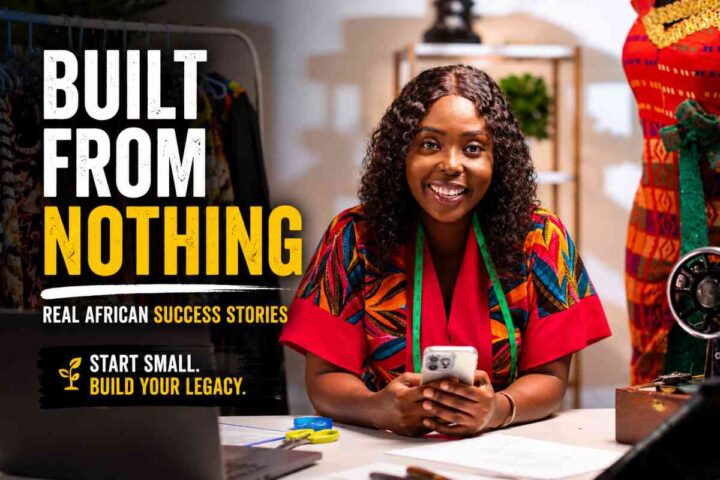
While most people blame their environment and limited resources for not finding success, there are several stories of people who built success from scratch. Among these, some notable African entrepreneurs have proven what it means to start from the ground up.
The African continent is arguably one of the most challenging environments in the world. This is due to factors relating to a lack of structured economies, the presence of multiple overlapping regulatory roadblocks with duplicated functions, among others.1Bawole, J. N., & Langnel, Z. (2023). Corruption-Induced Inhibitions to Business: What Business Leaders Have to Say in Ghana. Journal of African Business, 24(1), 59–76. https://doi.org/10.1080/15228916.2021.2018226 But through practical knowledge, dedication, and innovation, some African entrepreneurs have surmounted these challenges to build billion-dollar empires from almost nothing.
You may want to ask, what do they know that others don’t? In this post, we are not just listing names, but we will x-ray the peculiar mindsets that set these people apart, and how you can succeed too.
Why Success Feels Hard (Especially in Africa)
Achieving success is not easy anywhere in the world, including Africa. This is because success doesn’t often follow a straightforward path. It takes resilience and persistence to wait long enough to see results.
In Africa, there seem to be other challenges that make it even harder to achieve desired results in business. These include:
- Political bottlenecks from harsh business policies, poor provision of basic amenities for sustainable entrepreneurial development, security issues, and corrupt practices.
- Lack of support for growing businesses.
- Poor access to financial support for startups, including venture capitalist funds.
- Increasing reliance on imports with consistent local currency depreciation.
But despite the above challenges, Africa has a lot of untapped business opportunities compared to the diaspora. This is so much so that the continent has often been regarded as a “fallow ground” for business development.
With the right mindset, perseverance, and sound business acumen, several African entrepreneurs have successfully built mega businesses from scratch, and you can too.
7 Entrepreneurs Who Built Success From the Ground Up
Luck is not what separates entrepreneurs who have built success from the ground up from those who remain stuck. It’s also not about perfect timing or having unlimited resources. The difference is in how they think, act, and respond to challenges.
Let’s take a closer look at 7 African entrepreneurs who built their way to the top.
Aliko Dangote — Started Small, Scaled Big

Aliko Dangote, regarded as the richest man in Nigeria and Africa, didn’t begin with a massive empire. He started by trading food products, then moved into cement production, cargo business, and now into crude oil refining and petrochemicals.
Although raised in an influential business family, his father donated his inheritance to charity after his death in 1965, leaving him with only his will and determination to succeed. With a clear vision and strong entrepreneurial acumen, he acquired a loan from his maternal uncle with which he built his business empire today.
Dangote’s success in business stems from several secrets, but one highly profound strategy is his openness to see opportunities in Africa and Nigeria that most people fail to see. This is why he once said, “Nigeria is one of the best-kept secrets”.
- You can be successful anywhere you are if you focus on the opportunities around you.
- Startup capital should not deter you from making your business plans. You can only see opportunities when you are prepared for them.
- To act big, you must first think big. This means you should be open enough to see the possibilities, even if others might not agree with you.
2. Mike Adenuga — Saw an Opportunity and Took It

Michael Adeniyi Adenuga is one of the most successful businessmen in Nigeria today, but he definitely wasn’t always where he is today. He is another proof that a single opportunity can change one’s life and put one in the spotlight of great achievers.
After completing his education, he returned to Nigeria and took over his family’s businesses, lumber, machinery trading, fabric, beer, and beverage businesses. Though these were remarkable businesses, Mike achieved his biggest breakthrough when he seized the golden opportunity to establish Consolidated Oil Limited (Conoil) in 1984.
At that time, the government opened up the oil industry for private individuals. And when he saw this opportunity, he placed a bid for an oil field, which he won. Later on, he went on to establish Globacom Telecommunications and other business ventures.
Here are some powerful business lessons you can learn from his life.
- Luck comes from hard work, purpose, and perseverance.
- Opportunities are available to everybody, but only a few seize them when they come.
- Adding innovation to all you do is what makes the difference. It is dangerous to remain where you are in this ever-changing world.
3. Adenike Ogunlesi — When Passion Meets Success
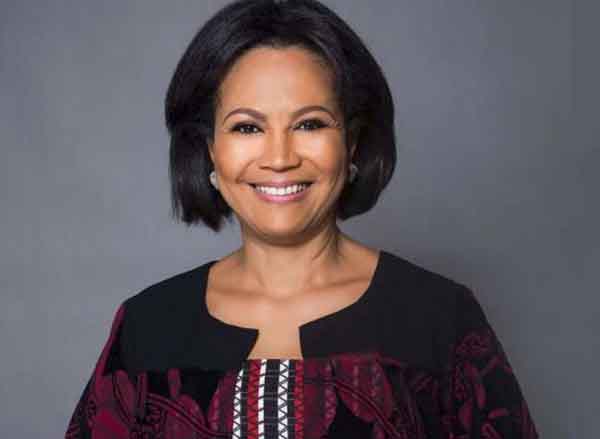
Adenike Ogunlesi was born in 1959 to a Scottish mother, Elizabeth Okuboyejo, and a Yoruba father who was a medical doctor. Her entrepreneurial journey demonstrates how being passionate can take you on your journey to success.
Her mother was a fashion entrepreneur who not only popularized the Nigerian Adire fabric but also empowered women to create innovative designs to make it stand out.
Influenced by her father, she initially studied law at Ahmadu Bello University, Zaria, but decided to drop out to follow her own passions. Then, she went back to join her mother’s fashion business because she felt Law would not give her the satisfaction she desired.
In 1996, she started her own company, Ruff ‘n’ Tumble, a Nigerian clothing brand that specializes in children’s apparel. She started from the boot of her car and today has over 15 branches across Nigeria.
Her success teaches that through passion, you can build great success from the ground up.
- Doing what you are passionate about can help you become successful because passion can fuel your motivation and determination even when it doesn’t seem rewarding.
- “Whether you are limited by funds and lack of access to investors, tenacity of purpose will always reign supreme as long as you are building on a viable business model,” she once said.
- In addition to a viable business plan, plan towards growth and innovation.
4. Sibongile Sambo — From Nothing to a First

Sibongile Sambo was born in Bushbuckridge, Mpumalanga, South Africa, in 1974. She showed an interest in aircraft at an early age and wondered if she could someday fly one herself, but her story was one that proves that nothing can stop your dream if you stay focused on it.
To follow her aviation dreams, she applied for a flight attendant job at South African Airways but was rejected due to their height requirements. Eventually, she got employed in the human resource department in several companies, including Telkom, De Beers Consolidated Mines, and City Power.
However, in 2003, when the South African Government passed the Black Economic Empowerment Act to redress the economic inequalities caused by apartheid and enable people from previously disadvantaged backgrounds to enter and participate in economic life as entrepreneurs, Sibongile saw an opportunity to fulfil her aviation dreams. She borrowed her mother’s pension money and took a loan from her aunt to start an aviation business to link people and businesses to aviation services.
Despite insufficient capital, getting rejected, and having no prior aviation experience, she grew from an aviation services brokerage business to establishing her own aviation company, SRS Aviation, becoming the first and only black woman to own an aviation company in Africa at the time.
- You can succeed in business if you follow your passions without relenting.
- Again, opportunities come to those who are ready to see them.
- You can get support and assistance when you are seen doing something. Nobody will notice you if you don’t do anything.
5. Bethlehem Tilahun Alemu — From Local to Global
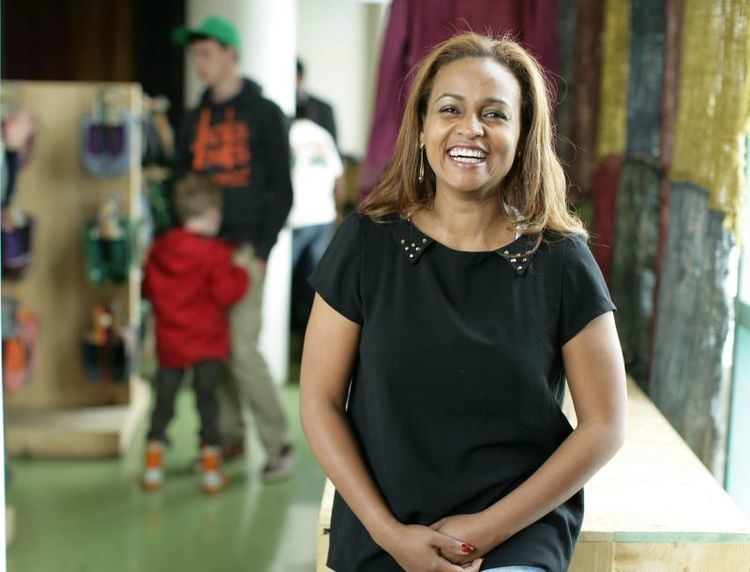
Bethlehem Tilahun Alemu was born and raised in the Zenebework area of Addis Ababa, Ethiopia. Her parents worked at a local hospital in Zenebework; her father was an electrician while her mother worked as a cook in the hospital kitchen. Yet, she was determined to create a legacy in Ethiopia.
Zenebework area is regarded as one of the most densely populated and slum-like areas in Ethiopia. While this area had a lot of charity “brands”, it had no global brand, and Bethlehem was passionate to change that.
Seeing that her small community had many skilled artisans who were living in chronic unemployment, she wanted to showcase their skills and offer them employment. In early 2005, Bethlehem founded soleRebels to provide ecologically and economically sustainable jobs for her community.
SoleRebels specializes in shoes with soles made from recycled car tyres. Today, the company has stores in several countries, including Ethiopia, Singapore, Switzerland, and Taiwan, making it Africa’s fastest-growing footwear company.
She also launched “The Republic of Leather”, which designs sustainable luxury leather goods, and “Garden of Coffee”, retail outlets to promote Ethiopian coffees.
Her story exemplifies the following lessons:
- You don’t need a global setup to build a global business. Start with what you have and scale it up strategically.
- Focus first on solving real problems, not just making a profit. That is what the best businesses do.
- Resourcefulness beats capital. Even with little capital, with creativity and resourcefulness, you soon realize that all you need is already around you.
6. Divine Simbi Ndhlukula
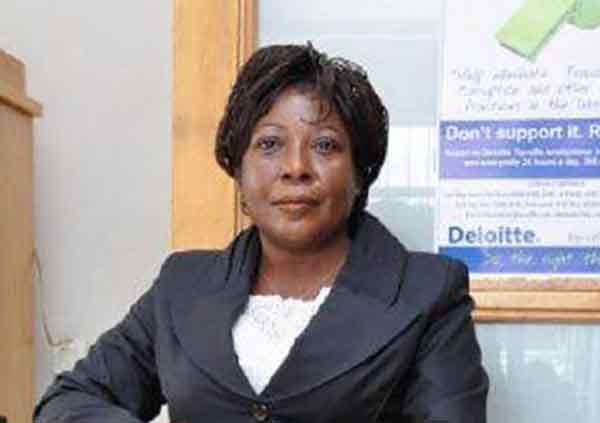
Born in rural Gutu, Zimbabwe, in 1960, to Mary and Piniel Simbi, Divine Ndhlukula grew up determined to excel in business.
She saw her future in business and pursued business education, obtaining an Executive MBA at Midlands University, an MBA, and a PhD in Business Leadership at the Women’s University in Africa. In 1995, she enrolled in an Entrepreneurial Development Programme to learn the critical elements of running a business.
In 1998, she founded SECURICO, a security firm in Zimbabwe. With only four employees in a cottage, she grew SECURICO into a present-day market-leading security firm.
Through her journey, she faced several challenges, the first of which involved trying to navigate the patriarchal barriers in a male-dominated industry. Her business also survived the economic crisis in post-2000 Zimbabwe. In 2001, she lost her husband to renal failure. That same year, their only operations manager at SECURICO was attacked by criminals on his way home, and he succumbed to death a few days later.
Despite all of these, her resilience allowed her to build SECURICO into a multimillion-dollar company today. Her success story demonstrates how one can achieve success through determination and persistence. She acknowledges that to achieve success, one must keep going despite the challenges.
7. Tabitha Karanja
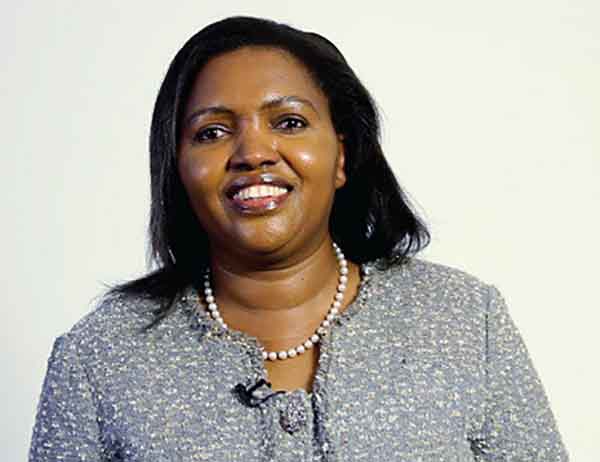
Tabitha Karanja is a Kenyan businesswoman and industrialist known for being the founder of Kenya’s first indigenous multinational brewery. She is the first child in a family of ten. Her father was a government driver, while her mother was a farmer, but they were determined to train their children through school.
After obtaining a Bachelor’s degree in Business Administration from the University of Nairobi, she was employed as an Accounting Clerk in the Ministry of Tourism, Kenya. But two years later, she quit her job to establish a kitchen hardware business, which she later closed in 1997. That same year, she co-founded Keroche Breweries with her husband, specializing in the production of fortified wine, spirits, and beer.
Today, Keroche Breweries has remained significant as the first non-multinational, locally owned brewery in Kenya, breaking an 80-year monopoly in the liquor market.
Some of the inspiring lessons her story teaches include:
- Develop the courage to venture into your business ideas even when everyone else is afraid to do so.
- Dream big and keep doing so.
- Challenges can come in the course of any business, but never give up. Resilience and fortitude are essential qualities to have.
What Did These 7 Entrepreneurs Do Differently?
The above entrepreneurs didn’t achieve success because they were just lucky. There is a repeatable pattern you can adapt to and become successful in.
This section explores some insightful qualities that set them apart from most other people. You can copy these.
1. They Started Before They Were Ready
While capital is important, building a successful business begins with a plan and the determination to succeed. Every entrepreneur discussed in this post began with little capital and scaled up from there. In addition, you don’t have to know everything or feel fully ready before starting.
For example, Ogunlesi started from a car boot, which was not exactly where she saw her business in a few years. Dangote took a small trading loan to scale up his existing businesses. And Sibongile had no aviation experience before starting her air brokerage business, which later morphed into SRS Aviation.
While most people wait till everything is ready, they didn’t wait. Thus, if you have a business idea today, now is a great time to start doing something, no matter how small.
2. They Were Open to Opportunities Others Ignored
Opportunities come every day, but very few people are open to them. The quality of being open to opportunities is what sets high achievers in business apart from those who remain on the spot.
From Adenuga, who seized the opportunity to explore oil, to Sibongile, who exploited the policy change, to Dangote, who saw an opportunity in cement production, their successes are proof that opportunities are visible to those prepared for them.
3. They Took Calculated Risks
Another quality that sets these entrepreneurs apart is their openness to taking calculated risks. A calculated risk is a strategic and deliberate business decision made after thorough assessment of the potential hazards, probabilities of success, and potential rewards. It involves using data, experience, and foresight to weigh the pros and cons before embarking on the venture.
Dangote has once talked about the willingness to take calculated risks and why entrepreneurs should do so. Adenuga, Sibongile, and Tabitha also exemplified this quality. For example, Tabitha left her job to enter a competitive industry because she had weighed the risk and found it worth taking.
Sometimes, growth requires stepping into uncertainty, particularly when you are sure that there is a significant chance of finding success long-term.
4. They Didn’t Let Their Environment Define Them
No doubt, Africa has a harsh business environment due to a lack of funding, support, and infrastructure. In addition, specific individual and family situations can potentially deter people from achieving their full potential.
These successful African entrepreneurs didn’t let their immediate environment deter them from pursuing their entrepreneurial goals. Divine Ndhlukula and Tabitha Karanja were women who pursued their passion against the patriarchal barriers against women in male-dominated industries.
The environment is an important factor, but it is never an excuse for those who are determined to achieve success.
5. They Focused on Solving Real Problems
The most successful entrepreneurs are those who identify and solve real problems, and not just chase profits. This problem-solving mindset helps you stay focused even before achieving success. And this keeps you prepared for opportunities when they come.
Notable examples include Bethlehem Alemu, who built a multinational company by solving the problem of tire dumping and its ecological impact. Tabitha and Dangote broke the foreign monopoly by focusing on local production, while amassing wealth in the process.
Rather than focusing only on making money, focus on providing value to people and solving real problems.
6. They Stayed Consistent Through Challenges
Becoming successful requires passion and perseverance. Loss, crisis, rejection, and failure before success are common in most business ventures, but resilience is what helps you sail beyond that face and achieve success.
Take a look at Divine Ndhlukula, who lost her husband, her manager, and also faced a serious economic crisis in Kenya. Despite all that, she remained resilient, and it paid off eventually.
When everything seems rough and uncertain, resilience and consistency outlast the difficulty.
7. They Thought Long-Term, Not Just Survival
Long-term thinking allows you to build systems and structure rather than just hustling to survive. Most of these entrepreneurs demonstrated long-term thinking rather than just making ends meet.
For example, Dangote met his major success when he moved into manufacturing. Adenuga designed a framework that could allow him to diversify later. And Ogunlesi put structures in place to scale her business beyond the boot of her car.
Short-term thinking limits growth, but thinking long-term gives you a clear direction about what you want to achieve.
Final Words
These stories prove that it is possible to build great business empires from almost nothing. While many people think Africa is not a favourable place to do great things, these entrepreneurs have shown that one can make something out of nothing.
You may not have everything figured out. You may not have the resources, the connections, or the perfect plan you need. But neither did these entrepreneurs. It turns out that you need your determination more than anything else.
Which of these stories challenged you the most? Let me know what you learnt from it in the comment section below.
References
| ↑1 | Bawole, J. N., & Langnel, Z. (2023). Corruption-Induced Inhibitions to Business: What Business Leaders Have to Say in Ghana. Journal of African Business, 24(1), 59–76. https://doi.org/10.1080/15228916.2021.2018226 |
|---|














You Might Also Like