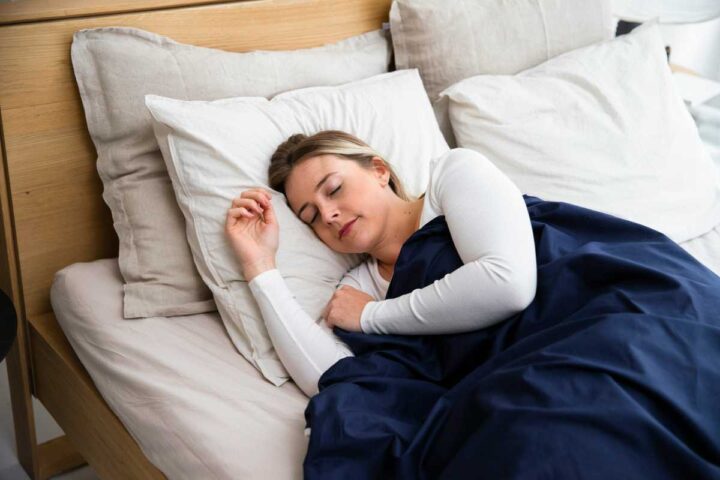
Are you struggling to sleep well at night or have trouble falling asleep? Insomnia is a common condition affecting many people globally, but unlike what most people think, sleep problems can be related to factors that can be treated naturally without any medical interventions.
Medically, the series of natural interventions used to improve the quality and quantity of sleep is called sleep hygiene. These are lifestyle adjustments and environmental modifications that enhance sleep without necessarily requiring medications.
According to several studies, insomnia is a significant problem affecting millions of people worldwide. An estimated 164 million Americans (68% of study respondents) have problems with sleep at least once a week, and around 20% of Americans were clinically diagnosed with insomnia as of 2015.1Consumer Reports. (2016, January 14). Why Americans can’t sleep. Consumer Reports. https://www.consumerreports.org/sleep/why-americans-cant-sleep/
In addition, with an estimated cost of $41 billion in 2015 and a predicted rise to $52 billion by 2020, healthcare costs related to insomnia are on the rise as people are becoming increasingly dependent on sleep medications. In 2020, studies showed that Americans spent over $840 million on melatonin sleep supplements alone.2Ibid. Why Americans Can’t Sleep
Sleep hygiene could significantly reduce insomnia-related healthcare costs globally. But what exactly is sleep hygiene, and how can it improve sleep naturally? Find out more in this post.
What is Sleep Hygiene?
Sleep hygiene refers to a set of modifiable behaviors and environmental adjustments that can help promote sleep quality and improve sleep duration.3De Pasquale, C., El Kazzi, M., Sutherland, K., Shriane, A. E., Vincent, G. E., Cistulli, P. A., & Bin, Y. S. (2024). Sleep hygiene – What do we mean? A bibliographic review. Sleep Medicine Reviews, 75, 101930. https://doi.org/10.1016/j.smrv.2024.101930 It simply describes daily habits that “clean up” your lifestyle to foster restorative and refreshing sleep every night.
The term ‘Sleep Hygiene’ was coined by Br Peter Hauri in 1977, reflecting that a significant proportion of insomnia and sleep problems can be prevented and treated through modifiable behaviors and environmental adjustment, similar to how personal hygiene helps in general well-being.
Classification of the Sleep Hygiene Habits for Better Sleep
The sleep hygiene habits can be classified into the following domains:
1. Consistent sleep routines
- Sleep only as much as you need
- Observe a regular sleep routine
- Adequate daily exercise
- Limiting napping
2. Optimizing sleep environment
- Reduce noise during sleep
- Sleep in a cool and comfortable environment
3. Bedtime routines
- Avoid going to bed hungry
- Avoid caffeine or nicotine in the evening
- Avoid alcohol close to bedtime
- Avoid relying on sleep pills long-term
- Do not force yourself to sleep
- Listen to calming music
12 Sleep Hygiene Habits for Better Sleep
The earliest foundations of the concept of Sleep Hygiene were laid by the psychologist Peter Hauri, an expert who is considered the world’s leading authority on insomnia. According to him, a more descriptive phrase for this concept is “Sleep/wake lifestyle modifications”, referring to the role of lifestyle modifications for sleep and wakefulness.
Over time, Hauri’s original ideas have become foundational to the following essential sleep hygiene tips that can help overcome insomnia naturally without any medications.
1. Sleep only as much as you need
This idea is based on what is known as “sleep efficiency“, which is a term used to describe the proportion of how much time you spend in bed versus how much time you actually spend sleeping.
Spending too much time in bed not sleeping can make your brain start associating the bed with boredom, distractions, idle time, wakefulness, and phone use. Thus, spending less idle, non-sleeping time in bed is an essential sleep hygiene tip that can naturally improve the quality of your sleep.
2. Observe a regular sleep routine
Sleep routine is used to describe the time you go to bed and when you wake up every day. A regular and consistent sleep routine strengthens the body’s circadian rhythm, which is the body’s internal clock that regulates the sleep-wake cycle. This helps you sleep faster and get a more refreshing sleep every night.
To establish a sleep routine, set a sleep time for yourself and go to bed when it’s time. Then, set a daily alarm clock to wake you up in the morning, even on weekends. But ensure you are getting 7–8 hours of daily sleep recommended for adults.
3. Adequate daily physical exercise
Consistent daytime exercise has been shown to enhance the quality of sleep over time. Regular physical activity during the day improves circulation to the skeletal muscles and enhances wakefulness and alertness during the day. These help synchronize your body to the natural diurnal variation of the sleep-wake cycle.
It is recommended to include at least 20–30 minutes of physical activity daily as part of your sleep-enhancing routine.4Desai, D., Momin, A., Hirpara, P., Jha, H., Thaker, R., & Patel, J. (2024). Exploring the Role of Circadian Rhythms in Sleep and Recovery: A Review Article. Cureus, 16(6), e61568. https://doi.org/10.7759/cureus.61568 And in Hauri’s original sleep hygiene rules, “A steady daily amount of exercise probably deepens sleep: occasional exercise does not necessarily improve sleep the following night.”
Physical exercise is a stimulating activity that activates your alertness and wakefulness. Thus, while it helps nighttime sleep when carried out during the day, it can interfere with your ability to fall asleep when done close to bedtime.
4. Limit napping if you experience insomnia
In contrast to engaging in stimulating activities during the day, napping can alter your sleep-wake cycle and impair nighttime sleep. The goal is to stay active during the day and sleep at night.
Daytime sleep is not as refreshing as nighttime sleep because of noise and external stimulation. Thus, stay alert and active during the day rather than sacrifice a refreshing night’s sleep for daytime naps.
5. Reduce noise during sleep
Loud noise can impair one’s ability to fall asleep or disturb the quality of sleep, even in people who are not easily awakened by noises while sleeping. This is because loud noise stimulates the cerebral cortex directly through the auditory pathway.
Avoid or reduce loud noise during sleep. If you are struggling with insomnia, optimizing the noise level of your bedroom is an important sleep hygiene tip to improve your sleep naturally without medications.
For people who are unable to totally avoid sleep-disruptive noises in the sleep environment, white noise has been shown to improve sleep in high-noise environments.5Ebben, M. R., Yan, P., & Krieger, A. C. (2021). The effects of white noise on sleep and duration in individuals living in a high noise environment in New York City. Sleep medicine, 83, 256–259. https://doi.org/10.1016/j.sleep.2021.03.031 White noise improves sleep by masking sleep-distrupting background noises.
According to SleepFoundation.org, white noise refers to a noise that contains all frequencies across the spectrum of audible sound in roughly equal measure, thus sometimes referred to as broadband noise. The broad distribution of sound frequencies in white noise creates a constant background sound that helps mask sudden environmental noises like traffic, snoring, dog barking, or door closing sounds.
Examples of white noise include fans, air conditioners, rainfall sounds, static noise, or dedicated white noise machines. These continuous, broad frequency sounds make the brain less likely to react to sudden, disruptive sounds in your sleep environment.
In addition to noise, light exposure may also disrupt sleep in people trying to get sleep. Thus, sleeping in a dark or dark-lit room is a sleep hygiene tip to optimize the sleep environment for better sleep.
6. Sleep in a cool and comfortable environment
Sleeping in rooms that are too hot can interfere with the quality and duration of sleep. This is because excessive sweating while sleeping can make you feel uncomfortable and easily aroused. Instead, ensure that your sleeping environment is cool and ventilated to get optimal sleep.
Other aspects of a comfortable sleep environment that contribute to sleep hygiene include sleeping on a comfortable mattress, bedding, and pillows. Getting a better mattress or improving your sleep environment can be what makes the difference between insomnia and nights of satisfying sleep.
While an excessively warm room can interfere with sleep quality, there is no evidence that an excessively cold room can enhance sleep. Keep your room cool, well-ventilated, and your beddings dry and comfortable.
7. Avoid going to bed hungry
Hunger may disturb sleep, and so also a large meal just before bedtime. Sleep experts and clinicians recommend eating a light snack or meal before bedtime, rather than loading up one’s stomach with a heavy meal.
The goal is not to sleep empty but without overloading your digestive system. In addition, you can experience food reflux when you eat too heavy food or too much liquid too close to bedtime.
Drinking too much liquid can also interrupt sleep due to frequent nighttime urination. For someone struggling with insomnia, waking up once in the middle of the night is enough to disrupt their sleep that entire night. Thus, eating or drinking just enough to sustain you through the night is one tip that has remained foundational since the origin of sleep hygiene.
8. Avoid caffeine or nicotine in the evening
Caffeine is a stimulant found in energy drinks and beverages made of coffee and kola, while nicotine is found in tobacco. Tea and chocolate also contain a significant amount of caffeine.
Like other stimulant substances, caffeine and nicotine keep one alert and drive sleep away. Thus, foods and drinks containing these substances should be avoided close to bedtime, particularly if you are struggling with insomnia.
9. Avoid alcohol close to bedtime
Alcohol, whether beer, wine, or liquor, can alter your sleep cycle when taken close to bedtime. Your sleep cycle is the stages of sleep you go through every night when you sleep. This is different from the sleep-wake cycle, which describes the sleeping and waking cycle over 24 hours.
Research has shown that alcohol taken just before bedtime causes you to fall asleep faster, irrespective of the dose.6Thakkar, M. M., Sharma, R., & Sahota, P. (2015). Alcohol disrupts sleep homeostasis. Alcohol (Fayetteville, N.Y.), 49(4), 299–310. https://doi.org/10.1016/j.alcohol.2014.07.019 However, as it is metabolized, it interferes with the sleep cycle, causing sleeplessness, restlessness, fragmented sleep, vivid dreams, and other sleep-disruptive problems like sleep paralysis.
In addition to the acute effects of alcohol on sleep, long-term alcohol use can also tremendously affect the quality and quantity of sleep. People who are trying to quit alcohol after long-term use may experience insomnia as an alcohol withdrawal symptom, which often presents as difficulty falling asleep. But this can improve over time with abstinence.7American Addiction Centers. (2025, February 11). Alcohol and insomnia: How alcohol affects sleep.
This highlights another health problem associated with alcohol use. And if you drink occasionally, experts recommend avoiding alcohol at least 3-4 hours before bedtime due to its disruptive effect on sleep quality.
10. Avoid relying on sleeping pills long-term
Hauri noted that, “An occasional sleeping pill may be of some benefit, but their chronic use is ineffective in most insomniacs.” Sleeping pills may help one sleep well, but they are not recommended for long-term use due to their risks of dependence, tolerance, and worsened sleep.
In contrast to conventional sleep drugs, sedating antidepressants, like Trazodone, are generally non-habit forming and have a lower risk of causing dependence. They are often prescribed off-label for insomnia at much lower doses than those used to treat depression to minimize side effects.
Finally, sleep medications may contribute to overall healthcare expenditure, making them unsustainable in the long run. Hence, the gold-standard, long-term solution for insomnia is Cognitive Behavioral Therapy for Insomnia (CBT-I), of which sleep hygiene is an integral component.8Sleepstation. (n.d.). Sleep hygiene. Sleepstation. https://www.sleepstation.org.uk/articles/sleep-basics/sleep-hygiene/
11. Do not force yourself to sleep
One last sleep hygiene tip introduced by Peter Hauri stated that, “People who feel angry and frustrated that they cannot sleep should not try harder and harder to fall asleep but turn on the light and do something different.” For some people, this could mean that they have some unfinished business to attend to.
Forcing yourself to sleep can make your mind begin to wander. If you have any tasks or something you are worrying about, turn on the light and finish up before you return to bed. Sometimes, sleep may come naturally while you are at it.
12. Listen to calming music
Calming music calms down the sympathetic nervous system responsible for alertness, lowers the heart rate and breathing rate, setting the stage for a refreshing sleep. It may also block sleep-disruptive thoughts, making it easier to fall asleep.
This can be a slow, familiar song played at a low volume. Enjoyable familiar music triggers the release of dopamine, a feel-good brain chemical that reduces anxiety at bedtime. When played at a low volume, it prevents the music from also being a distraction itself.
A calm, enjoyable music has also been found to help prevent sleep paralysis in people who go to bed later than their routine bedtime.
Cognitive Behavioral Therapy for Insomnia (CBT-I)
The original sleep hygiene tips were later expanded by sleep researchers to include other behavioral and lifestyle changes known to improve sleep. In the 1980s, these were developed as Cognitive Behavioral Therapy for Insomnia (CBT-I), of which sleep hygiene remained a component.
The cognitive frameworks developed by Peter Hauri, Arthur Spielman, Richard Bootzin, Aaron T. Beck, and earlier behavioral interventions for insomnia are foundational to CBT-I. Today, it is considered the gold-standard non-drug treatment for persistent insomnia that does not respond to sleep hygiene alone.
Here are the four components of CBT-I.
- Sleep Restriction Therapy (SRT)
- Stimulus Control Therapy (SCT)
- Sleep Hygiene (SH)
- Cognitive Therapy (CT)
Sleep Restriction Therapy
Sleep Restriction Therapy is based on the notion that the most important perpetuating factor for chronic insomnia is sleep extension.9Walker, J., Muench, A., Perlis, M. L., & Vargas, I. (2022). Cognitive Behavioral Therapy for Insomnia (CBT-I): A Primer. Klinicheskaia i spetsial’naia psikhologiia = Clinical psychology and special education, 11(2), 123–137. https://doi.org/10.17759/cpse.2022110208 Sleep extension is the tendency for individuals to compensate for “lost” sleep by increasing their time in bed.
Though already discussed in the original sleep hygiene rules, SRT describes a systematic way of limiting an individual’s bedtime hours to the number of sleep hours they actually need. The therapist determines the patient’s baseline sleep ability and prescribes a routine time to bed and time to wake based on the patient’s lifestyle and work schedule.
Stimulus Control Therapy
Stimulus Control Therapy involves controlling the stimuli elicited by your bed, bedroom, etc. In good sleepers, the bedroom and its accessories elicit the response to sleep, but in people with insomnia, these may become paired with other activities such as reading, watching television, and lying awake while trying to sleep.
SCT emphasizes that engaging in non-sleep-related activities can contribute to stimulus dyscontrol, where the bed and bedroom no longer elicit the urge to sleep. This gave birth to the following sleep hygiene rules:
- Lie down to sleep only when sleepy
- Avoid using the bed for activities other than sleep or sex, e.g, mobile phone use, reading, etc.
- If unable to sleep within 15-20 minutes, get out of bed and return when you are sleepy
- Avoid napping throughout the day, and others.
While these behaviors may not strictly apply to someone who sleeps easily, they can make a difference for people struggling with insomnia.
Sleep Hygiene
This component of CBT-I involves educating patients about behaviors that influence and improve sleep, known as sleep hygiene. These behaviors help to synchronize the body’s biological clock/circadian rhythm, maximize homeostatic sleep drive, minimize cognitive arousal, and counteract external factors that can impair sleep.10Ibid., SleepStation.org
Sleep hygiene has been exhaustively discussed earlier in this post. Some examples of these rules include: limiting caffeine and alcohol use before bedtime, avoiding napping, creating a comfortable sleeping environment, and exercising regularly.
Cognitive Therapy
Cognitive Therapy in CBT-I focuses on addressing an individual’s dysfunctional ideas about sleep through a process known as Cognitive Restructuring. It involves identifying and modifying unhealthy and inaccurate thoughts and fears that may affect their quality of sleep.
For example, sleep anxiety from past experiences of insomnia, and unrealistic expectations of sleep time and quality, exemplified by statements like, “If I don’t sleep tonight, tomorrow will be a disaster“, or “I must get exactly 8 hours of sleep“. These increase stress and performance anxiety around sleep.
The anxiety further impairs sleep. Thus, cognitive therapy, through cognitive restructuring, identifies and replaces negative and unrealistic thought patterns about sleep with healthier ways to reduce sleep anxiety, reduce stress, and promote better sleep.
Common Causes of Poor Sleep/Insomnia
Insomnia or poor sleep can be due to a lack of proper sleep routines. It can also be a sign of an underlying health problem or a response to an ongoing drug or ingested substance.
Here are some of the common causes of insomnia in the general population.
- Stress: Stress from work, study, or concerns about family, money, or health can make it harder to sleep. Overwhelming stress triggers your body’s “fight-or-flight” response, leading to the release of hormones like cortisol and adrenaline, which keep your brain alert and impair sleep.
- Poor sleep habits: These include irregular sleep routines, drinking or eating too close to bedtime, or using smartphones and screens while trying to get sleep. These can interfere with your sleep-wake cycle and affect the quantity and quality of sleep you get.
- Travel: Traveling can interfere with your body’s “internal clock” or what is known as the “circadian rhythm”. This is the biological process that regulates your sleep-wake cycle throughout 24 hours every day. Traveling across time zones can significantly disrupt your sleep-wake cycle, making it more difficult to sleep when you want to.
- Late-night work schedules: Working late-night shifts can affect your sleep-wake cycle, and for some people, finding sleep after busy schedules becomes difficult without medications.
- Other causes include sleep disorders (classified under mental health disorders11American Academy of Sleep Medicine. (2014). The International Classification of Sleep Disorders – Third Edition (ICSD-3). Darien, IL.), caffeine, alcohol, and nicotine use, chronic medical conditions, and sleep-related disorders like sleep paralysis, sleep terror, and obstructive sleep apnea.
How Effective is Sleep Hygiene?
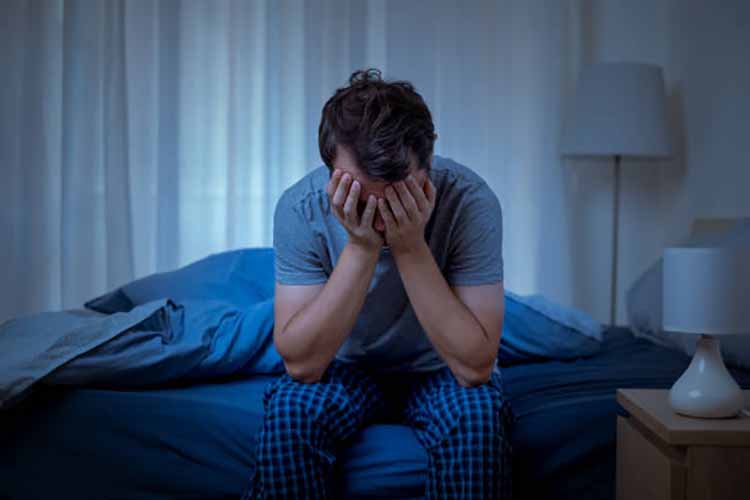
As a medical doctor, I have received several reports from my patients on the effectiveness of sleep hygiene for improving acute insomnia. Studies have also shown compelling evidence that good sleep hygiene can enhance sleep quality in insomniacs.12Varadharasu, S., & Das, N. (2024). Sleep hygiene efficacy on quality of sleep and mental ability among insomniac patients. Journal of family medicine and primary care, 13(10), 4693–4698. https://doi.org/10.4103/jfmpc.jfmpc_48_24
During clinical evaluation, patients often begin to discover the areas where their behaviors have contributed to the insomnia. And sometimes, their sleeplessness improves with these behavioral interventions, even without sleep medications.
In chronic conditions like severe insomnia or sleep apnea, sleep hygiene alone is typically less effective. However, when used alongside Cognitive Behavioral Therapy for Insomnia, it becomes more effective in managing these cases.
When to See a Doctor After Trying Sleep Hygiene
The rules of sleep hygiene describe behavioral changes that can improve the quality of sleep. They can be self-administered and do not require any third-party intervention once understood.
Generally, you should start noticing improvement in your sleep within 4 days of engaging in sleep hygiene practices. But if you don’t notice improvement after 2 to 4 weeks of practicing sleep hygiene, it might be high time to see a doctor.
A sleep doctor will evaluate the underlying causes and administer Cognitive Behavioral Therapy for Insomnia if necessary. A short course of sleep medication may also be necessary, depending on the severity and cause of the sleeplessness you experience.
Final words
Sleep hygiene is an inexpensive and effective way to overcome insomnia. Similar to other forms of personal hygiene, it involves the dos and don’ts both during the day and at bedtime.
Good sleep is beneficial to overall health and productivity. With the above sleep hygiene tips, you can enjoy good sleep and get all its benefits. These tips also reduce your reliance on sleep medications and effectively reduce unnecessary healthcare costs associated with chronic use of sleep medications.
Hope you found this post helpful. Let me know one important thing you learnt in the comments section below.
References
| ↑1 | Consumer Reports. (2016, January 14). Why Americans can’t sleep. Consumer Reports. https://www.consumerreports.org/sleep/why-americans-cant-sleep/ |
|---|---|
| ↑2 | Ibid. Why Americans Can’t Sleep |
| ↑3 | De Pasquale, C., El Kazzi, M., Sutherland, K., Shriane, A. E., Vincent, G. E., Cistulli, P. A., & Bin, Y. S. (2024). Sleep hygiene – What do we mean? A bibliographic review. Sleep Medicine Reviews, 75, 101930. https://doi.org/10.1016/j.smrv.2024.101930 |
| ↑4 | Desai, D., Momin, A., Hirpara, P., Jha, H., Thaker, R., & Patel, J. (2024). Exploring the Role of Circadian Rhythms in Sleep and Recovery: A Review Article. Cureus, 16(6), e61568. https://doi.org/10.7759/cureus.61568 |
| ↑5 | Ebben, M. R., Yan, P., & Krieger, A. C. (2021). The effects of white noise on sleep and duration in individuals living in a high noise environment in New York City. Sleep medicine, 83, 256–259. https://doi.org/10.1016/j.sleep.2021.03.031 |
| ↑6 | Thakkar, M. M., Sharma, R., & Sahota, P. (2015). Alcohol disrupts sleep homeostasis. Alcohol (Fayetteville, N.Y.), 49(4), 299–310. https://doi.org/10.1016/j.alcohol.2014.07.019 |
| ↑7 | American Addiction Centers. (2025, February 11). Alcohol and insomnia: How alcohol affects sleep. |
| ↑8 | Sleepstation. (n.d.). Sleep hygiene. Sleepstation. https://www.sleepstation.org.uk/articles/sleep-basics/sleep-hygiene/ |
| ↑9 | Walker, J., Muench, A., Perlis, M. L., & Vargas, I. (2022). Cognitive Behavioral Therapy for Insomnia (CBT-I): A Primer. Klinicheskaia i spetsial’naia psikhologiia = Clinical psychology and special education, 11(2), 123–137. https://doi.org/10.17759/cpse.2022110208 |
| ↑10 | Ibid., SleepStation.org |
| ↑11 | American Academy of Sleep Medicine. (2014). The International Classification of Sleep Disorders – Third Edition (ICSD-3). Darien, IL. |
| ↑12 | Varadharasu, S., & Das, N. (2024). Sleep hygiene efficacy on quality of sleep and mental ability among insomniac patients. Journal of family medicine and primary care, 13(10), 4693–4698. https://doi.org/10.4103/jfmpc.jfmpc_48_24 |














You Might Also Like