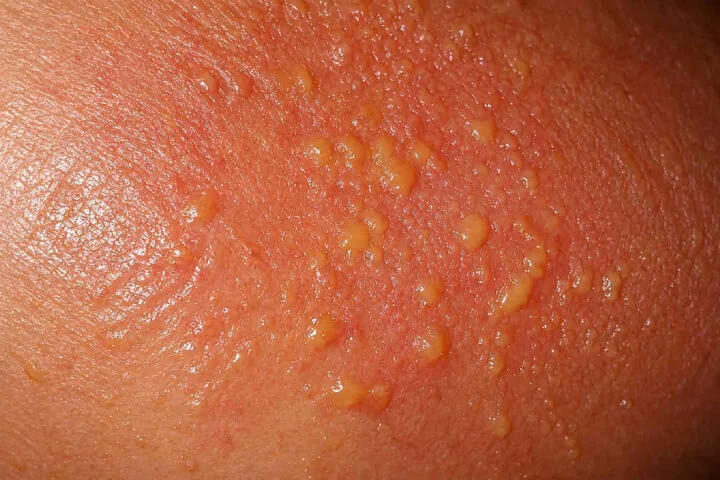
“Sun poisoning” isn’t a formal medical term, but people commonly use it to describe severe sunburn caused by excessive sun exposure. Despite its name, it does not mean being poisoned by the sun. Rather, the term likely comes from the severe, whole-body reactions that can occur following excessive sun exposure.
If you developed blisters, severe skin pain, headache, or dizziness after spending a long time under the sun, you may be wondering whether you have sun poisoning. However, some of these symptoms can also occur with other conditions, including dehydration and heat-related illness following sun exposure.
So, whether you want to know if sun poisoning is actually “a thing” or if you’re trying to understand symptoms you’ve developed after being in the sun, this article explains what sun poisoning means, the symptoms and treatments, and when to seek medical help.
What is Sun Poisoning
Sun poisoning is a common lay term used for “severe sunburn” caused by excessive exposure to ultraviolet (UV) radiation from the sun. It is not a medical diagnosis, and there is no agreed point at which an ordinary sunburn becomes “sun poisoning”. However, in this case, severe may simply refer to sunburn that goes beyond the milder cases.
A mild sunburn is usually a superficial burn involving the outermost skin layer (epidermis) and may cause changes in skin color but does not produce blisters. On the other hand, sun poisoning (referring to more severe cases) can involve the epidermis and/or the deeper layer (dermis), causing intense pain and significant swelling.1Carter, D. W. (2024, September). Burns. MSD Manual Consumer Version. MSD Manual
The term was probably coined because its symptoms can appear exaggerated compared with those of a regular sunburn. People may use “sun poisoning” when sunburn is accompanied by symptoms such as headache, nausea, fever, chills, dizziness, or dehydration.
However, some of those symptoms may occur from heat-related illness or fluid loss after prolonged exposure, rather than from how severely or deeply the skin was burned. Thus, from a medical perspective, it is more useful to describe sunburn by the skin depth, the size of skin affected, and the presence of serious symptoms or complications, rather than whether it qualifies as “sun poisoning”.
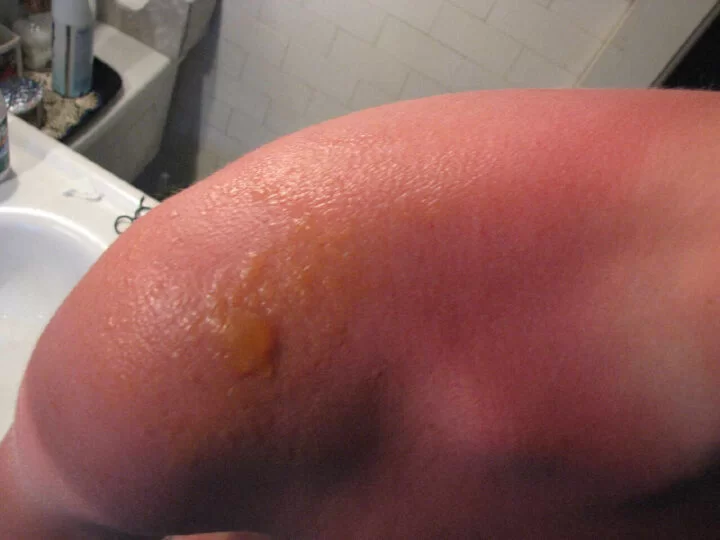
Sun Poisoning vs Sunburn: What’s the Difference?
Sunburn is an acute skin injury or inflammation caused by excessive exposure to UV radiation, while “sun poisoning” is a common term used for severe sunburn, particularly when it is associated with significant local or whole-body symptoms. Therefore, sun poisoning is not a medically defined type of sunburn even though it is informally used to describe the more severe forms of sunburn.
A mild sunburn mainly causes changes in skin color, warmth, itching, mild swelling, and pain, but typically improves within a few days. More severe sunburn may cause intense pain, significant swelling, and blister formation, and may take longer to heal.
What people describe as sun poisoning is actually the presence of whole-body symptoms such as headache, nausea, vomiting, fever, chills, dizziness, or rapid heartbeat, after significant exposure to the sun. However, some of these symptoms can also occur with dehydration or heat-related illness following prolonged sun exposure.
| Feature | Mild sunburn | Severe sunburn or “sun poisoning” |
|---|---|---|
| Skin changes | Mild color change, warmth, itching, or tenderness | More pronounced skin changes and swelling |
| Pain | Usually mild to moderate | May be severe |
| Blisters | Absent in superficial sunburn | May occur with deeper skin injury |
| Headache | Unusual | May occur |
| Nausea/vomiting | Unusual | May occur |
| Fever/chills | Unusual | May occur |
| Dizziness | Unusual | May occur |
| Dehydration | Usually absent | May accompany severe cases |
| Duration | Usually improves within a few days | May take longer to resolve |
Table comparing mild sunburn versus severe sunburn. Note: Sun poisoning is not a medically recognized term for severe sunburn.
What Does Sun Poisoning Look Like?
Sun poisoning isn’t a specific type of rash, though it can look like one. It usually looks like a severe sunburn, where the affected skin may appear intensely red on lighter skin tones or darker on darker skin. It may also appear swollen or form blisters when the burn extends deeper into the skin.
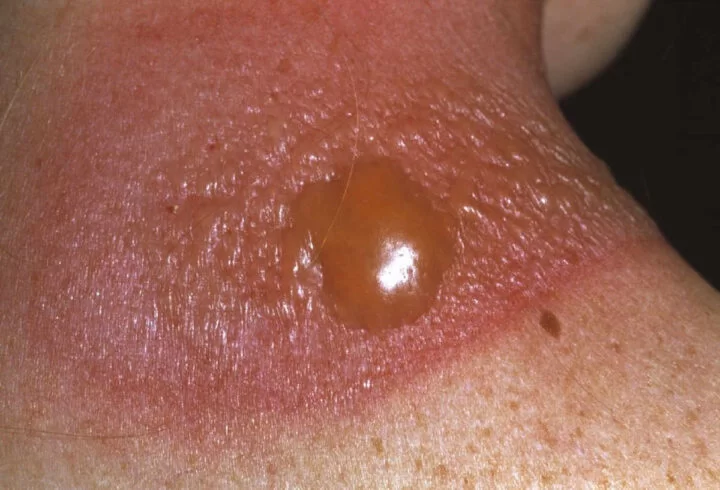
Although sun poisoning may sometimes be described as an allergic reaction, a severe sunburn is not an allergy to the sun. It is an acute inflammation of the skin due to skin damage caused by excessive UV light exposure.
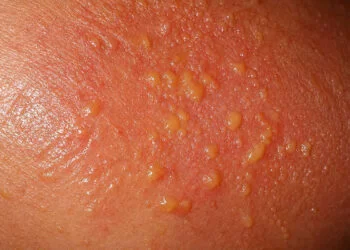
However, if the reaction mainly consists of itchy bumps, patches, or hives after a short sun exposure, it may be another type of reaction such as polymorphic light eruption (PMLE) or solar urticaria, rather than severe sunburn.
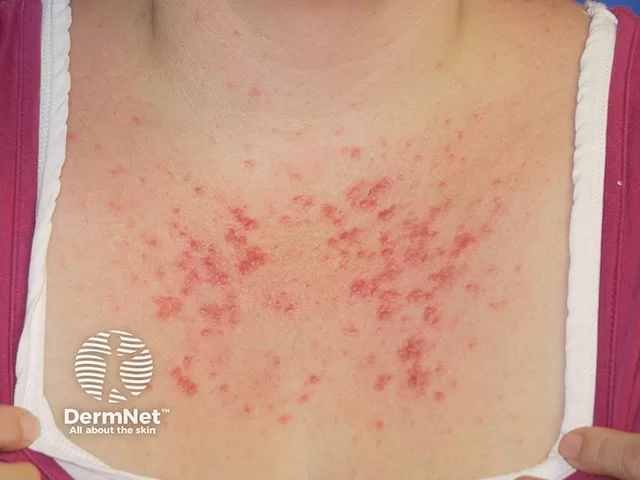
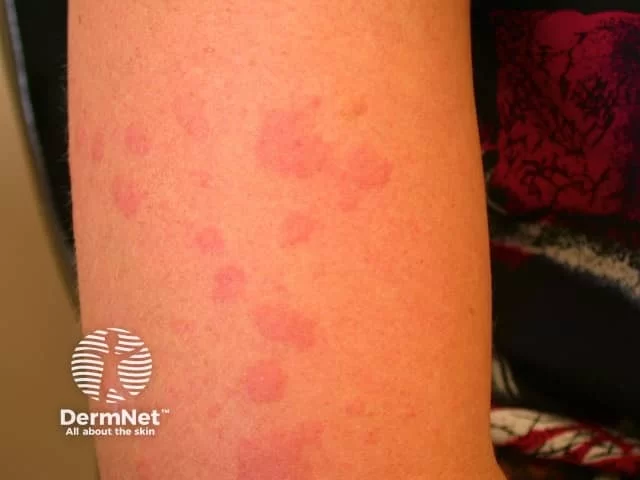
Image sources: DermNet — PMLE | Solar urticaria
Sun Poisoning Symptoms
Sun poisoning symptoms fall into two classes: localized skin symptoms and systemic symptoms. The symptoms may be mild or severe.
Localized skin symptoms
- Visible skin blisters
- Deep red, purple, or mottled skin color
- Severe throbbing pain
- Significant swelling in the sun-burned area
- Skin itching and peeling (occur during healing)
Systemic symptoms
- Fever
- Chills
- Nausea
- Headaches
- Symptoms of dehydration (dizziness, confusion, or weakness)
Secondary symptoms can also develop if severe sun poisoning is not treated properly. These include skin infection, sepsis (blood infection), shock from severe dehydration or sepsis, and complications in other organs of the body.
Is It Sun Poisoning or Something Else?
The table below compares sun poisoning with several related skin conditions that people might mistake for it.
| Condition | Typical skin findings | Other symptoms | Timing/clue |
|---|---|---|---|
| Severe sunburn (commonly called sun poisoning) | Painful, hot, swollen skin; possible blisters | Headache, nausea, fever may occur | Usually develops within hours after significant UV exposure |
| Polymorphic light eruption (PMLE) | Itchy/burning bumps, patches, or small blisters | Usually predominantly skin symptoms | Often follows sun exposure and may recur |
| Solar urticaria | Hives/wheals | Itching/burning | Often begins rapidly after sunlight |
| Drug-induced photosensitivity | Exaggerated sunburn or rash | Depends on reaction | Disproportionate reaction + photosensitizing medication |
| Heat exhaustion | Skin findings aren’t necessarily sunburn | Heavy sweating, weakness, dizziness, nausea, headache | Prolonged heat exposure |
| Heatstroke | Sunburn may or may not be present | CNS dysfunction; severe illness | Medical emergency |
This is especially useful because someone who feels sick after prolonged sun exposure shouldn’t automatically assume the symptoms are from their skin. Mayo Clinic recommends immediate medical attention for sunburn accompanied by confusion, dehydration, faintness, and certain other severe symptoms.
How Does Sun Poisoning Occur?
Sun poisoning develops when excessive ultraviolet (UV) radiation from the sun damages skin cells. The body responds to this damage with inflammation around the injured skin cells, resulting in pain, swelling, and changes in skin color. Blisters can develop with more severe skin damage.2Guerra KC, Crane JS. Sunburn. [Updated 2023 Oct 29]. In: StatPearls [Internet]. Treasure Island (FL): StatPearls Publishing; 2023 Jan-. Available from: https://www.ncbi.nlm.nih.gov/sites/books/NBK534837/
The inflammation occurs several hours after the damage occurs to the skin cells, causing skin changes, swelling, and pain. Skin color changes usually start within three to five hours of sun exposure.
How Long Does Sun Poisoning Last?
There is no specific duration for sun poisoning because it is not a medically defined condition. However, the healing duration for severe sunburn depends on the depth and extent of the skin injury.
Sunburn symptoms usually develop within a few hours of excessive sun exposure and may become more noticeable over the next 24 hours. The pain is most severe within 6 to 48 hours, after which it begins to subside.
Mild sunburn may improve within a few days, while severe sunburn and blistering sunburn can take several days to a few weeks to fully heal. If the pain worsens, you notice signs of infection, or symptoms do not improve at daily intervals, it should be assessed by a healthcare professional.
Factors that Predispose to Sun Poisoning
This answers what agents promote sun poisoning, who is at risk, and lifestyle factors that contribute to this condition. Some agents and medications enhance the absorption of UV radiation by the skin, and these can predispose to severe sunburns.3Guerra KC, Crane JS. Sunburn. [Updated 2023 Oct 29]. In: StatPearls [Internet]. Treasure Island (FL): StatPearls Publishing; 2023 Jan-. Available from: https://www.ncbi.nlm.nih.gov/sites/books/NBK534837/
1. Lifestyle factors
- Spending more time outside during a sunny day
- Excessive sun exposure due to non-use of sunscreen or sun-protective clothing
- Prolonged use of indoor tanning beds
- Using tanning lotions
- Binge drinking
- Overweight
2. Medications
These absorb UV energy in the skin and release it into the surrounding tissue, causing phototoxic skin cell injury even with minimal sun exposure.
- Tetracycline antibiotics such as doxycycline
- Fluoroquinolones
- Sulfonamides
- Thiazide diuretics
- NSAIDs, e.g., Ibuprofen
- Retinoids
- St John’s wort
3. Skin type and genetics
The amount and type of melanin in the skin determine how susceptible people are to sunburn, and these are influenced largely by genetics. Melanin protects the skin by absorbing and scattering harmful UV rays before they can penetrate deep into the skin and damage cellular DNA.4Brenner M, Hearing VJ. The protective role of melanin against UV damage in human skin. Photochem Photobiol. 2008 May-Jun;84(3):539-49. doi: 10.1111/j.1751-1097.2007.00226.x. PMID: 18435612; PMCID: PMC2671032.
Below is the Fitzpatrick phototype skin classification.
| Skin type | Typical features | Reaction to sun exposure |
|---|---|---|
| Type I | Pale white skin; often blue/green eyes and blond or red hair | Always burns; does not tan |
| Type II | Fair skin; often blue eyes | Burns easily; tans poorly |
| Type III | Darker white skin | May burn initially, then tans |
| Type IV | Light brown skin | Burns minimally; tans easily |
| Type V | Brown skin | Rarely burns; tans deeply and easily |
| Type VI | Dark brown or black skin | Very resistant to burning; tans deeply |
Source: DermNet — Fitzpatrick skin phototype
Sun poisoning can occur in people of all skin types, but those with fairer skin (types I to III) are at greater risk.5Ibid. Brenner M, Hearing VJ. The protective role of melanin against UV damage in human skin. Photochem Photobiol. 2008
4. Age and geography
- Infants and children are more susceptible to sunburns
- Areas closer to the equator have stronger sun rays
- Higher altitude causes greater UV exposure
- Areas closer to water, sand, or snow can cause reflections of the sun’s rays on the skin.
- Ozone depletion: Areas closer to the Southern Hemisphere, e.g., Australia and New Zealand, have relatively lower atmospheric ozone levels.
Thus, people who live in climates closer to the equator and have sunburn-sensitive skin types are at increased risk for sun poisoning.
Treatment of Sun Poisoning
Many cases of sunburn can be managed at home through supportive care and medications. However, large or widespread blisters, severe swelling, and worsening pain may require medical attention. Systemic symptoms like confusion, dizziness, or fainting following significant sun exposure require more urgent assessment.
Home Treatment
Sunburn without severe features can be managed at home with the following
- Cool baths or cool, damp compresses at intervals to cool the skin and reduce inflammation
- Over-the-counter pain medication
- Drink extra water to help prevent and correct dehydration
- Apply moisturizers like Aloe vera or moisturizing creams
- Avoid further sun exposure while healing
Blister Care/Treatment
If you have blisters:
- Don’t intentionally pop intact blisters
- Keep the area clean
If blisters have ruptured:
- Clean with soap and lukewarm water
- Cover with petrolatum or non-stick dressing as appropriate
- Observe for signs of infection (increasing swelling, pus, or worsening pain) and seek medical attention if present
- Regular cleaning, at least once a day
- Do not peel or forcibly remove the skin covering the blister
When to See a Doctor for Sun Poisoning
See a doctor for medical assessment and treatment if you notice the following:
- Large or widespread blisters
- Severe pain or swelling
- Blisters involving the face, hands, or genitals
- Worsening symptoms or not improving with home treatment
- Fever or significant systemic symptoms such as dizziness
- Signs of wound infection
- Concerns involving infants/young children
When to Seek Emergency Care
Some serious symptoms following prolonged sun exposure may be caused by dehydration or heat-related illness rather than the sunburn itself. Seek emergency medical care if you develop the following symptoms:
- Confusion or altered mental status
- Fainting
- Severe dehydration (severe weakness, extreme thirst, confusion, or reduced volume of urine)
- Persistent vomiting or inability to tolerate oral fluids
- Features of heatstroke, such as confusion, altered behavior, slurred speech, loss of consciousness, or very high body temperature.
- Shock or severe systemic illness
Hospital treatment
The treatment of sunburn or “sun poisoning” in the hospital is usually directed at the symptoms and associated complications.
- IV fluids and electrolyte correction where appropriate
- Pain relief and treatment of fever where appropriate
- Wound care for extensive blistering
- Treatment of secondary infection using antibiotics, where necessary
- Other supportive treatments depending on symptoms and severity, including heat-related illness if present
How to Prevent Sun Poisoning
Preventing sun poisoning primarily involves reducing or preventing excessive skin exposure to UV radiation from the sun6The Skin Cancer Foundation. (2025, August). Sun-protective clothing. The Skin Cancer Foundation. The following tips are helpful for the prevention of severe sunburns.
- Wear broad-brimmed hats when spending prolonged periods outside.
- Cover your body adequately with lightweight long-sleeved shirts and long pants or trousers where practical.
- Wear sun-protective clothing with an ultraviolet protection factor (UPF) of 50 or higher.
- Seek shade regularly, particularly when sunlight is intense.
- Use broad-spectrum sunscreen that protects against both ultraviolet A and B radiation.
- Choose sunscreen with a sun protection factor (SPF) of 30 or higher
- Apply sunscreen at least 15 minutes before going out, and reapply approximately every 2 hours, or after getting wet.
- Wear regular or UV-protective sunglasses to protect your eyes and reduce uncomfortable light glare.
- Limit sunlight exposure when the UV index is strongest, commonly around 10 am to 4 pm.
- Avoid indoor tanning beds
- Take extra precautions if you use medications that increase sensitivity to sunlight, such as tetracycline. Ask your doctor or pharmacist if you’re unsure about the medications you take
Frequently Asked Questions
Is sun poisoning contagious?
No. Sun poisoning is not contagious.
Can people with dark skin get sun poisoning?
Yes, dark skin people can get sun poisoning, but people with lighter skin under the Fitzpatrick classifications I to III are more vulnerable.
Can you get sun poisoning from a tanning bed?
Yes. Indoor tanning beds emit UV radiation for cosmetic tanning. Excessive exposure to UV can cause sun poisoning and contribute to skin aging.
Can sun poisoning cause fever?
Fever can accompany severe sunburn, but significant fever after prolonged sun exposure shouldn't automatically be attributed to skin injury. There may be other causes.
Can sun poisoning make you feel sick?
Yes, sun poisoning may be associated with nausea, headache, dizziness, and dehydration. making you feel sick.
Can you have sun poisoning without being sunburned?
Sun poisoning is often used to refer to severe sunburn with symptoms more severe than ordinary sunburn. But the skin reaction does not necessarily have to include blisters.
PMLE is sometimes called sun poisoning because it is similar to severe sunburn reactions and occurs after sun exposure. However, PMLE occurs after a short sun exposure rather than excessive exposure in sunburn.
References
| ↑1 | Carter, D. W. (2024, September). Burns. MSD Manual Consumer Version. MSD Manual |
|---|---|
| ↑2 | Guerra KC, Crane JS. Sunburn. [Updated 2023 Oct 29]. In: StatPearls [Internet]. Treasure Island (FL): StatPearls Publishing; 2023 Jan-. Available from: https://www.ncbi.nlm.nih.gov/sites/books/NBK534837/ |
| ↑3 | Guerra KC, Crane JS. Sunburn. [Updated 2023 Oct 29]. In: StatPearls [Internet]. Treasure Island (FL): StatPearls Publishing; 2023 Jan-. Available from: https://www.ncbi.nlm.nih.gov/sites/books/NBK534837/ |
| ↑4 | Brenner M, Hearing VJ. The protective role of melanin against UV damage in human skin. Photochem Photobiol. 2008 May-Jun;84(3):539-49. doi: 10.1111/j.1751-1097.2007.00226.x. PMID: 18435612; PMCID: PMC2671032. |
| ↑5 | Ibid. Brenner M, Hearing VJ. The protective role of melanin against UV damage in human skin. Photochem Photobiol. 2008 |
| ↑6 | The Skin Cancer Foundation. (2025, August). Sun-protective clothing. The Skin Cancer Foundation |













You Might Also Like