If you think you need money to start a blog, that’s your first mistake. As long as you can read this post, you have all you need to get started. What most people lack isn’t money—it’s the right information and a clear structure.
Most blogs don’t fail because blogging is hard (even though it’s clearly not easy). They fail because beginners follow the wrong advice, spend a lot of money on things they don’t yet understand, and burn out before they see results. You’re told to buy expensive hosting immediately, pick a niche like a pro, and master SEO before you publish your first post.
But that’s not how most successful bloggers started. They started with what they had, used freely available tools, learned as they went, and stayed consistent long enough to see results.
In this article, I will show you exactly how to start a blog from zero–with no money or experience–and grow it step by step sustainably.
What You Really Need to Start a Blog From Scratch
Starting a blog doesn’t require money—it requires having the right information and a clear structure. Once you understand the following key steps, the entire process becomes much simpler.
Let me break this down for you.
How to Choose the Right Niche for Your Blog
Choosing a niche is one of the first and most important steps, and it’s where most beginners get it wrong. A niche refers to the area or topics you want to write about. But as simple as it may sound, there are many factors to consider when choosing a niche.
There are many blogging niches to choose from, which is why it can feel difficult knowing which exact niche to specialize in. However, the following tips can help you decide which niche to write in.
1. Choose an area you have experience in
Choosing a niche you have experience in can help you keep up with your content as you go. And this involves fields where you have worked, courses you studied in school, and topics you have read about extensively.
For example, if you are a medical practitioner, you can choose a health niche where you can express your health knowledge through writing. And because niches can be broad, you are at liberty to choose a sub-niche or a few sub-niches for your blog.
In my own case, as a blogger, I love learning and sharing tips that improve people’s lives in areas of personal development. This made me choose the lifestyle-personal development niche when starting Knowseeker.com.
One common mistake many new bloggers make is writing without a niche in mind or targeting too many areas. This can negatively affect your progress and potentially wear you down over time.
2. Consider an area you are interested in learning about
This is where passion comes in. Choose a blog you are interested in.
One major advantage of blogging is that it makes you a researcher. This means that you can still choose a niche you do not have first-hand experience or knowledge about, as long as you are interested in learning about it.
For example, if you are interested in personal relationships, you can write on this niche even if you don’t have prior experience.
If your interests conflict with your experience, you can choose a niche that connects them while still keeping your focus within 2 or 3 sub-niches, at most. Specificity of niche helps you grow faster as a blogger.
3. Choose a niche that is worth it financially in the long run
The search for the most profitable niches is where most blogging beginners get it wrong. While some start-a-blog online sources might emphasize going after the most profitable niche, profitability in a niche is about high demand, strong buying intent, and clear monetization paths.
A niche that is financially worth it in the long run is one where there is a real demand and users can spend money. Are people searching for those topics, and do they have problems they need solutions to?
Another aspect of profitability involves monetization paths. Can you offer products or services in your content? How about opportunities for affiliate marketing and brand promotion? These are some financial aspects you can consider when choosing your niche.
Which Blogging Platform Should You Start With?
After choosing your niche, the next important step is choosing a platform. And when you are looking to start a blog with zero money, there are free blogging platforms you can start with.
Three of the most popular blogging platforms you can get started with include Blogger, WordPress.com, and Wix.
Blogger is a Google-owned free blog hosting platform that allows you to create a basic blog absolutely for free. Its ecosystem has several template designs you can install for free or customize to your taste.
WordPress.com is the free alternative to the popular WordPress.org. It has an easy-to-use content management interface that can help you set up your blog and publish blog posts for free.
Similarly, Wix is another highly versatile free blogging platform. It has a drag-and-drop website builder, excellent for blogging beginners, making it a great choice for people who want to get started with zero money and experience.
Others include Medium, Substack, and Ghost. These are not necessarily blog hosting platforms, but they allow you to post written content regularly for free, and even monetize them to make money.
If you’re starting with zero money, pick one of the above platforms and focus on publishing, rather than perfection. Blogger or WordPress.com are popular options for beginner bloggers.
How to Choose a Domain Name (Without Overthinking It)
A domain name is your blog’s identity. It’s also how people access your site when it goes live. This is typically what people type into the address bar when they want to visit your site.
A good domain name should reflect what your blog is about. For example, choosing a name like KnowSeeker could represent a blog where you are targeting users who are seeking general knowledge.
But don’t overthink your domain name at the beginning. Most bloggers change direction as they grow, so it’s better to start simple and refine later.
Free blogging platforms like Blogger, WordPress.com, and Wix give you a free domain extension, which means choosing a name like KnowSeeker would become knowseeker.blogspot.com on Blogger and knowseeker.wordpress.com on WordPress.com. However, you can eventually upgrade to a paid custom domain like knowseeker.com when you are ready.
How to Set Up Your Blog Step by Step
Once you have the above steps figured out, you’ve handled some of the most important prerequisites for your new blog. Now, it’s time to get fully started.
In the following sections, I will illustrate the process of building your free blog using Blogger as an example.
1. Register an account
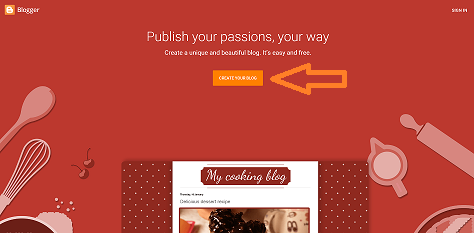
The first step in starting your blog for free on the above-mentioned platforms is creating an account. On Blogger, visit www.blogger.com and sign up or log in with an existing Google account. Alternatively, visit wordpress.com for WordPress.com, wix.com for Wix, medium.com for Medium, etc.
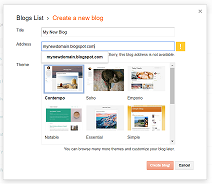
After signing in to Blogger using your Gmail account, the next page will show you the first step for creating your new blog, as shown above. Enter your blog title and fill in your preferred address, which is your domain name.
2. Design your blog layout
Next, select one of the default themes to be your blog design. You can change this later, and can even download more advanced templates from blogger template shops online. Most are free, but some require a fee for full customization.
3. Customizes your pages
Customize your page navigation and menu, change colors using the available settings in the dashboard, and then add important pages like contact us, privacy policy, etc. This step is similar if you are using WordPress.com or Wix. In addition, Wix has a drag-and-drop feature that makes it easier to customize your blog design.
On Medium, you may not need to set up any new pages or layout, as they are not required.
4. Start publishing
Once your blog design and layout are set, it’s time to start writing. Create your first post around your niche, starting with a topic you can easily write about. Research established pages to get ideas, while adding your own insights to make the post authentic.
Aim for quality and optimal length (say 700-1000+ words) and maintain a good structure using headings and paragraphs. These are essential for search engine optimization (SEO), which is the bedrock for securing organic traffic to your new blog.
Include images and caption them properly.
Once your article is ready, hit the publish button. Remember, your first article doesn’t have to be perfect before you publish it. And voila! You are now a published blogger.
Search Engine Optimization (SEO)
SEO is a lifelong process for every blogger–you keep learning, unlearning, and re-learning. But it is important to learn the basics of SEO because they never change.
- Content is for humans, so make it appealing to them
- Optimize your titles, images, and text for humans and search engines
- Use images for illustrations and design, and also label them using alt tags for search engines
- Font size and spacing are important
- Target keywords when writing, but importantly, make it more about the message rather than stuffing keywords everywhere
- Share posts to your social media for early traffic and page assessment
- Linkbuilding (both internal links and backlinks) is very important for ranking
- Stay consistent
Read here for more information on SEO.
You don’t need to master SEO to start blogging, but understanding these basics will give you a better chance of being visible to humans and search engines.
Monetizing your Blog
After setting up your blog for free and publishing some posts, the next important step is to establish ways to monetize your content. Some of these include displaying ads, selling products, offering paid services, publishing product reviews, and affiliate marketing.
However, at the early stage, your focus shouldn’t be on making money yet. It should be on building content and consistency.
Google Ads offers a direct way to earn passive income from your content by displaying ads within your webpages. When users see or interact with these ads, you earn a commission depending on their activity. So, by driving more traffic to your site, you can potentially earn more from displaying ads.
In addition, more traffic also means better opportunities for other monetization channels like affiliate marketing, product sales, etc.
For Google Ads, you typically have to apply to AdSense to get started. But they require that your free blog site is at least 1 month old, and you have up to 15-20 published articles. Articles must also meet eligibility criteria like optimal length, good quality, and originality, as listed earlier.
Knowing When to Migrate to Paid Tools
While you can set up your new blog completely for free with little or no experience, paid tools usually give you access to more advanced features. Also, a paid custom domain, such as www.knowseeker.com, will look more professional and more appealing than www.knowseeker.blogspot.com.
Thus, it is important to migrate when you are financially ready to do so.
Read here to learn how to add a custom domain to your Blogger site
In addition to a custom domain name, you can migrate to a WordPress.org hosting plan on hosts like BlueHost, GoDaddy, etc. I use BlueHost and would recommend it, but you can choose any hosting provider that fits your budget and preferences.
Read here to see other important factors to consider when choosing a hosting provider
Key Tips for Becoming a Successful Blogger
It is one thing to start your blog; it is another to be successful in the long run. But being a successful blogger only requires resilience and adaptability throughout your journey as a blogger.
Here are some important tips for becoming successful as a blogger.
- Be consistent
- Keep learning
- Share your posts on social media to gain confidence
- Build your writing voice and stay true to it
- Stay true to your niche
- Value relationship with other bloggers
- Write for humans, think about providing answers to their questions
- Focus on quality content
- Stay patient, results might take some time.
- You don’t need money to start a blog
- You need clarity, consistency, and patience
- Start with free tools and improve as you grow
Final words
Starting a blog doesn’t require money. It requires clarity, consistency, and the willingness to start before you feel completely ready. Most people never start because they are waiting for the perfect time, but the truth is, the best time to start is with what you already have now.
If you found this interesting, leave a comment about what you think below.












You Might Also Like