
If you are having uncontrollable symptoms, it might be time to see a doctor, especially if you have tried some self-administered medications. Sometimes, one is not sure when to see a doctor. But in my opinion, you should see your doctor as much as you can, considering the peculiar nature of healthcare costs and access to a healthcare facility in your area.
However, whether you have tried some interventions or not, I want to show you some clinical warning signs that should prompt your visit to the hospital immediately. Ignoring these signs may lead to serious complications, disability, or death.
Without further ado, let’s see some 8 important warning signs you should see a doctor immediately.
Warning Signs to See a Doctor Immediately
Whether you are here because you or someone close currently have a symptom or just here to get some good medical knowledge that could be helpful sometime, pay attention to these warning signs. Some of them might look insignificant but they could be pointers for more serious conditions in the body.
One of the things you will see here is that symptoms make more clinical meaning when they occur with another symptom(s), rather than an isolated symptom. But in some cases, a single symptom could be a cause for alarm.
1. Sudden-onset severe headache
Headaches can occur from mild causes like hunger (hypoglycemia), stress, or mild trauma to the head. But it can also be a sign of a severe underlying pathology like stroke, especially when it is sudden in onset, severe, with no obvious cause.
In addition to the onset, severity, and lack of any known cause, the headache in stroke may be associated with other neurological symptoms like sudden numbness or weakness in the face, arm, or leg— especially on one side of the body. Other associated symptoms that may point to a serious underlying condition include sudden blindness in one or both eyes, sudden confusion, loss of balance, poor speech, and dizziness. [1]Signs and Symptoms | National Institute of Neurological Disorders and Stroke[2]Stroke: Signs, Causes, and Treatment – National Institute on Aging
The presence of more neurological symptoms affecting perception, motor control, balance, and certain psychic symptoms like confusion, particularly in the absence of any known cause of the above is a warning sign that you should visit or take the individual to the hospital immediately.
2. Shortness of breath or difficulty breathing
If you or someone close to you is having shortness of breath or severe difficulty in breathing, this might be a warning sign to see the doctor immediately. Shortness of breath/difficulty in breathing is medically called “dyspnea” and it can point to some serious health emergencies.
According to the New York Heart Association (NYHA), dyspnea is an important criterion in the classification of heart failure sub-types.[3]New York Heart Association (NYHA) Classification It typically signifies compensation by the lungs when the heart fails to meet the body’s metabolic demands, and the more severe the difficulty in breathing (dyspnea), the more severe the failure.
Shortness of breath also signifies an acute exacerbation of an obstructive airway disease like asthma, COPD (Chronic Obstructive Pulmonary Disease), pulmonary embolism, or foreign body aspiration.[4]Respiratory Distress (Trouble Breathing) – Red Cross There could be associated coughing, wheezing, chest tightness, nasal flaring, inability to complete sentences, and bluish discoloration of the lips/extremities. If the patient is a known asthma patient or there is a family history, it should further heighten the need for immediate hospital admission to prevent life-threatening complications.[5]Fergeson, Jennifer E. et al. Acute asthma, prognosis, and treatment. Journal of Allergy and Clinical Immunology. Volume 139, Issue 2, 438 – 447
3. Mild to severe chest discomfort
Chest discomfort no matter how mild can be a warning sign of a medical emergency, especially when it occurs in the center of the chest. Mild chest discomfort or pain that feels like an uncomfortable pressure, squeezing, or fullness, lasting for more than a few minutes, are symptoms of myocardial infarction or heart attack.[6]Joseph P. Ornato & Mary M. Hand. Warning Signs of a Heart Attack. Circulation. 2001
There could be associated discomfort or pain in one or both arms, the back, neck, jaw, or stomach, as well as shortness of breath. There could also be a breakout of cold sweat, nausea, light-headedness, or involuntary fist-making over the chest. Some patients also report a feeling of impending doom.[7]Ibid., Joseph P, Mary. M. Circulation
Every year, approx. 1.1 million Americans experience a heart attack; approx. 460,000 of these cases are fatal, and almost half of those who die do so suddenly before they can get to a hospital. Thus, early intervention would be extremely life-saving. Call the medical emergency number if available or visit a facility immediately.
4. High-grade fever
Fever is a symptom of a broad range of infectious or non-infectious diseases. Normal inflammatory processes following trauma, local injuries, wound infection, local infections, and even some drug reactions, can present with fever, usually low-grade fever. However, high-grade fever is an indication for an emergency hospital visit.
High-grade fever is described as a body temperature greater than or equal to 103°F or 39°C, but fever over 38°C or 100.4°F is also a cause for alarm in babies under 3 months of age. Parents and caregivers could also be able to estimate the severity of fever by feeling how hot the body is but these readings can be more accurately obtained using a thermometer placed into the anus or axilla (armpit).[8]InformedHealth.org, Cologne, Germany: Institute for Quality and Efficiency in Health Care (IQWiG); 2006. Overview: Fever in children. [Updated 2022 Dec 9].
High-grade fever in association with severe weakness, confusion, or coma in adults is a sign of severity and central nervous system involvement. In children, it may be associated with convulsions, poor or weak crying, reduced appetite, restlessness, and intractable vomiting or diarrhea.
While most fevers are due to mild or harmless conditions, the presence of a high-grade fever with associated symptoms should alert you to visit the hospital immediately. For children, oral administration of paracetamol may be helpful while you prepare to see the doctor immediately.
5. Severe abdominal pain
Abdominal pain is usually a symptom of any condition affecting your gastrointestinal tract from the stomach to the intestines, down to the rectum. It can point to an inflammatory condition, rupture of a viscus, acute intestinal obstruction, or severe gastroenteritis.
While abdominal pain can occur from common causes like indigestion, food poisoning, and even some form of mild abdominal trauma, it can also be a sign of an emergency. Abdominal pain may be considered an emergency when it is sudden in onset, severe, and does not resolve within 30 minutes.[9]Stomach Pain — Know When to Go to the ER – American College of Emergency Physicians (ACOP)
Severe sudden abdominal pain on the right lower abdomen can point to acute appendicitis.[10]Acute Appendicitis | Gastroenterology – JAMA Network Severe pain that is colicky (periodically waxing and waning), with associated vomiting is a sign of intestinal obstruction. If it persists longer than 30 minutes, it might require emergency care.
Pain in the upper abdomen (epigastric pain) is a feature of acute peptic ulcer disease. If this occurs with vomiting of blood, passage of blood in stool, or passage of dark tarry stool (melaena), it points to a bleeding peptic ulcer disease which is a medical emergency.
For women, one-sided or generalized abdominal pain with associated vaginal bleeding and generalized weakness are symptoms of ectopic pregnancy, a gynecologic emergency.[11]Ibid., ACOP
Abdominal pain may be associated with loss of appetite, low-grade fever, nausea, and vomiting. Whether alone or in association with these, severe abdominal pain lasting longer than 30 minutes is a warning sign to see the doctor immediately.
6. Intractable vomiting
Vomiting may be associated with any of the above symptoms and may spontaneously resolve after a few hours to one day. But when it becomes intractable or persistent, it is an indication to seek medical attention.
While there is no unified definition for intractable or persistent vomiting, some studies have defined it as ≥2 episodes 15 minutes apart, and >3 episodes within 24 hours.[12]Morra ME, Elshafay A, Kansakar AR, Mehyar GM, Dang NPH, Mattar OM, Iqtadar S, Mostafa MR, Hai VN, Vu TL, Ghazy AA, Kaboub F, Huy NT, Hirayama K. Definition of “persistent vomiting” in … Continue reading However, vomiting may be said to be intractable or persistent if you vomit frequently despite the removal of known causes of vomiting.
Consuming contaminated food can cause vomiting, of which food poisoning accounts for the most common cause of vomiting globally.[13]Vomiting in adults – NHS inform but this may be self-limiting. If after two or three episodes of vomiting out the likely offending substances or in the absence of any, this can point to a more serious systemic condition.
Vomiting, in association with headache and seizure, is a sign of raised intracranial pressure caused by bleeding into the brain, hydrocephalus, or growing intracranial tumor.[14]Pinto VL, Tadi P, Adeyinka A. Increased Intracranial Pressure. Treasure Island (FL): StatPearls Publishing; 2025 [Updated 2023]
Intractable nausea and vomiting have also been described in diabetic patients without any other underlying physical etiology. This may be due to the effect of diabetes on the gastrointestinal nervous system causing a form of functional intestinal obstruction, that is without any mechanical impaction or obstruction.[15]Avilés-Santa L, Wolff TK, Raskin P. Intractable vomiting in diabetic patients. J Diabetes Complications. 2003
In addition to intractable vomiting being a sign of a serious underlying systemic condition, it can also result in severe dehydration and electrolyte derangements, with their attendant sequelae. Thus, it is a critical sign to see a doctor immediately.
7. Severe unprovoked body pain + joint stiffness
Unprovoked body pain (muscles & joints) and joint stiffness are typical symptoms of rheumatological conditions. While these conditions rarely present as acute emergencies, special attention needs to be paid to rare rheumatologic conditions that have the potential to progress into irreversible disabilities and death.
One such example is Giant Cell Arteritis (GCA). This is a condition characterized by inflammation of the arteries, especially those of the head and neck. This rheumatologic condition usually has no specific triggers but commonly presents with cramping or aching pain in the arms or legs with activity, especially when it involves large arteries like the aorta.[16]Polymyalgia Rheumatica and Giant Cell Arteritis – National Institute of Arthritis and Musculoskeletal and Skin Diseases (NIAMS)
Common causes of musculoskeletal pain and joint stiffness are related to previous-day trauma, prolonged abnormal body postures, blunt traumatic injuries, etc. But when they occur unprovoked, they could be signs of a rheumatologic condition.
While rheumatological conditions rarely present as emergencies as stated earlier, giant cell arteritis which often co-exist with Polymyalgia Rheumatica are presentations that could progress into serious complications if not attended to promptly.
Symptoms of Polymyalgia Rheumatica include pain and stiffness of the shoulders, neck, upper arms, and hips, while pain in Giant Cell Arteritis occurs often around the scalp and temples and severe, jaw pain, and visual disturbances like double vision or temporary vision loss in one or both eyes. But if left unattended, it can lead to permanent vision loss within hours or days.[17]Ibid., NIAMS
GCA is common among people aged 60 years and above. When detected, your doctor would administer high-dose corticosteroids which would help treat it and prevent further complications.
8. Painful urination
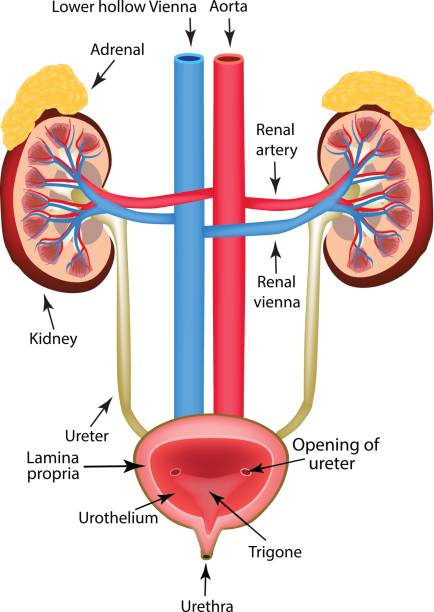
Painful urination typically occurs when there is a functional or mechanical obstruction at any point in the lower urinary tract (LUT). The lower urinary tract involves the bladder which stores urine and the urethra through which urine is voided to the outside. Any obstruction along these areas will cause painful urination.
This can be from a urinary stone lodging at the exit of the bladder, or lodging within the urethra. An obstruction can also occur high up in the urinary tract involving the ureters or renal pelvis. It can also be due to urinary tract infection.
If you are having severe pain during urination, you need to seek medical attention immediately. This is because it can lead to more serious conditions affecting the kidneys, resulting in progressive kidney injury or failure.[18]Rishor-Olney CR, Hinson MR. Obstructive Uropathy. Treasure Island (FL): StatPearls Publishing; 2025 [Updated 2023]
Factors Affecting Health-Seeking Behavior
Several reasons account for people’s unreadiness to see a doctor in the face of a health challenge. Sometimes, difficulties accessing a doctor or health facilities may be the deterrent factor even when they are willing to visit the hospital.
These factors include the following:
- Poor attitude to health-seeking due to sociocultural ideas about visiting the hospital: Some individuals and families may have an unfounded aversion towards visiting a hospital facility for medical care.[19]Latunji OO, Akinyemi OO. Factors Influencing Health-Seeking Behaviour Among Civil Servants in Ibadan, Nigeria. Ann Ib Postgrad Med. 2018
- Financial constraints: Healthcare financing is an important aspect of healthcare that deters many people in certain parts of the world from accessing healthcare. This problem can be significantly addressed by introducing well-established health insurance schemes that cover people of all categories.
- Convenience in accessing healthcare services: In areas where there are functional emergency health services like emergency phone numbers and ambulance services, it is easier to access healthcare than in areas with bad road access and a limited network of hospitals.
- Undermining of the symptoms: While some symptoms may look mild, they can be warning signs to some life-threatening situations if not well-attended. Undermining certain symptoms is one of the reasons health-seeking is poor among some people. This post tried to open the reader’s eyes to some of these symptoms that should not be overlooked, but this list could not have been exhaustive.
- Level of education, especially maternal education, etc.
Final words
While over-the-counter and self-interventions can be helpful in a number of medical cases, some cases may require immediate medical attention. The above signs/symptoms are warning signs to see a doctor immediately, as failure to seek medical care promptly may lead to severe life-threatening complications and death.
Whether you or someone you know have any of the above symptoms, or you simply want to equip yourself with the right medical knowledge about these conditions, I hope you found this useful. Stay safe!
References
| ↑1 | Signs and Symptoms | National Institute of Neurological Disorders and Stroke |
|---|---|
| ↑2 | Stroke: Signs, Causes, and Treatment – National Institute on Aging |
| ↑3 | New York Heart Association (NYHA) Classification |
| ↑4 | Respiratory Distress (Trouble Breathing) – Red Cross |
| ↑5 | Fergeson, Jennifer E. et al. Acute asthma, prognosis, and treatment. Journal of Allergy and Clinical Immunology. Volume 139, Issue 2, 438 – 447 |
| ↑6 | Joseph P. Ornato & Mary M. Hand. Warning Signs of a Heart Attack. Circulation. 2001 |
| ↑7 | Ibid., Joseph P, Mary. M. Circulation |
| ↑8 | InformedHealth.org, Cologne, Germany: Institute for Quality and Efficiency in Health Care (IQWiG); 2006. Overview: Fever in children. [Updated 2022 Dec 9]. |
| ↑9 | Stomach Pain — Know When to Go to the ER – American College of Emergency Physicians (ACOP) |
| ↑10 | Acute Appendicitis | Gastroenterology – JAMA Network |
| ↑11 | Ibid., ACOP |
| ↑12 | Morra ME, Elshafay A, Kansakar AR, Mehyar GM, Dang NPH, Mattar OM, Iqtadar S, Mostafa MR, Hai VN, Vu TL, Ghazy AA, Kaboub F, Huy NT, Hirayama K. Definition of “persistent vomiting” in current medical literature: A systematic review. Medicine (Baltimore). 2017 |
| ↑13 | Vomiting in adults – NHS inform |
| ↑14 | Pinto VL, Tadi P, Adeyinka A. Increased Intracranial Pressure. Treasure Island (FL): StatPearls Publishing; 2025 [Updated 2023] |
| ↑15 | Avilés-Santa L, Wolff TK, Raskin P. Intractable vomiting in diabetic patients. J Diabetes Complications. 2003 |
| ↑16 | Polymyalgia Rheumatica and Giant Cell Arteritis – National Institute of Arthritis and Musculoskeletal and Skin Diseases (NIAMS) |
| ↑17 | Ibid., NIAMS |
| ↑18 | Rishor-Olney CR, Hinson MR. Obstructive Uropathy. Treasure Island (FL): StatPearls Publishing; 2025 [Updated 2023] |
| ↑19 | Latunji OO, Akinyemi OO. Factors Influencing Health-Seeking Behaviour Among Civil Servants in Ibadan, Nigeria. Ann Ib Postgrad Med. 2018 |












You Might Also Like