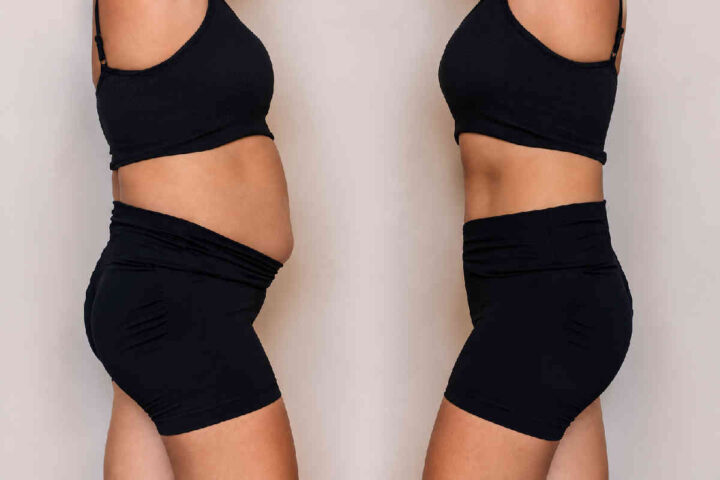
Losing belly fat the safe way means managing your diet, getting enough physical exercise, and understanding how calorie balance affects fat burning in the belly area. As you will see in this post, these tips are more effective than many ab exercises and belly-fat-slimming teas people recommend.
If you’ve ever tried to lose belly fat, you can easily understand how difficult it is to achieve this feat. However, here are a few tips that will totally change how you approach belly fat loss or weight loss in general. You may also apply these tips to losing face fat.
You might want to ask, “Why should I believe these tips I am about to see?” You should, because they are based on proven facts and my professional experience as a medical doctor. In addition, some popular unhealthy weight loss products and routines not only do not yield noticeable results but may also cause harmful health effects in those who practise them.
So, in this post, we will discuss 8 fact-based tips to lose belly fat safely.
How Belly Fat Loss Works
Belly fat loss occurs when your body uses more energy than it takes in over time. The converse is true when your body stores more energy than you use, and this applies to all fat reserves in the body.
There are two layers of abdominal fat: subcutaneous fat and visceral fat, as shown in the diagram below. These fat layers serve useful functions in the body, but they may accumulate when energy storage exceeds energy expenditure.

Abdominal exercises like planks, crunches, and Russian twists engage and strengthen the abdominal muscles, but they do not specifically target abdominal fat. However, these activities contribute to energy expenditure, which can lead to general fat loss. Thus, you should not expect abs exercises to cause fat loss targeted solely at the abdomen.
There are two types of body fat–white fat and brown fat, and they do not have the same function. While white fat mainly stores energy, brown fat uses glucose and fat to produce heat and help maintain body temperature.
Adults have brown fat in regions such as the neck and around the collarbones. Most body fat is white fat, found mainly beneath the skin and also around internal organs
8 Evidence-Based Ways to Lose Belly Fat Safely
The core idea behind losing belly fat effectively is about maintaining a state of calorie deficit that allows your body to use up more energy than it is storing in the fat stores. This is generally through dietary modification, regular physical exercise, and effective stress management.
This section explores seven evidence-based ways to lose belly fat safely.
1. Reduce excess calorie intake
Calorie intake, or caloric intake, is the total amount of energy an individual consumes through food and beverages.1Elsevier. (n.d.). Caloric intake. ScienceDirect. Retrieved October 7, 2026, from https://www.sciencedirect.com/topics/medicine-and-dentistry/caloric-intake A calorie is the unit of energy derived from food, mainly from fats, carbohydrates, and protein.
When we eat food, it is broken down into calories depending on the composition and quantity of the food. Fats have more calories per gram than an equivalent weight of carbohydrates and protein, while protein and carbohydrates generate roughly the same amount of calories per gram.2Bhupathiraju, S. N., & Hu, F. (2025, November). Carbohydrates, proteins, and fats. MSD Manual Consumer Version. https://www.msdmanuals.com/home/disorders-of-nutrition/overview-of-nutrition/carbohydrates-proteins-and-fats
An average man needs 2,500 calories per day to maintain his weight, while an average woman needs 2,000 calories to achieve the same. A daily intake of around 2,000 calories for some men and 1,500 calories for some women may support general weight loss and belly fat loss.3Osilla, E. V., Safadi, A. O., & Sharma, S. (2022, September 12). Calories. In StatPearls. StatPearls Publishing. https://www.ncbi.nlm.nih.gov/books/NBK499909/ However, this reduction should be adjusted according to individual need.
Eating excess calories will result in weight gain and an increased waistline, while reducing excessive calorie intake can help you lose belly fat.
2. Prioritize regular exercise
We earlier noted that abdominal exercises do not preferentially target belly fat, but they can contribute to calorie expenditure and overall weight loss. This means regular exercise, not just abs exercises, can lead to significant weight loss and belly fat loss.
For overall health, adults need at least 150 minutes a week of moderate-intensity aerobic activity, or 75 minutes of vigorous-intensity aerobic activity every week, or an equivalent combination of moderate- and vigorous-intensity aerobic activity.4Centers for Disease Control and Prevention. (2026, April 7). Physical activity and your weight and health. https://www.cdc.gov/healthy-weight-growth/physical-activity/index.html
A moderate-intensity aerobic exercise is any physical activity that causes your heart to beat faster, makes you breathe harder, and causes you to break a light sweat while still allowing you to talk comfortably but without being able to sing. Examples include brisk walking, cycling, light swimming, and light jogging.
Vigorous-intensity exercises are high-effort activities that make you breathe harder and your heartbeat faster, so you can only say a few words before pausing to breathe. Examples include running or fast-paced jogging, uphill cycling, jumping rope, football or basketball, and continuous, fast-paced swimming.
An equivalent combination of moderate- and vigorous-intensity activity per week involves a combination of moderate and vigorous-intensity activity that equals either 150 minutes of moderate exercise or 75 minutes of vigorous exercise, assuming that 1 minute of vigorous activity equals 2 minutes of moderate activity.
Adults also need at least 2 days of muscle-strengthening activity a week, which includes push-ups, squats, lunges, lifting weights, and planks.
Regular physical activity increases your calorie expenditure above your intake, builds muscles, which increases your basal metabolic rate, and helps you lose weight by burning belly fat and other excess fat stores in the body.

3. Cut back on refined sugars and sugary beverages
Refined sugars are notorious for unhealthy weight gain and belly fat because of how they affect fat storage in the body. When you consume refined or added sugars, blood insulin levels surge, the hormone responsible for storing calories as glycogen and fat.
However, refined sugars are often called “empty calories” because they provide calories with little nutritional value. This can make one want to eat more, slowing down one’s metabolism and resulting in weight gain. 5May CE, Rosander J, Gottfried J, Dennis E, Dus M. Dietary sugar inhibits satiation by decreasing the central processing of sweet taste. Elife. 2020 Jun 16;9:e54530. doi: 10.7554/eLife.54530. PMID: 32539934; PMCID: PMC7297538.
Sugar-sweetened beverages, particularly carbonated soft drinks, and sugary snacks are rich in processed sugars. Cutting back on them can help you lose belly fat and maintain healthy body weight.6Malik VS, Schulze MB, Hu FB. Intake of sugar-sweetened beverages and weight gain: a systematic review. Am J Clin Nutr. 2006 Aug;84(2):274-88. doi: 10.1093/ajcn/84.1.274. PMID: 16895873; PMCID: PMC3210834.
The American Heart Association recommends keeping added sugars below 6% of calories per day. Men should consume no more than 9 teaspoons (36 grams or 150 calories) of added sugar per day, while women should consume no more than 6 teaspoons (25 grams or 100 calories) per day.7American Heart Association. (2026, May 14). How much sugar is too much? https://www.heart.org/en/healthy-living/healthy-eating/eat-smart/sugar/how-much-sugar-is-too-much
Sugar-sweetened beverages make up about 24% of the added sugars consumed in the US diet, and in addition, there are other added sugar products consumed worldwide. Replacing sugar-sweetened beverages with water is a healthier habit for maintaining body weight.
Lastly, it is not true that you can eat whatever you desire if you exercise heavily. Processed sugars cause weight gain through their effect on your metabolism, energy storage, and satiety. They can also pose a risk of several preventable diseases such as diabetes, heart disease, and various cancers.8Ibid. Osilla, E. V., Safadi, A. O., & Sharma, S. (2022, September 12). Calories.
4. Reduce saturated fats and calorie-dense foods
Fats are calorie-dense foods because fat contains 9 calories per gram, which is over two times the number of calories in an equal weight of proteins or carbohydrates. This high calorie intake can lead to an excess, which will be stored in the body as belly fat and face fat.
Paradoxically, saturated fats are abundant in our common foods such as baked and fried foods, meat, butter, and tropical oils. Aim for a dietary pattern that contains less than 6% of your total daily calories from saturated fat.9
American Heart Association. (2024, August 23). Saturated fats. https://www.heart.org/en/healthy-living/healthy-eating/eat-smart/fats/saturated-fats
5. Eat enough protein and fibre
Eating enough protein and fibre can help you burn belly fat and lose weight faster by helping you feel satisfied after meals and reduce the need to eat more calories. Adequate protein intake also helps preserve muscle mass when you reduce calorie intake for weight loss and belly fat loss.10Te Morenga, L. A., Levers, M. T., Williams, S. M., Brown, R. C., & Mann, J. (2011). Comparison of high protein and high fiber weight-loss diets in women with risk factors for the metabolic syndrome: A randomized trial. Nutrition Journal, 10, 40. https://doi.org/10.1186/1475-2891-10-40
Your body uses more energy digesting and processing protein than carbohydrates or fat. This provides some additional benefit for losing belly fat, while fibre-rich foods can help you feel fuller for a longer period.
You don’t need any specialized protein diet. Include protein sources such as fish, eggs, beans, plain yoghurt, and tofu, alongside fibre-rich foods such as vegetables, whole fruits, and whole grains. These can help you avoid overeating, boost your metabolism, and support a sustainable approach to weight loss.
6. Move more throughout the day
Beyond regular exercise, everyday movements contribute to your total calorie expenditure. A sedentary lifestyle can reduce how many calories you use, which can make it harder to achieve your weight-loss goals.
Move more during the day. Include taking the stairs, doing household chores, and breaking up prolonged sitting with short-distance walks. Replacing sitting time with physical activity, even light movement, provides health benefits.11World Health Organization. (2020). WHO guidelines on physical activity and sedentary behaviour. https://www.who.int/publications/i/item/9789240015128
Staying active and engaged during the day may also reduce opportunities to snack out of boredom. Thus, helping you increase your daily energy expenditure over intake and supports overall fat loss, including belly fat.
7. Get enough sleep and manage stress
Getting enough sleep may support your efforts to lose belly fat by reducing average daily calorie intake compared to sleeping fewer hours.12Tasali, E., Wroblewski, K., Kahn, E., Kilkus, J., & Schoeller, D. A. (2022). Effect of sleep extension on objectively assessed energy intake among adults with overweight in real-life settings: A randomized clinical trial. JAMA Internal Medicine, 182(4), 365–374. https://doi.org/10.1001/jamainternmed.2021.8098 Sleep restriction may also affect how much fat loss occurs. One study found that individuals on a low-calorie diet lost a smaller proportion of fat when sleep was shortened, despite overall weight loss.13Xuewen Wang, Joshua R Sparks, Kimberly P Bowyer, Shawn D Youngstedt. Influence of sleep restriction on weight loss outcomes associated with caloric restriction. Sleep. Volume 41, Issue 5. May 2018. https://doi.org/10.1093/sleep/zsy027
Adults aged 18-60 should generally get at least 7 hours of sleep every night, maintain sleep hygiene involving having a consistent bedtime routine, sleeping in a quiet and comfortable bedroom, and avoiding caffeine close to bedtime.14Centers for Disease Control and Prevention. (2024, May 15). About sleep. https://www.cdc.gov/sleep/about/index.html Staying awake for longer hours can predispose you to late-night snacking and overeating.
Stress can also affect your eating habits and may increase your calorie intake. Some people respond to stress by snacking more and choosing foods high in sugar and fat, while others lose their appetite.15Hill, D., Conner, M., Clancy, F., Moss, R., Wilding, S., Bristow, M., & O’Connor, D. B. (2022). Stress and eating behaviours in healthy adults: A systematic review and meta-analysis. Health Psychology Review, 16(2), 280–304. https://doi.org/10.1080/17437199.2021.1923406
Thus, better sleep and stress management can complement your weight loss efforts. While these do not directly target belly fat, they can help your overall weight loss goal.
8. Limit alcohol intake
Alcohol is calorie-dense, containing roughly 7 calories per gram, but these are empty calories with no nutritional value. This means alcohol may encourage you to eat more, even with the high load of calories it provides.16Kwok, A., Dordevic, A. L., Paton, G., Page, M. J., & Truby, H. (2019). Effect of alcohol consumption on food energy intake: A systematic review and meta-analysis. British Journal of Nutrition, 121(5), 481–495. https://doi.org/10.1017/S0007114518003677
Significant alcohol consumption has been associated with a preferential accumulation of visceral/abdominal fat over total fat among men and women consuming more than 17 and 10 units of alcohol per week, respectively.17Chesters, J., Neville, M.J. & Karpe, F. Greater visceral fat mass accumulation with high alcohol consumption. Int J Obes 50, 1360–1363 (2026). https://doi.org/10.1038/s41366-026-02030-5Cigolini M, Targher G, Bergamo Andreis IA, Tonoli M, Filippi F, Muggeo M, De Sandre G. Moderate alcohol consumption and its relation to visceral fat and plasma androgens in healthy women. Int J Obes Relat Metab Disord. 1996 Mar;20(3):206-12. PMID: 8653140. This is commonly referred to as the “beer belly”, and it occurs because alcohol can temporarily reduce fat burning while hormonal changes influence the preference for abdominal fat.
If you drink alcohol, cut back on it. Try smaller servings, fewer drinking occasions, and drinking plain water or unsweetened flavoured water. These changes can help you achieve overall weight loss, including a reduction in belly fat, especially when your calorie expenditure exceeds your calorie intake.
Can Abdominal Exercises Help You Lose Belly Fat?
Abdominal exercises can help you lose belly fat, but they don’t specifically target belly fat. These activities contribute to increased energy usage and muscle building, and these can lead to overall fat loss.
Overall fat loss can also reflect in abdominal fat loss, but it doesn’t follow that abdominal exercises would specifically target abdominal fat. The body loses stored fat from different areas based largely on genetics rather than a specific order, irrespective of which area is exercised more.
Do Belly Fat Pills and Slimming Teas Work?
Fat pills and slimming teas marketed as “fat burners” raise concerns about both effectiveness and safety. Evidence for many weight loss supplements is limited, and where benefits have been demonstrated, weight loss is generally small.
Many of the fat burners may also be associated with several side effects depending on the active ingredients, dose, and combination used. Some of these side effects include anxiety, palpitations, liver injury, etc.18El-Zayat, S. R., Sibaii, H., & El-Shamy, K. A. (2019). Physiological process of fat loss. Bulletin of the National Research Centre, 43, Article 208. https://doi.org/10.1186/s42269-019-0238-z19National Institutes of Health, Office of Dietary Supplements. (2022, May 18). Dietary supplements for weight loss: Fact sheet for health professionals. https://ods.od.nih.gov/factsheets/WeightLoss-HealthProfessional/
| Fat Burner Class | Examples | Possible side effects or safety concerns |
|---|---|---|
| Energy enhancers | Caffeine, green tea extract | Caffeine: nervousness, nausea, and rapid heartbeat, especially at high doses. Green tea extract: abdominal discomfort, increased blood pressure, and reported liver injury. |
| Protein and amino acid products | Whey protein, casein | Both can trigger allergic reactions in people with milk allergy. Products containing lactose may cause gas, bloating, or diarrhoea in people with lactose intolerance. |
| “Testosterone enhancers” | 7-keto-DHEA, yohimbe | 7-keto-DHEA: nausea and dizziness have been reported; long-term safety remains uncertain. Yohimbe: anxiety, agitation, increased blood pressure, and rapid heartbeat; serious cardiovascular events have also been reported. |
| Lean body enhancers | Chitosan, L-carnitine, chromium, ephedrine, synephrine, raspberry ketone, pyruvate, CLA | Chitosan: bloating, constipation, nausea. L-carnitine: digestive upset and fishy body odour. Chromium: headache and digestive symptoms. Ephedrine: palpitations, anxiety, and reported seizures or cardiovascular events. Synephrine: increased blood pressure or heart rate. Pyruvate and CLA: digestive symptoms. Raspberry ketone: insufficient human evidence to establish its safety. |
| Appetite suppressants | Hoodia gordonii; drugs affecting noradrenaline or serotonin signalling | Hoodia: nausea, vomiting, dizziness, headache, and increased heart rate or blood pressure. Adverse effects of medicines vary by the specific drug. |
| Miscellaneous | White kidney bean extract; guggul extract | White kidney bean extract: gas, soft stools, constipation, and headache. Guggul: stomach discomfort and allergic skin rash; potential interactions with medicines. |
Table showing some fat burner classes, examples, and side effects. Adapted from Bulletin of the National Research Centre
In addition, some slimming teas contain laxatives or ingredients that increase urine output. These may result in a temporary reduction in weight due to loss of ingested fluid, but they may cause side effects such as abdominal cramps, diarrhea, dehydration, and electrolyte imbalances.20National Center for Complementary and Integrative Health. (n.d.). “Detoxes” and “cleanses”: What you need to know. https://www.nccih.nih.gov/health/detoxes-and-cleanses-what-you-need-to-know
Lastly, supplements marketed as “fat burners” should be distinguished from prescription medications for weight loss, including orlistat, semaglutide, and tirsepatide. These drugs have clinical evidence in support of their use in appropriately selected patients. However, they are not selectively used for burning belly fat; they require medical assessment and are often used alongside dietary changes and physical activity.21National Institute of Diabetes and Digestive and Kidney Diseases. (n.d.). Prescription medications to treat overweight & obesity. https://www.niddk.nih.gov/health-information/weight-management/prescription-medications-treat-overweight-obesity
How Long Does It Take to Lose Belly Fat?
Losing belly fat requires consistency over time, but there is no exact number of weeks that applies to everyone. It also depends on how well the individual adheres to recommended weight loss practices.
A systematic review of 116 trials found that aerobic exercise significantly reduced waist circumference and both visceral and subcutaneous fat in adults with overweight or obesity. The included exercise programmes lasted at least eight weeks, but this does not mean that everyone will see the same results within eight weeks.22Jayedi, A., Soltani, S., Emadi, A., Zargar, M.-S., & Najafi, A. (2024). Aerobic exercise and weight loss in adults: A systematic review and dose-response meta-analysis. JAMA Network Open, 7(12), e2452185. https://doi.org/10.1001/jamanetworkopen.2024.52185
Rather than viewing belly fat loss as a deadline, think of it as a gradual process. Focus on the overall benefits of these exercises and dietary control, rather than on your belly diameter alone. Track your waist measurement and weight at regular intervals, instead of judging from daily changes or appearance alone.
How to Track Your Belly Fat Loss Progress
While it is not practical to measure the amount of belly fat lost, here are some ways you can measure your weight loss progress, including belly fat.
- Measure your waist periodically: In an upright position and with your abdomen relaxed, use a flexible, non-stretch tape to measure around your bare abdomen midway between the bottom of your lowest rib and the top of your hip bone on the side. Measure periodically every 2 to 4 weeks.
- Monitor your weight: This measures overall weight changes. Weigh yourself weekly using the same scale on a firm, level floor, preferably before eating in the morning.
- Use clothing fits and photographs: Though not as accurate as the above methods, an observable looser waistband can indicate some weight loss. If you take progress photographs using the same clothing, lighting, distance, and posture, you can subjectively monitor changes over time.
Your waist measurement can provide clues about health risks associated with abdominal fat. Commonly used thresholds indicate:
- Increased risk at 94 cm in men and 80 cm in women, respectively.
- Substantially increased risk at 102 cm and 88 cm, respectively.
These thresholds were primarily established for adults of European ancestry and may differ for other populations.
Why Am I Not Losing Belly Fat?
If you notice that you can’t lose belly fat, it might be due to the following reasons:
- Poor adherence to the belly fat loss tips above.
- Larger food portions, snacks, and drinks, which are easy to overlook.
- An inconsistent routine.
- Too little time before assessing progress.
- Changes in physical activity, sleep, or medication: Some medications can affect sleep and metabolism.
When to See a Doctor
If you are struggling to manage your weight despite being consistently “calorie-conscious” and physically active, it might be time to see a doctor regarding the challenges. A doctor will assess the health risks, medications, or medical history associated with your weight loss struggle, and modify the management as appropriate.23National Institute of Diabetes and Digestive and Kidney Diseases. (2024, February). Choosing a safe & successful weight-loss program. https://www.niddk.nih.gov/health-information/weight-management/choosing-a-safe-successful-weight-loss-program
Also, seek medical attention if an increase in abdominal size is associated with sudden or severe abdominal pain, vomiting of blood, bloody stool, or inability to pass gas or stool. Not every increase in abdominal size is belly fat.
Final words
With the right tips, you can work towards losing belly fat through manageable changes to your dietary habits and physical activity. Understand how calorie balance affects weight loss, start small, and stay consistent.
Take care,
Dr Prosper Yole
References
| ↑1 | Elsevier. (n.d.). Caloric intake. ScienceDirect. Retrieved October 7, 2026, from https://www.sciencedirect.com/topics/medicine-and-dentistry/caloric-intake |
|---|---|
| ↑2 | Bhupathiraju, S. N., & Hu, F. (2025, November). Carbohydrates, proteins, and fats. MSD Manual Consumer Version. https://www.msdmanuals.com/home/disorders-of-nutrition/overview-of-nutrition/carbohydrates-proteins-and-fats |
| ↑3 | Osilla, E. V., Safadi, A. O., & Sharma, S. (2022, September 12). Calories. In StatPearls. StatPearls Publishing. https://www.ncbi.nlm.nih.gov/books/NBK499909/ |
| ↑4 | Centers for Disease Control and Prevention. (2026, April 7). Physical activity and your weight and health. https://www.cdc.gov/healthy-weight-growth/physical-activity/index.html |
| ↑5 | May CE, Rosander J, Gottfried J, Dennis E, Dus M. Dietary sugar inhibits satiation by decreasing the central processing of sweet taste. Elife. 2020 Jun 16;9:e54530. doi: 10.7554/eLife.54530. PMID: 32539934; PMCID: PMC7297538. |
| ↑6 | Malik VS, Schulze MB, Hu FB. Intake of sugar-sweetened beverages and weight gain: a systematic review. Am J Clin Nutr. 2006 Aug;84(2):274-88. doi: 10.1093/ajcn/84.1.274. PMID: 16895873; PMCID: PMC3210834. |
| ↑7 | American Heart Association. (2026, May 14). How much sugar is too much? https://www.heart.org/en/healthy-living/healthy-eating/eat-smart/sugar/how-much-sugar-is-too-much |
| ↑8 | Ibid. Osilla, E. V., Safadi, A. O., & Sharma, S. (2022, September 12). Calories. |
| ↑9 | American Heart Association. (2024, August 23). Saturated fats. https://www.heart.org/en/healthy-living/healthy-eating/eat-smart/fats/saturated-fats |
| ↑10 | Te Morenga, L. A., Levers, M. T., Williams, S. M., Brown, R. C., & Mann, J. (2011). Comparison of high protein and high fiber weight-loss diets in women with risk factors for the metabolic syndrome: A randomized trial. Nutrition Journal, 10, 40. https://doi.org/10.1186/1475-2891-10-40 |
| ↑11 | World Health Organization. (2020). WHO guidelines on physical activity and sedentary behaviour. https://www.who.int/publications/i/item/9789240015128 |
| ↑12 | Tasali, E., Wroblewski, K., Kahn, E., Kilkus, J., & Schoeller, D. A. (2022). Effect of sleep extension on objectively assessed energy intake among adults with overweight in real-life settings: A randomized clinical trial. JAMA Internal Medicine, 182(4), 365–374. https://doi.org/10.1001/jamainternmed.2021.8098 |
| ↑13 | Xuewen Wang, Joshua R Sparks, Kimberly P Bowyer, Shawn D Youngstedt. Influence of sleep restriction on weight loss outcomes associated with caloric restriction. Sleep. Volume 41, Issue 5. May 2018. https://doi.org/10.1093/sleep/zsy027 |
| ↑14 | Centers for Disease Control and Prevention. (2024, May 15). About sleep. https://www.cdc.gov/sleep/about/index.html |
| ↑15 | Hill, D., Conner, M., Clancy, F., Moss, R., Wilding, S., Bristow, M., & O’Connor, D. B. (2022). Stress and eating behaviours in healthy adults: A systematic review and meta-analysis. Health Psychology Review, 16(2), 280–304. https://doi.org/10.1080/17437199.2021.1923406 |
| ↑16 | Kwok, A., Dordevic, A. L., Paton, G., Page, M. J., & Truby, H. (2019). Effect of alcohol consumption on food energy intake: A systematic review and meta-analysis. British Journal of Nutrition, 121(5), 481–495. https://doi.org/10.1017/S0007114518003677 |
| ↑17 | Chesters, J., Neville, M.J. & Karpe, F. Greater visceral fat mass accumulation with high alcohol consumption. Int J Obes 50, 1360–1363 (2026). https://doi.org/10.1038/s41366-026-02030-5 |
| ↑18 | El-Zayat, S. R., Sibaii, H., & El-Shamy, K. A. (2019). Physiological process of fat loss. Bulletin of the National Research Centre, 43, Article 208. https://doi.org/10.1186/s42269-019-0238-z |
| ↑19 | National Institutes of Health, Office of Dietary Supplements. (2022, May 18). Dietary supplements for weight loss: Fact sheet for health professionals. https://ods.od.nih.gov/factsheets/WeightLoss-HealthProfessional/ |
| ↑20 | National Center for Complementary and Integrative Health. (n.d.). “Detoxes” and “cleanses”: What you need to know. https://www.nccih.nih.gov/health/detoxes-and-cleanses-what-you-need-to-know |
| ↑21 | National Institute of Diabetes and Digestive and Kidney Diseases. (n.d.). Prescription medications to treat overweight & obesity. https://www.niddk.nih.gov/health-information/weight-management/prescription-medications-treat-overweight-obesity |
| ↑22 | Jayedi, A., Soltani, S., Emadi, A., Zargar, M.-S., & Najafi, A. (2024). Aerobic exercise and weight loss in adults: A systematic review and dose-response meta-analysis. JAMA Network Open, 7(12), e2452185. https://doi.org/10.1001/jamanetworkopen.2024.52185 |
| ↑23 | National Institute of Diabetes and Digestive and Kidney Diseases. (2024, February). Choosing a safe & successful weight-loss program. https://www.niddk.nih.gov/health-information/weight-management/choosing-a-safe-successful-weight-loss-program |












You Might Also Like