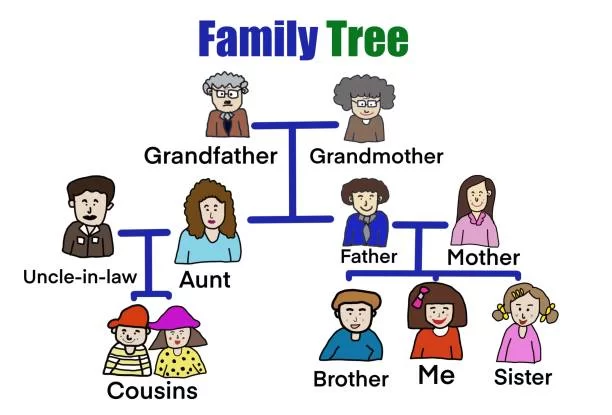
Cousin marriage is a topic with varying levels of acceptance across cultures, legal systems, and personal beliefs. While it is a common practice in certain parts of the world, for others, it is a topic surrounded by taboo and prohibition. But that is not to say there are no pros and cons (benefits and disadvantages) of cousin marriage.
Cousin marriage, also known as consanguineous marriage, is a marriage between close relatives up to second cousins.[1]Cousin marriage. (2025, August 30). In Wikipedia. Retrieved August 30, 2025, from https://en.wikipedia.org/wiki/Cousin_marriage
People get romantically attracted to their cousins all the time, but does that provide a leeway for marriage? Are there some benefits to it?
Whether you are contemplating marrying a close cousin or just curious about its cultural significance, as well as the legal and health implications, this post will explore the benefits and demerits of cousin marriage and its impacts on health and society.
Historical Perspective of Consanguineous Marriage
Historically, close cousin marriage was encouraged and practised by some indigenous cultures in Australia, North America, South America, and Polynesia. This was and is still currently so in some climes because of the need to keep cultural values intact, preserve family wealth, maintain nobility, maintain geographical proximity, keep tradition, strengthen family ties, and maintain family structure, as well as a closer relationship between the wife and her in-laws.[2]HandWiki. (2022, October 12). Cousin Marriage. In Encyclopedia. Retrieved September 2, 2025, from https://encyclopedia.pub/entry/28985
Europe
In early medieval Europe, the Roman civil laws allowed close cousin marriage, but the Justinian reforms in the 6th century CE prohibited cousin marriage up to the fourth degree cousins.
By the 9th century, the Catholic church had adopted the Justinian Code, and at some point extended the ban to up to seventh degrees (sixth cousins), even stricter than the Roman law. In this law, unknowingly marrying a closer consanguineous blood relative was a ground for a declaration of nullity by the church. Eventually, the prohibition of consanguineous marriage would severely cripple the existing European kinship structures, which survived to consolidate wealth and alliances through cousin marriage, replacing them with smaller nuclear family units.[3]Wikipedia contributors. (2025, August 29). Cousin marriage. In Wikipedia. Retrieved September 2, 2025, from https://en.wikipedia.org/wiki/Cousin_marriage
By the 11th and 12th centuries, it became nearly impossible to find a spouse who wasn’t within the forbidden degrees (up to the seventh degree). Due to this, the Fourth Lateral Council of the Catholic church in 1215 revised the prohibition from seven degrees back to four degrees. In addition, exemptions (known as dispensations, often requiring large payments) were granted to permit couples who were too closely related to marry anyway.[4]Ibid., Wikipedia. Cousin Marriage.
By the 19th century, George Darwin (whose father, Charles Darwin, married his first cousin, Emma, George’s mother), estimated cousin marriage to be 3.5% for the middle classes and 4.5% for the nobility, but this further declined to under 1% during the 20th century.
Asia (China)
In Asia, Ancient China subscribed to Confucian values that marriage is a union between two surnames to maintain proper family boundaries and avoid confusion in kinship roles. While this significantly prevented consanguineous marriages, it permitted cross-cousin marriage, where one can marry one’s father’s brother’s children or one’s mother’s sister’s children because cross-cousins (one’s opposite-gender siblings’ children) had different surnames and did not disrupt sibling-like roles.[5]Ibid., Wikipedia. Cousin Marriage
Later during the Ming Dynasty (1368–1644), all cousin marriage was prohibited by Chinese law. However, enforcement proved difficult, and the former laws were restored during the Qing Dynasty (1644–1912), which allowed first-cousin marriages. By the early to mid-20th century, anthropologists described cross-cousin marriage in China as “still permissible but generally obsolete” or as “permitted but not encouraged”.
Eventually, in 1981, a legal ban was enacted by the government of the People’s Republic of China on first-cousin marriage due to potential health concerns. This prohibition was retained in the revised Marriage Law of 2001 and later incorporated into the Civil Code of 2021, under Article 1048, which continues to enforce the same restrictions to this day.
However, in contrast to mainland China, the Special Administrative Regions (Hong Kong and Macau) enforce no legal restrictions on first-cousin unions, permitting all forms of cousin marriage.
Middle East
Cousin marriage has been allowed throughout recorded history in the Middle East. Anthropologists have shared contrasting views on the significance of this practice, with some viewing it as the defining feature of the Middle Eastern kinship system, while others noted that overall rates of cousin marriage are not universal across the entire Middle East, with varying rates in different Middle Eastern communities.
In addition, the Jewish anthropologist, Raphael Patai, reported in 1962 that, in central Arabia, a man had a kind of preferential claim to marry his father’s brother’s daughter (FBD). This is such that the female cousin is traditionally seen as belonging to the man. Here, the girl is not forced to marry her male cousin, but she cannot marry another man unless he gives consent.
This custom is pervasive in the Middle Eastern countries, including but not limited to Jordan, Iraq, Syria, Qatar, Yemen, the UAE, etc. Deeply rooted in kinship and not just as a family preference, consanguineous marriage in the Middle East could be seen as a social institution tied to property, inheritance, and clan solidarity. Thus, the Middle East display some of the highest rates of consanguineous marriages in the world.
Africa
While the exact rates of consanguineous marriage are unknown, cousin marriage in Africa is largely influenced by religion. An estimated 35–50% of all sub-Saharan African populations either prefer or accept cousin marriages.[6]Bittles, A. H. (1994). The Role and Significance of Consanguinity as a Demographic Variable. Population and Development Review, 20(3), 561–584. https://doi.org/10.2307/2137601
Nigeria is the most populous country in Africa, with three major ethnic groups by size–Hausa, Yoruba, and Igbo–and two major religions–Christianity and Islam–while the African Traditional Religion has rapidly declined over time.
The African Traditional Religion (ATR) or pagan worship forbids cousin marriage up to around fourth cousin degree, and particularly links close cousin marriage to a taboo. In some areas, special atonement rites are done to permit close cousin marriage if the marriage has to be consumated. These rites are believed to help lift off the curses that come upon close-cousin couples and their family.
Islam is the predominant religion among the Hausas and most Northern states of Nigeria. In these areas, marriage between close kins, especially cousins, is the preferred pattern but this does not prevent marriages involving non-related individuals or those who are not part of the extended family.[7]Centre for Social Anthropology and Computing. (2010, February 17). Culture entry 7844 [Archived webpage]. Ethnographic Atlas, University of Kent. Retrieved September 2, 2025, from … Continue reading
In Christian-dominated areas, kinfolks and close cousins are not allowed to marry or have intimacy, considering these as incestuous and abominable. These areas inherently frowned upon and prohibited consanguineous marriages and this continues even after the introduction of Christianity, since the religion did not say anything in support or in favor of cousin marriages.
In those Christian areas, parents closely monitor those with whom their children are intimate to prevent them from committing incest and bring curses upon themselves. It is also customary for parents to bring their children up to known their immediate and close cousins, and if possible, distant cousins. And just before marriage, background checks may also be conducted to ensure their partner is not a close cousin.
In some other parts of Africa, the influence of religion on consanguineous marriage is only minimal. For example, in Ethiopia where more than a third of the population are muslims, cousin marriage is rigidly opposed up to sixth cousins, with third cousins being considered the equivalent of a brother/sister.
The Americas
In early United States, consanguineous marriage was not legally prohibited, but down the line, several attempts have been made to ban the practice to supposedly maintain social order, uphold religious morality, and safeguard the creation of fit and viable offspring.[8]Ibid. Wikipedia
For example, Writers like Lewis Henry Morgan (1818-1881) had written anti-cousin-marriage topics like “the advantages of marriages between unrelated persons” and “the necessity of avoiding the evils of consanguine marriage”. many of these writers and activists argued that cousin marriage is a remnant of a more primitive stage of human social organization, and that practising it would decrease the vigor and fitness of offsprings.[9]Ibid. Wikipedia. Cousin Marriage.[10]Ottenheimer, M. (1996). Forbidden relatives: The American myth of cousin marriage [Archived webpage]. Urbana: University of Illinois Press. Retrieved September 3, 2025, from … Continue reading
In 1846, George N. Briggs, the then Governor of Massachusetts, appointed a commission to study mentally disabled people (termed ‘idiots’) in the state. This study implicated cousin marriage as being responsible for idiocy. Numerous other reports also supported that cousin marriage sometimes resulted in deafness, blindness, and idiocy. Perhaps the most important was the report of physician, Samuel Merrifield Bemiss, for the American Medical Association, which concluded that cousin inbreeding does lead to “physical and mental deprivation of the offspring”.[11]Ibid. Ottenheimer. 1996
These developments led to 13 states and territories in the United States passing cousin marriage prohibitions by the 1880s. By the 1920s, the number of states had doubled, including Kentucky, Texas, etc. Since 1985, Maine has mandated genetic counseling, now including genetic screenings, for marrying cousins to minimize the risk of any serious health defects for their children.
Contrastingly, in Australia, cousin marriage is historically allowed in the indigenous culture and secular laws. You can marry a cousin, niece, nephew, aunt, or an uncle.
Pros (Benefits) of Close Cousin Marriage
Several notable individuals in history got married to a close cousin. For example, Charles and Emma Darwin (first cousins), Saddam Hussein and Sadija Talfah (first cousins), Albert Einstein and Elsa Lowenthal (first maternal cousins and second paternal cousins), Franklin and Eleanor Roosevelt, and Thomas Jefferson and Martha Wayles Skelton (third cousins).
Despite what some people would think about consanguineous marriage, here are some benefits of cousin marriage that may have influenced its practice in history and in current times.
- Majority of respondents in a Pakistan study on consanguineous marriage cited experiencing a better and more caring attitude of the in-laws and consequently, easier adjustment for the bride as a major advantage of consanguineous marriage.[12]Hussain, R. (1999). Community perceptions of reasons for preference for consanguineous marriages in Pakistan. Journal of Biosocial Science, 31(4), 449–461. https://doi.org/10.1017/S0021932099004496
- Preservation of cultural values (preventing cultural extinction) and family wealth.
- Sustenance of a ‘royalty bloodline’.
- Maintenance of physical closeness between relatives and strengthening of family ties between a wife and her relative-in-laws.
- Biologically, inbreeding, which results from consanquineous marriage, can create pure lines of desired genetic traits, but carries a risk of expressing recessive traits in the bloodline.
Now that you have seen some benefits of close-cousin marriage, let’s weigh them against the cons or potential disadvantages in the next section.

Cons (Disadvantages) of Close Cousin Marriage
Consanguineous marriage have the following disadvantages:
- Increased risk of genetic diseases, birth defects and learning disabilities: Hemophilia B, an inherited bleeding disorder, is called the “Royal Disease” because it spread through European royalty due to inbreeding. Genetic diseases like hemophilia, Tay Sachs’, cystic fibrosis, sickle cell disease, which are recessive in nature, are often expressed through close-cousin marriages.
- Lower birth weight: A 2007 study showed that consanguinity was associated with a decrease in birth weight for gestational age by 1.8%, producing effects similar but less than those caused by lower parity and smoking during pregnancy.[13]Mumtaz, G., Tamim, H., Kanaan, M., Khawaja, M., Khogali, M., Wakim, G., Yunis, K. A., & National Collaborative Perinatal Neonatal Network. (2007). Effect of consanguinity on birth weight for … Continue reading
- May lead to lack of sociocultural diversity and universal acceptability: The practice of cousin marriage, whether preferentially or not, may lead people to prefer only their lineages, cultures, and tradition, closing up the possibility of building beneficial unions with other people.
- Prohibition of non-royal marriages: The Royal Marriages Act 1772 of the Parliament of Great Britain prescribes that royal marriages must meet specific minimum criteria before proceeding lawfully or out of special consideration. Cousin marriage, which is often allowed in such unions, often creates serious difficulties for royals marrying a non-royal, as seen in the case of Prince Harry and Meghan Markle.
Frequently Asked Questions
What are the genetic effects of marrying cousins?
The genetic effects of cousin marriage include a higher risk of genetic diseases and birth defects. A study highlighted a 4.4% increased risk of pre-reproductive mortality in children born from first-cousin unions, as well as an increased risk of congenital anomalies from 0.7-3.8%.[14]Bittles A. Consanguinity and its relevance to clinical genetics. Clin Genet. 2001 Aug;60(2):89-98. doi: 10.1034/j.1399-0004.2001.600201.x. PMID: 11553039.[15]Bittles AH, Neel JV. The costs of human inbreeding and their implications for variations at the DNA level. Nat Genet. 1994 Oct;8(2):117-21. doi: 10.1038/ng1094-117. PMID: 7842008.
Which country has the most cousin marriages?
Pakistan has the highest rates of consanguinity in the world, with nearly two-thirds of its population marrying cousins.[16]Shenk, M. K., Naz, S., & Chaudhry, T. T. (2024). Intensive kinship, development, and demography: Why Pakistan has the highest rates of cousin marriage in the world. Population and Development … Continue reading
What are the benefits of cousin marriage?
Some reported advantages include stronger family ties, cultural preservation, financial security within families, and easier adjustment for brides due to familiar in-law relationships.
Is cousin marriage becoming less common?
Yes, cousin marriage is becoming less common in many regions, especially in Western societies. The practice has declined due to legal restrictions, changing social norms, and awareness of health risks. However, it remains prevalent in parts of the Middle East, Africa, and South Asia.
Final words
Consanguineous marriage or close-cousin marriage has its pros and cons. However, its seems the cons outweigh the benefits, at least scientifically or medically. While cousin marriage can be an instrument of social harmony among relatives, it carries an increased risk of genetically transmitted diseases, chromosomal anomalies, and birth defects.
If you enjoyed this post, please share your thoughts in the comments section below.
References
| ↑1 | Cousin marriage. (2025, August 30). In Wikipedia. Retrieved August 30, 2025, from https://en.wikipedia.org/wiki/Cousin_marriage |
|---|---|
| ↑2 | HandWiki. (2022, October 12). Cousin Marriage. In Encyclopedia. Retrieved September 2, 2025, from https://encyclopedia.pub/entry/28985 |
| ↑3 | Wikipedia contributors. (2025, August 29). Cousin marriage. In Wikipedia. Retrieved September 2, 2025, from https://en.wikipedia.org/wiki/Cousin_marriage |
| ↑4 | Ibid., Wikipedia. Cousin Marriage. |
| ↑5 | Ibid., Wikipedia. Cousin Marriage |
| ↑6 | Bittles, A. H. (1994). The Role and Significance of Consanguinity as a Demographic Variable. Population and Development Review, 20(3), 561–584. https://doi.org/10.2307/2137601 |
| ↑7 | Centre for Social Anthropology and Computing. (2010, February 17). Culture entry 7844 [Archived webpage]. Ethnographic Atlas, University of Kent. Retrieved September 2, 2025, from https://web.archive.org/web/20100217193539/http://lucy.ukc.ac.uk/EthnoAtlas/Hmar/Cult_dir/Culture.7844">https://web.archive.org/web/20100217193539/http://lucy.ukc.ac.uk/EthnoAtlas/Hmar/Cult_dir/Culture.7844 |
| ↑8 | Ibid. Wikipedia |
| ↑9 | Ibid. Wikipedia. Cousin Marriage. |
| ↑10 | Ottenheimer, M. (1996). Forbidden relatives: The American myth of cousin marriage [Archived webpage]. Urbana: University of Illinois Press. Retrieved September 3, 2025, from https://archive.org/details/forbiddenrelativ00otte/page/n5/mode/2up">https://archive.org/details/forbiddenrelativ00otte/page/n5/mode/2up |
| ↑11 | Ibid. Ottenheimer. 1996 |
| ↑12 | Hussain, R. (1999). Community perceptions of reasons for preference for consanguineous marriages in Pakistan. Journal of Biosocial Science, 31(4), 449–461. https://doi.org/10.1017/S0021932099004496 |
| ↑13 | Mumtaz, G., Tamim, H., Kanaan, M., Khawaja, M., Khogali, M., Wakim, G., Yunis, K. A., & National Collaborative Perinatal Neonatal Network. (2007). Effect of consanguinity on birth weight for gestational age in a developing country. American Journal of Epidemiology, 165(7), 742–752. https://doi.org/10.1093/aje/kwk108 |
| ↑14, ↑17 | Bittles A. Consanguinity and its relevance to clinical genetics. Clin Genet. 2001 Aug;60(2):89-98. doi: 10.1034/j.1399-0004.2001.600201.x. PMID: 11553039. |
| ↑15, ↑18 | Bittles AH, Neel JV. The costs of human inbreeding and their implications for variations at the DNA level. Nat Genet. 1994 Oct;8(2):117-21. doi: 10.1038/ng1094-117. PMID: 7842008. |
| ↑16 | Shenk, M. K., Naz, S., & Chaudhry, T. T. (2024). Intensive kinship, development, and demography: Why Pakistan has the highest rates of cousin marriage in the world. Population and Development Review, 50(4), 1045–1090. https://doi.org/10.1111/padr.12678 |
| ↑19 | Shenk, M. K., Naz, S., & Chaudhry, T. T. (2024).Intensive kinship, development, and demography: Why Pakistan has the highest rates of cousin marriage in the world. Population and Development Review, 50(4), 1045–1090. https://doi.org/10.1111/padr.12678 |












You Might Also Like